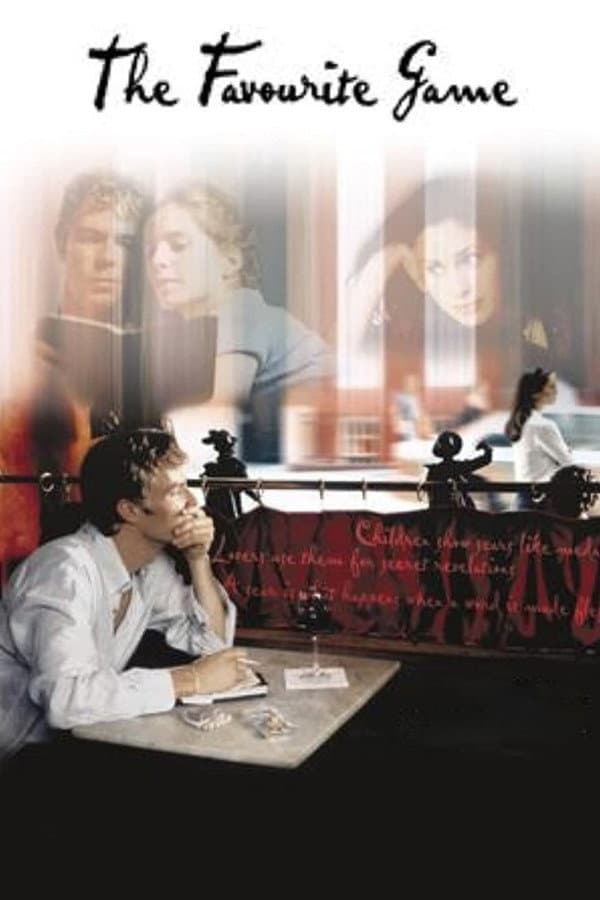
The Favourite Game

The Favourite Game

2003 • Drama
As a kid, Leo thought he possessed, like a magician, the secret power to make things happen. As a young man, he certainly knows how to make things happen with women. But as his best friend Krantz would say to him, "Why do you always ask questions you already know answers to?" Leo believes firmly in what he invents from one day to the next. Images, impressions, stories fill his head. That's just how he is: life, for Leo, is just a game. Behind this childlike attitude, hides the very essence of his own life's quest.
Runtime: 1h 41m
Buy related books from Amazon

As an Amazon Associate I earn from qualifying purchases. Read the full disclosure.

Why you should read the novel

Before watching The Favourite Game (2003), discover the source: Leonard Cohen’s debut novel The Favourite Game. Cohen’s lyrical prose immerses you in Montreal’s streets, memory, and desire in ways no camera can fully capture. Reading the book offers a deeper, more intimate portrait of Lawrence Breavman—his creative awakening, conflicted relationships, and search for identity—rendered in sentences that sing. If you love literary fiction, Canadian literature, or coming-of-age stories, this novel is essential. The novel includes scenes, subplots, and reflections that enrich the story well beyond the film. Experience the original vision—unfiltered, poetic, and resonant—by reading The Favourite Game by Leonard Cohen before or after you watch the adaptation.

Adaptation differences

The novel The Favourite Game unfolds with an intensely interior, lyrical voice that traces Lawrence Breavman’s thoughts, memories, and creative impulses. The 2003 adaptation, by necessity, externalizes much of this inner life, translating it into images and dialogue, which shifts the emphasis from introspection to observation. Structurally, the book moves through time with episodic vignettes that braid childhood and adult experience. The film streamlines this journey, compressing the timeline, combining or omitting episodes, and shaping a clearer, more linear arc around key relationships to fit feature-length pacing. Characterization also differs. On the page, secondary figures and family dynamics receive fuller backstories and thematic weight—art-making, heritage, and the cost of desire are explored in layered scenes. On screen, some roles are reduced or merged, and the romantic throughline and visual mood carry more of the narrative load. Finally, tone and imagery diverge. Cohen’s metaphor-rich language allows ambiguity and subtle tonal shifts that readers interpret privately. The film relies on cinematography, music, and performance to evoke that mood, which can soften, reframe, or intensify moments differently. Reading the novel restores the full complexity of the book’s themes and voice.

The Favourite Game inspired from

The Favourite Game
by Leonard Cohen