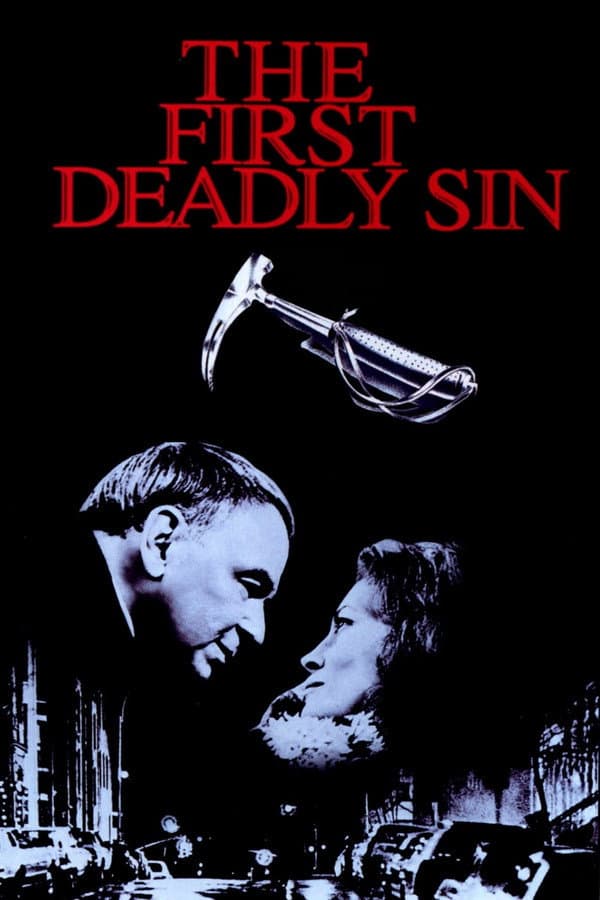
The First Deadly Sin
1980 • Crime, Drama, Mystery, Thriller • R
A serial killer is stalking New York City. Inspector Edward Delaney is an NYPD detective, nearing retirement, who is trying to put together the pieces of the case. Are the victims somehow linked? What does the brutal method of death signify?
Runtime: 1h 52m
Buy related books from Amazon
As an Amazon Associate I earn from qualifying purchases. Read the full disclosure.
Why you should read the novel
Before pressing play on the 1980 film The First Deadly Sin, discover the source: The First Deadly Sin by Lawrence Sanders. This gripping Edward X. Delaney novel delivers a richer, more immersive crime-thriller experience than any adaptation can offer.
Sanders’ prose places you inside New York City’s streets and squad rooms, revealing the meticulous craft of police work and the chilling psychology behind the murders. The novel’s layered character study of Detective Edward X. Delaney—and the enigmatic killer—creates tension that builds page by page.
If you love deeply researched police procedurals, nuanced motives, and atmospheric storytelling, read the book first. The First Deadly Sin novel offers authoritative detail, elegant pacing, and emotional depth that make it the definitive version of this story.
Adaptation differences
The film streamlines the novel’s wide-ranging perspectives. In Lawrence Sanders’ book, readers spend substantial time inside both Edward X. Delaney’s mind and the killer’s routines and psychology, while the movie largely centers on Delaney and keeps the murderer more enigmatic.
Procedural depth is far greater on the page. The novel dwells on forensics, paperwork, interdepartmental politics, and the slow accumulation of clues; the adaptation condenses these processes into a handful of tightly edited investigative beats and a quicker timeline.
Supporting characters and subplots are reduced or merged on screen. The book’s rich New York texture—Delaney’s personal rituals (including his celebrated culinary habits), extended hospital sequences, and neighborhood color—receives far less emphasis in the film, which prioritizes plot momentum.
Tone and resolution also diverge. The movie favors a taut, neo-noir mood and a more immediate, confrontational climax, whereas the novel builds a painstaking evidentiary case with a more expansive, text-driven wrap-up that highlights motive, method, and institutional response.
The First Deadly Sin inspired from
The First Deadly Sin
by Lawrence Sanders