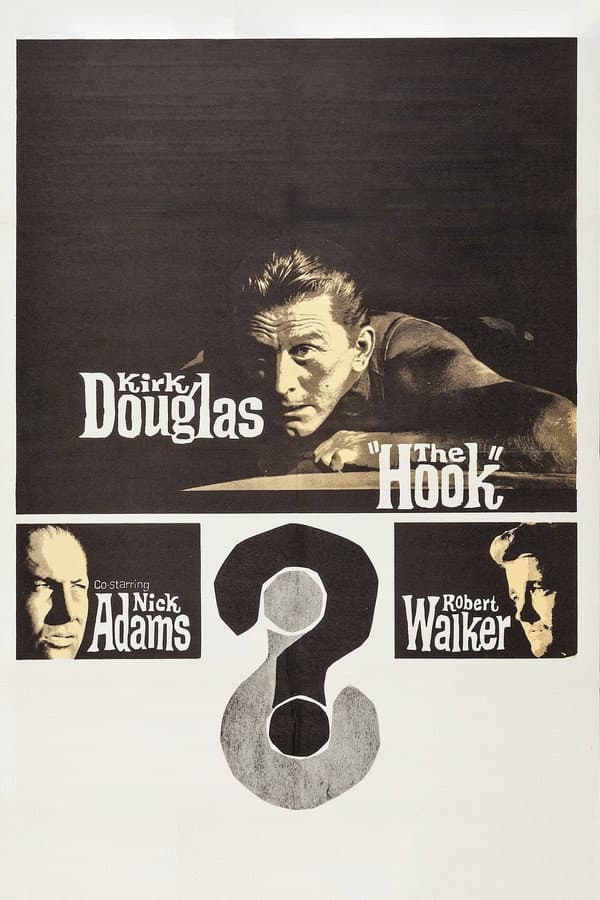
The Hook
1963 • Drama, War • NR
Three soldiers in Korea go through inner torment when they're ordered to execute an enemy soldier.
Runtime: 1h 38m
Buy related books from Amazon
As an Amazon Associate I earn from qualifying purchases. Read the full disclosure.
Why you should read the novel
Before you queue up The Hook (1963), consider reading The Hook by Vahe Katcha—the powerful Korean War novel that inspired the film. The book delivers intimate psychological depth, immersive ethical conflict, and vivid atmosphere that a two-hour movie can only hint at.
If you care about character-driven storytelling, the source novel lets you live inside the soldiers’ doubts, fears, and shifting loyalties. Katcha’s prose layers nuance onto every decision, turning the central moral dilemma into a relentless, page-turning examination of conscience and complicity.
For readers who want the fullest version of The Hook’s themes, start with the book. It offers richer cultural context, more textured emotional stakes, and thought-provoking detail—ideal for book clubs, academic reading lists, and anyone seeking the definitive experience of this story.
Adaptation differences
The biggest difference between The Hook (1963) and Vahe Katcha’s novel is interiority. On the page, you get sustained access to the soldiers’ inner conflicts and shifting rationalizations, while the film must externalize these struggles through dialogue, staging, and performance. The book’s deeper interior lens makes the moral stakes feel more suffocating and personal.
Structure and pacing also diverge. The novel unfolds with measured escalation and reflective pauses; the film compresses timelines, streamlines scenes, and heightens a few set pieces for momentum. Several supporting roles are consolidated or renamed, and locations are simplified to keep the cinematic narrative clear and tightly focused.
Tone and emphasis shift under studio-era constraints. The book leans into ambiguity and ethical gray areas, allowing harsher implications to stand; the movie softens certain edges, clarifies character motivations, and curbs explicit brutality. As a result, the adaptation tends to underline duty and camaraderie more directly, while the novel sustains a lingering unease about agency, obedience, and blame.
Finally, the story’s payoff lands differently. Katcha’s novel privileges unresolved aftermath and reader judgment, leaving thematic questions deliberately open. The film aims for a more contained resolution and catharsis, translating the central metaphor of “the hook” into imagery and plot beats, whereas the book develops it as a recurring idea threaded through character thought, memory, and moral reckoning.
The Hook inspired from
The Hook
by Vahe Katcha