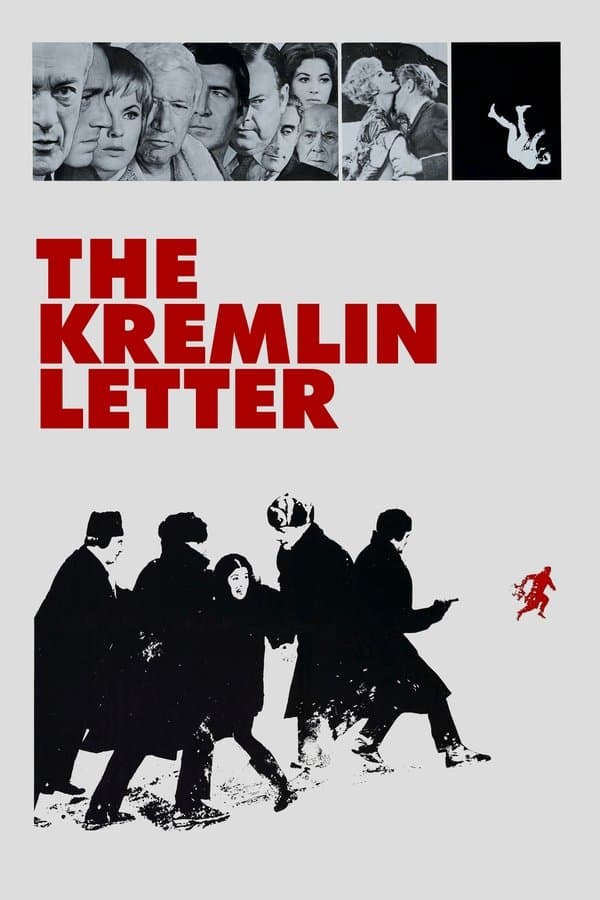
The Kremlin Letter
1970 • Action, Thriller • PG
After an unauthorized letter suggesting U.S. support for a Russian attack on China is sent to Moscow, a former naval officer and his team go undercover to retrieve it. Their plans are disrupted when a cunning politician raids their hideout.
Runtime: 2h
Buy related books from Amazon
As an Amazon Associate I earn from qualifying purchases. Read the full disclosure.
Why you should read the novel
Before you stream the 1970 film, experience the source: The Kremlin Letter by Noel Behn. This taut Cold War spy novel delivers the original characters, stakes, and intrigue the movie only hints at. If you love intelligent espionage fiction, reading the book gives you the full design behind the mission, the letter, and the betrayals that propel the plot.
In Noel Behn's novel, you get richer tradecraft, deeper motivations, and a wider geopolitical canvas. The Kremlin Letter novel carefully builds the clandestine networks, codes, and counter-moves that fuel its twists. It's a brisk, absorbing read that rewards attention to detail while still moving like a high-tension spy thriller.
Prefer page-turning suspense with layered psychology over a two-hour runtime? Choose the book. Fans of John le Carre and Len Deighton will appreciate Behn's cool precision, sardonic wit, and moral ambiguity. Read The Kremlin Letter book first to understand every player—and enjoy the film later as a stylish companion piece to the original source material.
Adaptation differences
Scope and structure (The Kremlin Letter book vs movie): the film tightens and compresses Behn's narrative to fit a feature-length runtime. Several subplots and secondary operations are streamlined or omitted, and timelines are condensed to keep momentum on the central mission. The novel, by contrast, spends more time mapping institutions, rival services, and back channels, creating a broader strategic picture.
Characterization and point of view: on the page, characters' inner calculations, loyalties, and compromises are explicit. The Kremlin Letter book offers more backstory and internal logic for handlers, assets, and double agents. The film externalizes these dynamics through glances, cryptic dialogue, and performance, which can make motivations feel colder or more opaque. This is a core difference between the book and the movie that readers often highlight.
Tone and clarity: John Huston's adaptation favors an icy, elliptical mood that withholds exposition and invites viewers to infer connections. The novel provides clearer connective tissue between operations and explains the provenance and leverage of the titular letter in greater detail. Both are morally ambiguous, but the book often states consequences and trade-offs that the film implies—an important book vs film distinction for viewers seeking clarity.
Pacing and emphasis: the book balances tradecraft, politics, and personal entanglements; the movie emphasizes fatalism, visual economy, and the brutal cost of espionage. Key relationships and betrayals receive more groundwork in the novel, making reversals feel inexorable rather than abrupt. As a result, many readers find the book's endgame more comprehensible, while the John Huston adaptation leans into ambiguity for dramatic effect—one of the most notable differences between the adaptation and the book.
The Kremlin Letter inspired from
The Kremlin Letter
by Noel Behn