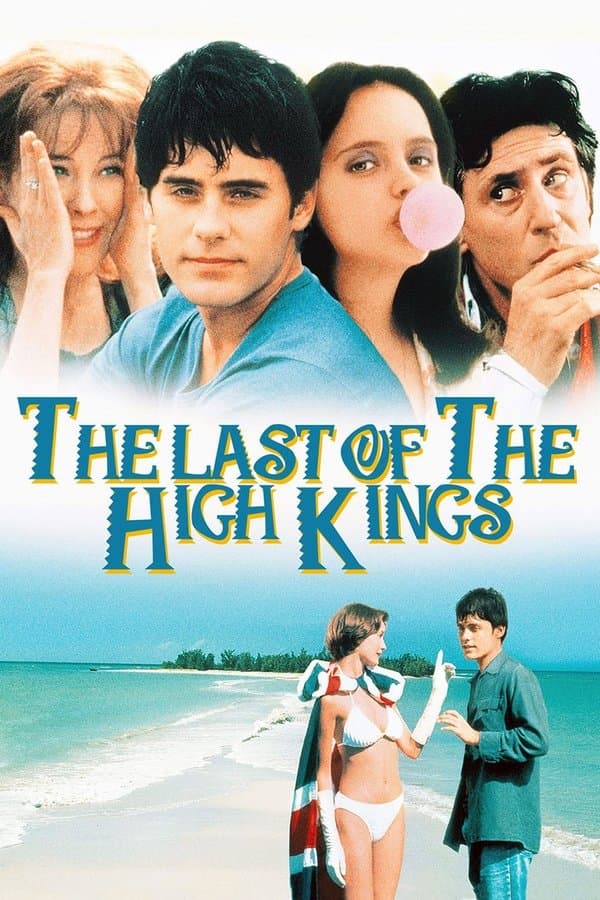
The Last of the High Kings
1996 • Comedy, Drama
It is 1977, Dublin rocks to the music of Thin Lizzy and the world is stunned by the death of Elvis Presley. Frankie, caught between acne and adulthood, has just completed his final exams in school. Convinced he will fail, he survives the summer organising a beach party, having lustful thoughts about two girls he believes are unobtainable and fending off the advances from a visiting American family friend, all whilst coping with his oddball family.
Runtime: 1h 42m
Buy related books from Amazon
As an Amazon Associate I earn from qualifying purchases. Read the full disclosure.
Why you should read the novel
If you loved the vibe of The Last of the High Kings, the novel by Ferdia Mac Anna delivers an even richer, funnier, and more intimate experience. On the page, the summer haze of late-1970s Dublin turns into a vivid, lived-in world, full of authentic slang, aching first loves, and the kind of family chaos only a sharp Irish storyteller can conjure.
The book lets you linger with the protagonist’s hopes, doubts, and humor in a way a two-hour film simply can’t. Each chapter layers personal awakenings with the era’s music, politics, and neighborhood lore, making the reading journey a deeply immersive coming-of-age trip.
For readers who crave voice, texture, and heart, this novel is a must. Discover why The Last of the High Kings became a cult favorite in Irish literature, and enjoy Ferdia Mac Anna’s wit, warmth, and observational brilliance long after the credits would have rolled.
Adaptation differences
The novel provides much fuller access to the protagonist’s inner life than the film adaptation. Where the movie relies on visuals and dialogue, the book unfolds thoughts, anxieties, and daydreams, deepening emotional stakes and sharpening the coming-of-age arc.
In print, late-1970s Dublin feels broader and more detailed, from local politics to pop-culture currents. The film streamlines this background for pacing, while the book lingers on street-level textures, cultural references, and small-but-telling moments that enrich the setting.
Secondary characters typically receive more space in the novel, allowing complex motivations and relationships to develop. On screen, roles may be condensed or combined, and subplots trimmed, to keep the narrative focused on the central summer and the most cinematic beats.
Tone and pacing also diverge. The film leans into breezy nostalgia, music cues, and set-piece humor, while the book balances comic energy with reflective passages and bittersweet notes, creating a more gradual, layered build toward its emotional payoffs.
The Last of the High Kings inspired from
The Last of the High Kings
by Ferdia Mac Anna