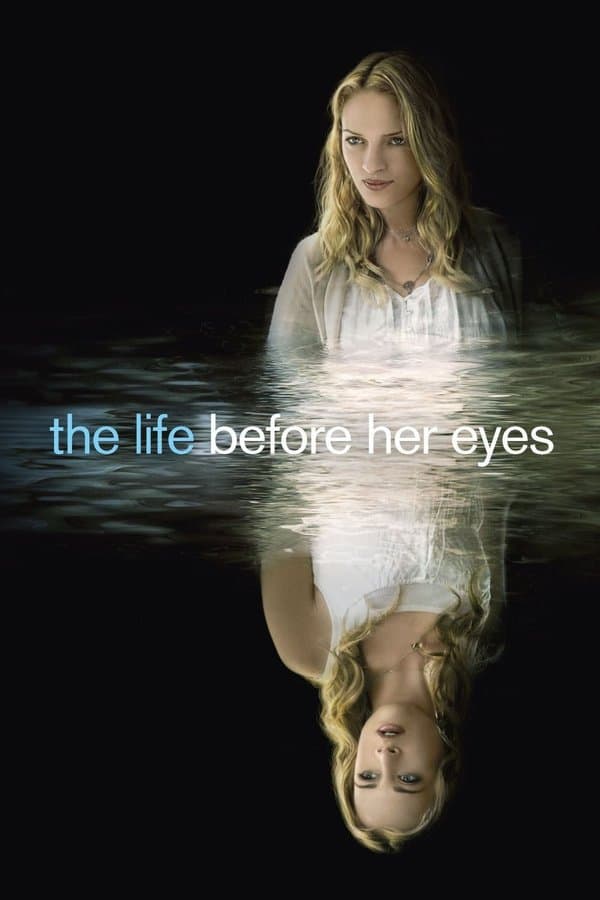
The Life Before Her Eyes
2007 • Drama, Mystery, Thriller • R
As the 15th anniversary of a fatal high school shooting approaches, former pupil Diana McFee is haunted by memories of the tragedy. After losing her best friend Maureen in the attack, Diana has been profoundly affected by the incident - her seemingly perfect life shaped by the events of that day.
Runtime: 1h 30m
Buy related books from Amazon
As an Amazon Associate I earn from qualifying purchases. Read the full disclosure.
Why you should read the novel
Before you press play, open the novel The Life Before Her Eyes by Laura Kasischke. The book’s haunting, poetic prose pulls you directly into the intimate mind of its heroine, exploring memory, guilt, and identity with a depth no screen can fully capture. Reading the source material reveals layers of meaning, delicate symbolism, and emotional nuance that the film can only hint at.
Kasischke’s novel unfolds with a mesmerizing, nonlinear rhythm that rewards careful attention. Each page invites you to pause, reconsider what you’ve learned, and discover how small details echo across time. If you want the most complete, immersive version of this story—its voice, its interiority, and its lyricism—the book is the essential experience.
For readers who love sophisticated psychological fiction, this is a standout choice. Whether in paperback or eBook, the novel offers a thoughtful, lingering experience perfect for book clubs, fans of literary suspense, and anyone who wants to understand the film’s themes at their source.
Adaptation differences
Structure and point of view shift significantly from page to screen. The novel relies on an intimate, nonlinear interiority—memories, impressions, and associations that blur time—while the film streamlines this into intercut timelines with clearer thriller beats. As a result, the movie emphasizes external events and visual clues, whereas the book privileges inner voice, uncertainty, and the fragile mechanics of memory.
Character depth and context are notably richer in the book. Kasischke devotes more space to Diana’s psychology, her relationships, and the social pressures shaping her choices, and she paints a more textured portrait of the friendship at the story’s core. The film reduces or compresses side characters and subplots, sharpening the focus on plot momentum and visual motifs but inevitably narrowing the range of motivations and backstory found in the novel.
Tone and theme diverge as well. On screen, the adaptation leans into suspenseful pacing and striking imagery to convey trauma and survivor’s guilt. On the page, the same themes are filtered through lyrical language, recurring symbols, and ambiguity that ask the reader to participate in meaning-making. The novel keeps violence more psychologically mediated and reflective, while the film renders key moments with immediate, visible impact.
The ending and its implications are handled differently. The book seeds its revelations through subtle foreshadowing and maintains a more open-ended, interpretive quality about what is imagined versus what is lived. The film presents the twist more explicitly, guiding the audience toward a definitive resolution. In doing so, the adaptation clarifies certain answers but trims the novel’s lingering uncertainties, rebalancing mystery toward clarity and leaving fewer interpretive paths than the text invites.
The Life Before Her Eyes inspired from
The Life Before Her Eyes
by Laura Kasischke