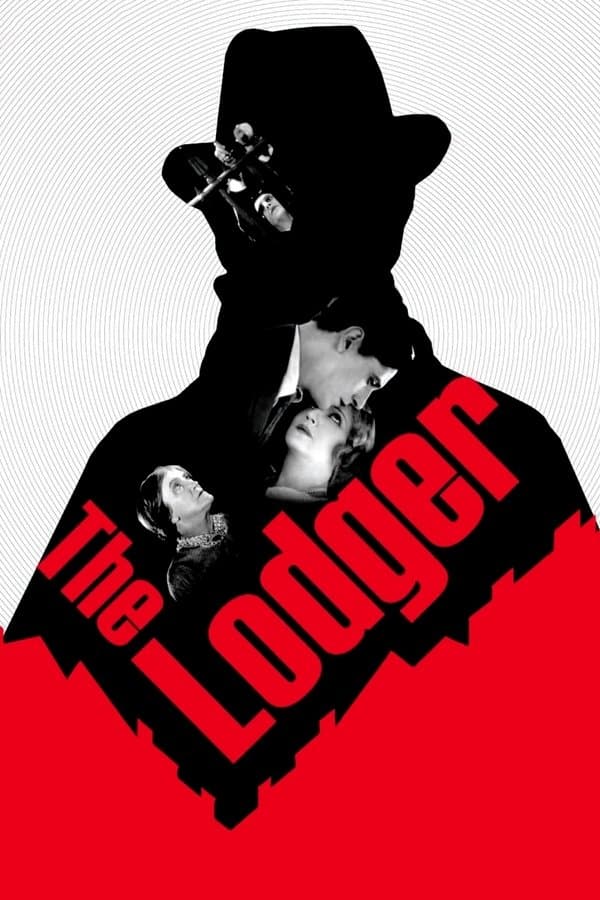
The Lodger: A Story of the London Fog
1927 • Crime, Mystery, Thriller • NR
London. A mysterious serial killer brutally murders young blond women by stalking them in the night fog. One foggy, sinister night, a young man who claims his name is Jonathan Drew arrives at the guest house run by the Bunting family and rents a room.
Runtime: 1h 31m
Buy related books from Amazon
As an Amazon Associate I earn from qualifying purchases. Read the full disclosure.
Why you should read the novel
Before pressing play, open the pages of Marie Belloc Lowndes’s The Lodger: A Story of the London Fog. This landmark crime novel delivers the original pulse of dread, psychological tension, and London’s gaslit atmosphere that inspired Hitchcock’s silent classic—only with deeper character nuance and richer moral ambiguity.
Lowndes crafts a slow-burn thriller from inside a cramped townhouse, where Ellen and Robert Bunting take in the mysterious Mr. Sleuth. As fear thickens and murders mount, the book’s intimate viewpoint captures domestic claustrophobia, class anxiety, and the chilling uncertainty of sharing a roof with possible evil—textures a film can only hint at.
If you love historical mysteries, Jack-the-Ripper–era suspense, and character-driven thrillers, the source novel rewards you with layered motives, ethical dilemmas, and atmospheric detail. Read The Lodger to experience the original psychological suspense blueprint that shaped generations of crime fiction and screen adaptations.
Adaptation differences
The most striking difference between the book and Hitchcock’s 1927 film is the ending and moral emphasis. Lowndes’s novel strongly implies the lodger (Mr. Sleuth) is the killer and lets him slip away into the fog, preserving unsettling ambiguity. The film, shaped by star image and studio concerns, transforms him into a sympathetic “wrong man,” publicly exonerated.
Point of view and tone also diverge. The novel is a domestic, psychological study told largely through landlady Ellen Bunting’s fears and rationalizations, building dread from inside a modest home. Hitchcock’s adaptation pivots outward to kinetic suspense, chases, and visual bravura, focusing on the lodger’s peril rather than the landlady’s gnawing conscience.
Character dynamics shift to fit screen romance. In the book, Daisy and the policeman suitor exist within a tense household drama, with no romantic bond to the lodger. The film recasts Daisy as the lodger’s love interest and positions the policeman as a jealous antagonist, altering motivations and draining the novel’s morally gray domestic focus.
Thematic texture changes with content choices. Lowndes emphasizes class precarity, religiously tinged fanaticism, and the ethics of complicity; Mr. Sleuth’s puritanical mania and the Buntings’ desperation drive the book’s unease. The film minimizes these elements, adds a sensationalist mob sequence, and supplies tidy resolution—trading the novel’s lingering dread for cathartic innocence and star-driven suspense.
The Lodger: A Story of the London Fog inspired from
The Lodger: A Story of the London Fog
by Marie Belloc Lowndes