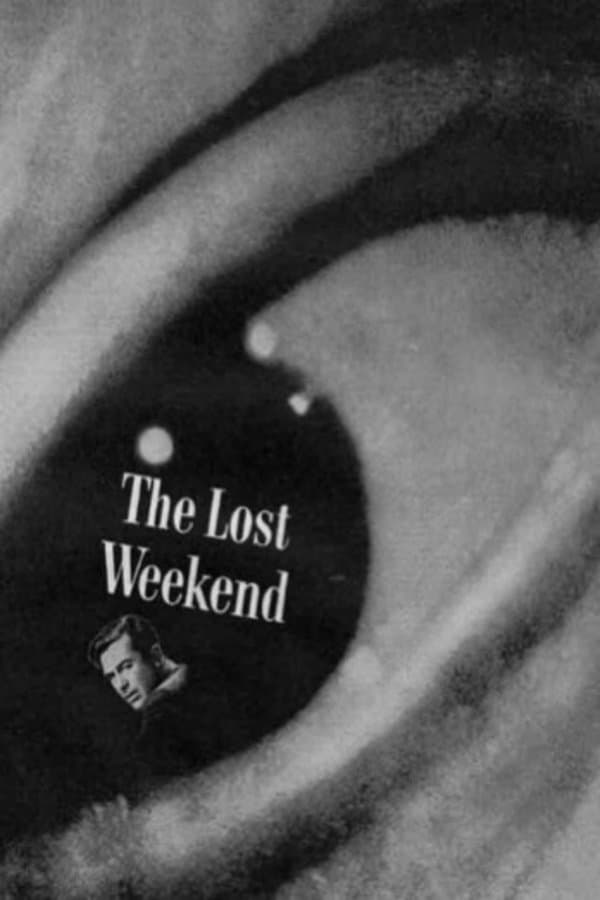
The Lost Weekend
1945 • Drama • NR
Longtime alcoholic Don Birnam has been sober for ten days and appears to be over the worst... but his craving has just become more insidious. Evading a country weekend planned by his brother and girlfriend, he begins a four-day bender that just might be his last – one way or another.
Runtime: 1h 41m
Buy related books from Amazon
As an Amazon Associate I earn from qualifying purchases. Read the full disclosure.
Why you should read the novel
Before you watch The Lost Weekend, read Charles R. Jackson's novel to experience the original, unflinching portrait of addiction, rendered with piercing psychological insight, razor-sharp prose, and compassionate, unsettling honesty.
Jackson's book places you inside Don Birnam's mind, tracing cravings, denial, and memory with intensity no camera can fully capture. For readers of classic American literature and addiction memoirs, this novel is essential.
Searchers comparing The Lost Weekend book vs movie will find the novel richer in context, character, and social nuance. Choose the source text first for deeper understanding, book club discussion, and lasting impact.
Adaptation differences
One of the most significant differences between the book and the movie is how each handles Don Birnam's underlying motivations. The novel frankly engages with repressed same-sex desire and shame; the Hays Code era film removes this, reframing his crisis around artistic failure and insecurity.
The endings diverge. Jackson's novel leaves recovery uncertain and bleakly cyclical, refusing easy catharsis. Billy Wilder's adaptation closes on a more hopeful note, with Don resolved to write about his ordeal and an implied chance at sobriety.
Narrative technique shifts are substantial. The Lost Weekend novel relies on interior monologue, stream-of-consciousness movement through memory, and granular psychological detail. The film necessarily externalizes these states through dialogue, performance, and Miklos Rozsa's theremin-laced score, altering emphasis and pace.
Specific scenes and tone also differ. The movie dramatizes delirium tremens with striking visual hallucinations (notably the bat-and-mouse episode), softens some raw edges, and renders supporting characters more warmly. The book remains more unsparing, claustrophobic, and analytically probing throughout.
The Lost Weekend inspired from
The Lost Weekend
by Charles R. Jackson