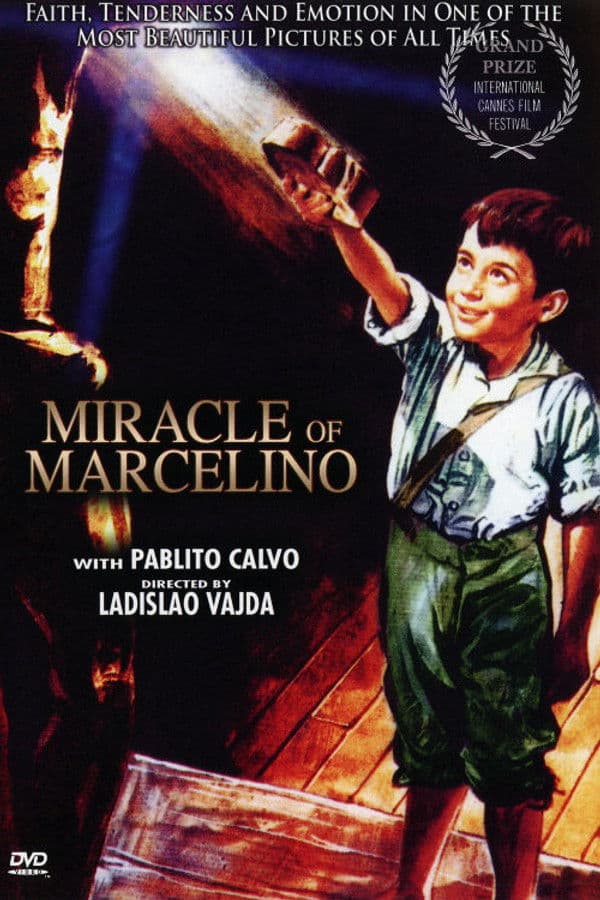
The Miracle of Marcelino
1955 • Drama • NR
Left on the doorstep of a monastery as an infant, Marcelino was raised by the monks. He was well-cared for but lonely and missed having a mother. One day he found a special friend in the forbidden attic, hanging on a cross. A friend that would repay Marcelino's kindness by granting him one heart-felt wish.
Runtime: 1h 31m
Buy related books from Amazon
As an Amazon Associate I earn from qualifying purchases. Read the full disclosure.
Why you should read the novel
Before pressing play on The Miracle of Marcelino (1955), discover the luminous source: Marcelino Bread and Wine by José María Sánchez-Silva. This classic novella offers a gentle, faith-filled journey told with lyrical simplicity and cultural richness that the screen can only hint at. If you’re searching for the heart behind the film, the book delivers the original vision with quiet power and unforgettable tenderness.
Reading Marcelino Bread and Wine places you inside Marcelino’s inner world—his questions, awe, and innocence—while immersing you in the rhythms of monastic life and the spiritual imagination of postwar Spain. The prose invites reflection, making the miracle feel intimate, contemplative, and deeply personal in ways that a movie’s images can’t fully convey.
Choose the book to experience the complete story as José María Sánchez-Silva intended. Whether you pick up a print edition, ebook, or library copy, reading Marcelino Bread and Wine is the most moving way to understand this beloved tale—ideal for readers of spiritual classics, Catholic fiction, and timeless stories of childhood grace.
Adaptation differences
The 1955 film employs a framing device—a friar recounting Marcelino’s story to a child—that streamlines and externalizes the narrative. The novel, by contrast, unfolds with a more direct, storybook voice, keeping you close to Marcelino’s viewpoint without an added storyteller, which subtly changes tone and emphasis from shared legend to lived experience.
On the page, the miracle is contemplative and interior, conveyed through quiet encounters saturated with symbolism and prayerful stillness. The adaptation necessarily visualizes these moments, shifting from suggestive, devotional prose to concrete images and dialogue. This makes the film more immediate and accessible, but the book sustains a meditative cadence that invites personal reflection.
Characterization also differs. The novel paints the monks with greater nuance—individual temperaments, small routines, and spiritual concerns—while the movie consolidates roles, adds gentle humor, and trims subplots to keep the narrative brisk. Timeframes are tightened, and conflicts are simplified, amplifying emotional beats that read more subtly in the source text.
Finally, the book’s ending emphasizes intimate spiritual union and a hushed sense of grace. The film heightens the event’s visibility and communal impact, creating a more public, cinematic resolution. Readers who return to Marcelino Bread and Wine will find a quieter, more theologically textured close—one that favors interior transformation over spectacle and lingers in the heart long after the last page.
The Miracle of Marcelino inspired from
Marcelino Bread and Wine
by José María Sánchez-Silva