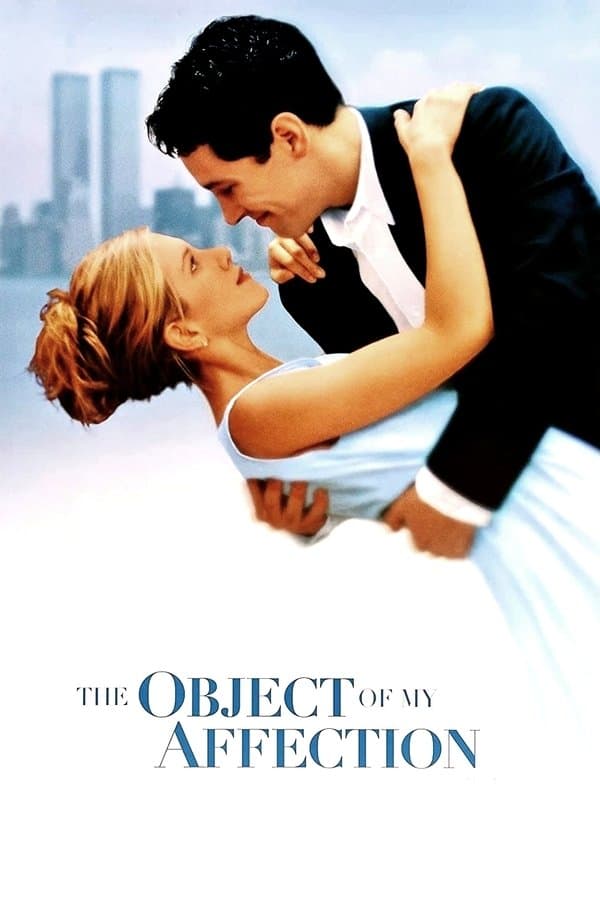
The Object of My Affection
1998 • Comedy, Drama, Romance • R
A pregnant New York social worker begins to develop romantic feelings for her gay best friend, and decides she'd rather raise her child with him, much to the dismay of her overbearing boyfriend.
Runtime: 1h 51m
Buy related books from Amazon
As an Amazon Associate I earn from qualifying purchases. Read the full disclosure.
Why you should read the novel
Before you stream the 1998 film The Object of My Affection, discover the original source: The Object of My Affection by Stephen McCauley. The novel delivers layered humor, emotional precision, and a nuanced portrait of friendship, desire, and modern love that no two-hour movie can fully capture.
McCauley’s novel invites you inside the characters’ minds, revealing the tender contradictions and quiet compromises that define their choices. With sharp, compassionate wit, it paints a vivid world of apartments, workplaces, and friendships, making every scene feel lived-in and true.
If you love character-driven stories and smart, literary romantic comedy, read the book first. The Object of My Affection (novel) offers richer context, deeper stakes, and enduring insights—available in paperback and ebook editions for your next book-club pick or solo read.
Adaptation differences
Tone and emphasis: Stephen McCauley’s novel is a sly, psychologically observant comedy of manners, balancing tenderness with sharp social satire. The movie leans warmer and more conventionally rom-com, smoothing messy edges, trimming ambiguity, and heightening feel-good moments that prioritize uplift over the book’s pricklier, more ambivalent humor.
Setting and scope: The novel unfolds in and around Boston/Cambridge, where neighborhood textures and local habits shape the characters’ choices. The film relocates the action to New York City, changing the social backdrop and energy. The adaptation also condenses timelines and rearranges beats, streamlining complex threads to fit a theatrical runtime.
Point of view and character depth: On the page, George’s first-person voice provides intimate access to motives, doubts, and rationalizations; the film necessarily externalizes that interiority. Several side characters are combined, simplified, or repurposed, and certain occupations or backstories are tweaked. As a result, the novel’s queer community textures and the push-pull of friendship, romance, and cohabitation feel more layered in the book than on screen.
Resolution and themes: The book’s ending is more open-ended and bittersweet, inviting reflection on boundaries, attachment, and the imperfect ways we love one another. The film opts for a tidier, more optimistic closure with clearer romantic and co-parenting outcomes. Readers who want the fuller complexity—the gray areas the movie glosses—will find the novel’s final chapters especially resonant in a book-vs-movie comparison.
The Object of My Affection inspired from
The Object of My Affection
by Stephen McCauley