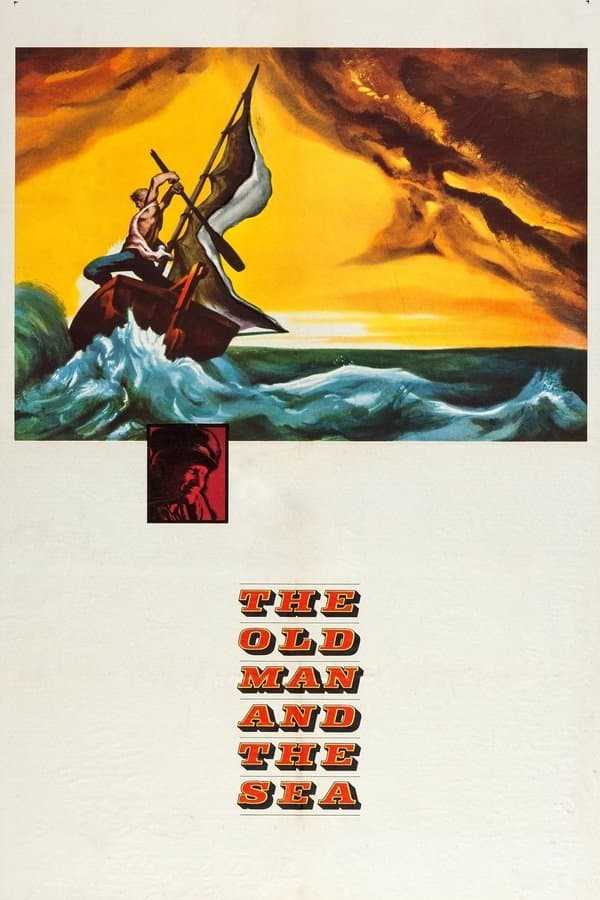
The Old Man and the Sea
1958 • Adventure, Drama
Santiago is an aging, down-on-his-luck, Cuban fisherman who, after catching nothing for nearly 3 months, hooks a huge Marlin and struggles to land it far out in the Gulf Stream.
Runtime: 1h 26m
Buy related books from Amazon
As an Amazon Associate I earn from qualifying purchases. Read the full disclosure.
Why you should read the novel
Before pressing play on the 1958 film, discover the elemental power of Ernest Hemingway’s The Old Man and the Sea. This Pulitzer Prize–winning classic delivers the full measure of Santiago’s courage, dignity, and quiet endurance in crystalline prose that no screen can entirely capture.
Reading the novella lets you inhabit Santiago’s mind: his hopes for the great marlin, memories of youth, prayers spoken into the wind, and the famous dream of lions on the beach. Hemingway’s language is spare yet luminous, turning the Gulf Stream, the skiff, and the marlin into living presences you can feel and hear.
If you value timeless literature, choose the book first. The Old Man and the Sea is brief enough to finish in an evening, but profound enough to revisit for a lifetime—perfect for readers, book clubs, and students seeking authentic Hemingway style and the original vision behind the movie.
Adaptation differences
The 1958 adaptation relies on cinema’s strengths—performance, photography, and a sweeping score—but the novella’s essence is intensely interior. On the page, you live inside Santiago’s thoughts, prayers, and hard-won wisdom. The film uses extensive voiceover to bridge that gap, yet the book’s quiet cadences and silences create a more intimate spiritual journey than images and music can sustain.
Pacing and structure naturally shift. Hemingway’s three-day ordeal unfolds with tidal patience, marked by currents, hands cramping, and the sun’s arc. The movie streamlines rhythms for screen momentum, often emphasizing action beats and adding or expanding shore-side moments to frame Santiago’s isolation. The result is a more conventional narrative tempo compared with the book’s meditative flow.
Symbolism and emphasis differ as well. On the page, details like the lions, DiMaggio references, and religious echoes gather meaning through repetition and restraint. The film visualizes some of these elements but leans on dramatic scoring and seascape spectacle, which can tilt the tone from metaphysical struggle toward adventure, especially in marlin and shark sequences.
The ending in both versions shows Santiago’s return with the marlin’s skeleton, yet the emotional aftertaste diverges. Hemingway’s final pages invite reflection on defeat, victory, humility, and grace, leaving space for personal interpretation. The film renders those beats more directly and sentimentally through performance and music, gently guiding viewers, while the book leaves you to measure Santiago’s triumph—and cost—in your own heart.
The Old Man and the Sea inspired from
The Old Man and the Sea
by Ernest Hemingway