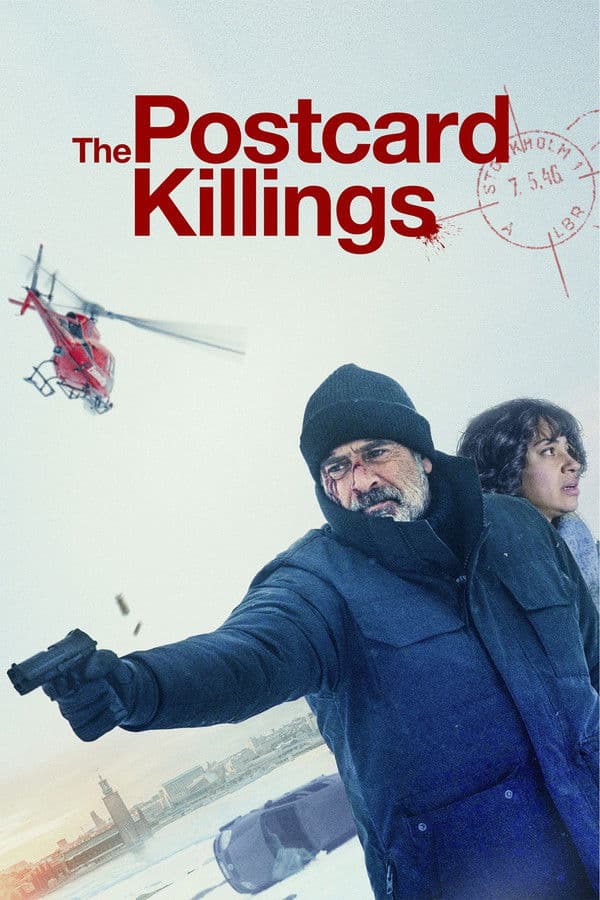
The Postcard Killings
2020 • Drama, Thriller • NC-17
After suffering a personal tragedy, and desperate for justice, Jacob Kanon, a veteran New York City police detective, embarks on the search for a twisted killer who is leaving a bloody trail of elaborate murders across Europe.
Runtime: 1h 41m
Buy related books from Amazon
As an Amazon Associate I earn from qualifying purchases. Read the full disclosure.
Why you should read the novel
If you loved the intrigue of The Postcard Killings movie, the source novel The Postcard Killers by James Patterson and Liza Marklund delivers even sharper suspense. This international crime thriller plunges you into a chilling cat-and-mouse game where art history and forensic detail collide. The book’s layered clues and relentless pacing make it a true page-turner for fans of dark, sophisticated mysteries.
Reading The Postcard Killers gives you a far deeper dive into character psychology than the film can offer. Patterson and Marklund explore grief, obsession, and moral ambiguity through multiple perspectives, including the investigator, the journalist, and the killers. That intimate access to motives and methods heightens tension and makes each twist land with maximum impact.
The novel’s vivid European settings—museums, cathedrals, galleries, and hidden corners of iconic cities—are richly rendered on the page. You’ll savor the art-infused clues, the meticulous police work, and the cultural textures that shape every chapter. For a fully immersive experience the movie can’t match, start with The Postcard Killers and let the story unfold in your imagination.
Adaptation differences
The Postcard Killings movie streamlines the novel’s wide-ranging European investigation, condensing locations, witnesses, and timelines to maintain a tight two-hour runtime. In the book, the case sprawls across more cities and crime scenes, with additional postcard clues and art references that enrich the puzzle. This broader scope creates a denser trail of misdirection and red herrings on the page.
Character focus also shifts from the book to the screen. The novel uses multiple points of view, immersing readers inside the investigator’s mind, the journalist’s reporting, and the killers’ chilling logic. The film largely centers on Jacob Kanon’s grief-driven pursuit, trimming side characters and subplots that, in the book, deepen motivation, backstory, and the ethical gray areas of the hunt.
The journalist ally is notably reinterpreted. In the novel, her background and cultural context shape the investigation’s media angle and the way clues surface; the film alters her name, nationality, and professional role to fit its streamlined narrative. These changes affect how information reaches the public, how leads develop, and how the partnership with Kanon evolves emotionally and strategically.
Tone and resolution differ as well. The book leans harder into art-history detail, psychological tension, and the killers’ mythology, while the film pares back some intricacies and intensifies visual shock. Several victim scenarios, specific artworks referenced, and aspects of the final confrontation are simplified or reconfigured on screen, resulting in a more direct, less labyrinthine ending than the novel’s more layered, twist-forward culmination.
The Postcard Killings inspired from
The Postcard Killers
by James Patterson, Liza Marklund