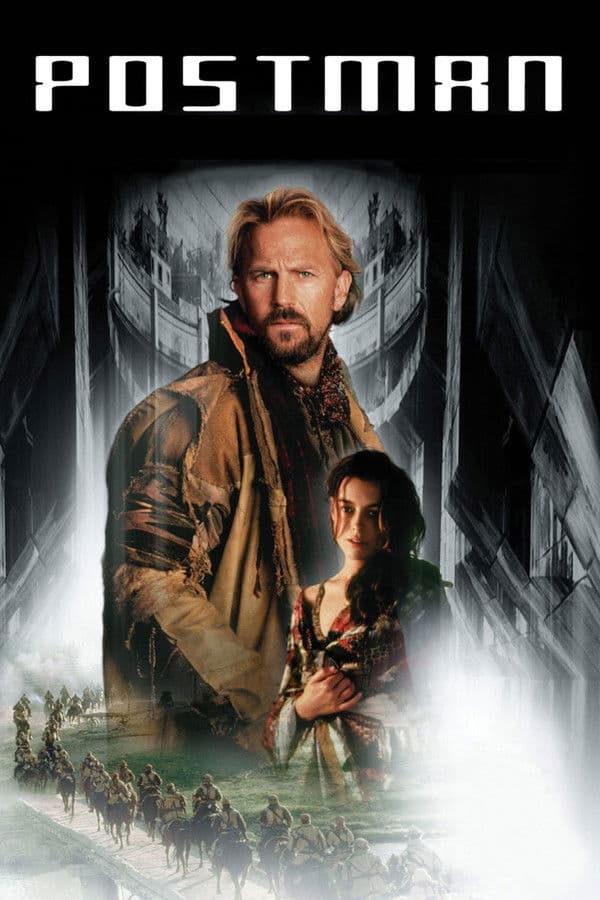
The Postman
1997 • Action, Adventure, Science Fiction • R
In 2013, there are no highways, no I-ways, no dreams of a better tomorrow, only scattered survivors across what was once the United States. Into this apocalyptic wasteland comes an enigmatic drifter with a mule, a knack for Shakespeare, and something yet undiscovered: the power to inspire hope.
Runtime: 2h 58m
Buy related books from Amazon
As an Amazon Associate I earn from qualifying purchases. Read the full disclosure.
Why you should read the novel
If The Postman (1997) intrigued you, read the original novel by David Brin for a richer, thought-provoking journey. The Postman book dives deeper into rebuilding civilization, civic trust, and the power of communication in a shattered America. Its layered world-building and nuanced characters deliver post-apocalyptic science fiction with heart, brains, and hope.
Where the movie highlights symbolic heroism, the novel explores the difficult choices behind rekindling community—myth-making, responsibility, and the ethics of leadership. Readers who love intelligent, character-centered world-building will find compelling stakes and imaginative ideas that the screen can only hint at. Discover why The Postman book remains a touchstone for fans of realistic, hopeful sci-fi.
Choose the source material for a complete experience: the growing postal network, the complex towns of the Pacific Northwest, and the moral puzzles that shape a new nation. Pick up David Brin’s The Postman in paperback, ebook, or audiobook and enjoy a classic of post-apocalyptic science fiction that rewards every chapter.
Adaptation differences
Differences between The Postman book and movie begin with scope and tone. The film condenses a big, idea-driven novel into a mythic frontier tale focused on one man’s symbolic impact. The novel offers a broader canvas—social institutions, communication networks, and competing philosophies—making the “restoration of the United States” feel systemic rather than purely inspirational.
The protagonist also differs. In the book, Gordon Krantz is a pragmatic survivor whose improvised postal persona raises thorny questions about truth, lies, and responsibility. The movie centers on a nameless drifter nicknamed “Shakespeare,” leaning into messianic overtones and sentimental heroism. Book vs movie, the novel emphasizes ordinary people and civic cooperation; the film prioritizes individual legend.
Major subplots are streamlined or omitted on screen. The novel’s pivotal “Cyclops” thread—scientists maintaining the illusion of an AI to stabilize society—adds rich ethical and technological debates absent from the film. Likewise, late-book elements involving advanced biotech and specialized defenders of the rebuilding effort are missing, reducing the adaptation’s science-fiction texture and narrowing its thematic range.
Antagonists and resolution shift as well. The movie consolidates threats into General Bethlehem and a personal rivalry; the book presents decentralized Holnist ideology spreading through multiple warlords, underscoring cultural contagion more than a single villain. Where the film ends with a sentimental, statue-framed epilogue, the novel’s payoff centers on resilient institutions, information networks, and the hard, cumulative work of a functioning civil society.
The Postman inspired from
The Postman
by David Brin