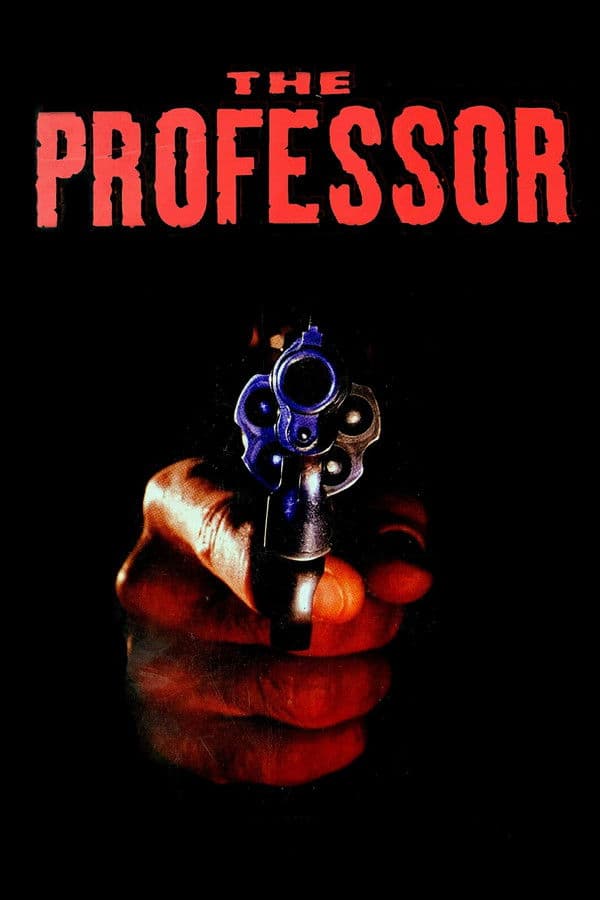
The Professor
1986 • Crime, Drama
An imprisoned murderer carries out a violent bid for control of Naples' underworld crime syndicate.
Runtime: 2h 44m
Buy related books from Amazon
As an Amazon Associate I earn from qualifying purchases. Read the full disclosure.
Why you should read the novel
Before you watch The Professor (1986), read The Camorrist by Giuseppe Marrazzo—the authoritative, deeply researched true-crime account behind the film. Marrazzo’s reporting opens a window onto the Camorra’s inner workings and the rise of Raffaele Cutolo with unmatched detail and credibility.
The book offers the historical context, political connections, and street-level realities the movie can only hint at. Drawing on investigative journalism, interviews, and documents, Marrazzo builds a precise portrait of power, loyalty, and violence in Naples that rewards careful reading and re-reading.
If you’re searching for the definitive source material behind the film, The Camorrist delivers. Choose the book to gain the nuances, timelines, and facts essential to understanding this era of Italian organized crime—ideal for true-crime readers, mafia-history enthusiasts, and students alike.
Adaptation differences
The 1986 film The Professor streamlines decades of criminal ascent into a tightly paced narrative, while The Camorrist documents a broader timeline with granular, sourced reporting. The book’s depth in dates, places, and corroborated events creates a factual map the movie necessarily condenses.
On the page, Marrazzo uses multiple voices—witnesses, investigators, and press accounts—to triangulate the truth. The film focuses on a singular antihero arc, emphasizing psychology, charisma, and myth. Characters and incidents are sometimes compressed or abstracted for coherence, whereas the book preserves journalistic specificity.
High-profile episodes appear in the movie as tense set pieces, but the book dissects the machinery behind them: negotiations, institutional complicity, and the economics that sustain the Camorra. Where cinema opts for dramatic shorthand, the text unpacks procedures, players, and cause-and-effect with documented clarity.
Tone and closure diverge as well. The film favors operatic momentum and moral ambiguity, stopping at a resonant dramatic peak. The book maintains a sober register, following consequences into courtrooms, testimonies, and aftermath—complete with sources and context that illuminate what really happened beyond the frame.
The Professor inspired from
The Camorrist
by Giuseppe Marrazzo