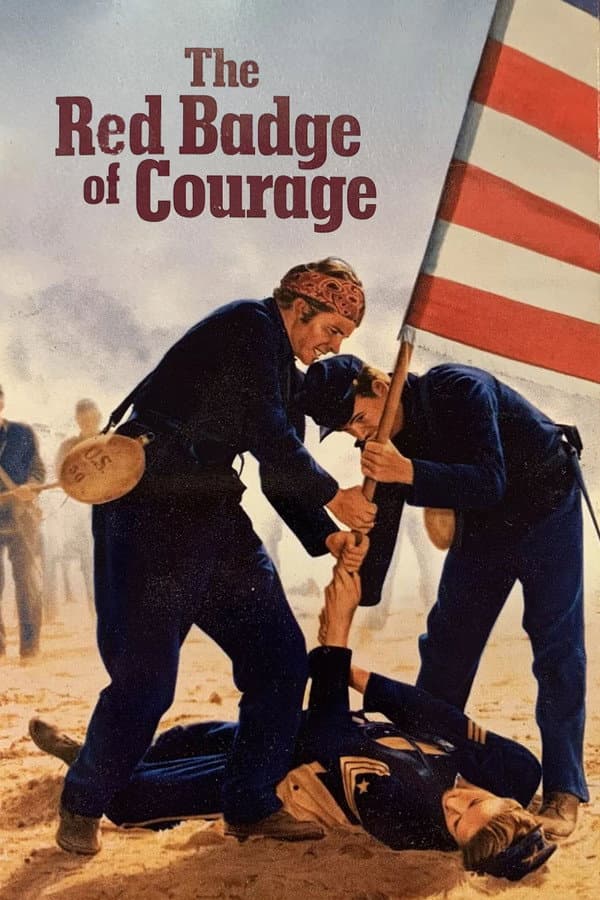
The Red Badge of Courage
1951 • War • NR
Henry Fleming is a young Union soldier in the American Civil War. During his unit's first engagement, Henry flees the battlefield in fear. When he learns that the Union actually won the battle, shame over his cowardice leads him to lie to his friend Tom and the other soldiers, saying that he had been injured in battle. However, when he learns that his unit will be leading a charge against the enemy, Henry takes the opportunity to face his fears and redeem himself.
Runtime: 1h 9m
Buy related books from Amazon
As an Amazon Associate I earn from qualifying purchases. Read the full disclosure.
Why you should read the novel
Discover the power of Stephen Crane’s The Red Badge of Courage, a landmark Civil War novel that places you directly inside a young soldier’s mind. The book’s psychological realism, vivid imagery, and relentless honesty create an immediacy no screen can fully match.
Crane’s prose is lean, lyrical, and unforgettable. He crafts scenes of fear, shame, and emerging courage with precision, using symbolism and impressionistic detail to illuminate the battlefield and the human spirit. As a cornerstone of classic American literature, this novel rewards careful reading and re-reading.
Whether you prefer ebook, paperback, or audiobook, reading the source novel offers richer character depth, nuanced themes, and Crane’s original language. Start with an unabridged edition to experience the complete, uncompromised artistry behind The Red Badge of Courage.
Adaptation differences
Perspective and interiority define the book but are limited on screen. Crane’s novel lives inside Henry Fleming’s thoughts—his shame, rationalizations, and shifting self-image—while the film leans on visuals and narration, inevitably externalizing what the prose makes intensely internal.
The 1951 adaptation dramatically compresses events and streamlines subplots. Because of its short runtime and studio cuts, episodes such as Henry’s prolonged wandering, chance encounters, and extended battlefield lulls are condensed or omitted, reducing the novel’s layered rhythm of fear, confusion, and reflection.
Tone and emphasis shift under Production Code-era constraints. Crane’s stark naturalism and moral ambiguity—his refusal to glamorize war—soften into more conventional heroism on film. Violence is less harrowing, irony is muted, and Henry’s redemption is framed more straightforwardly than the novel’s uneasy, introspective resolution.
Clarity and scope differ markedly. The novel keeps battles and geography impressionistic to mirror Henry’s confusion; the film offers clearer staging, broader battlefield views, and guiding narration. This widens the vantage point but dilutes the book’s claustrophobic, fog-of-war subjectivity that defines Henry’s journey.
The Red Badge of Courage inspired from
The Red Badge of Courage
by Stephen Crane