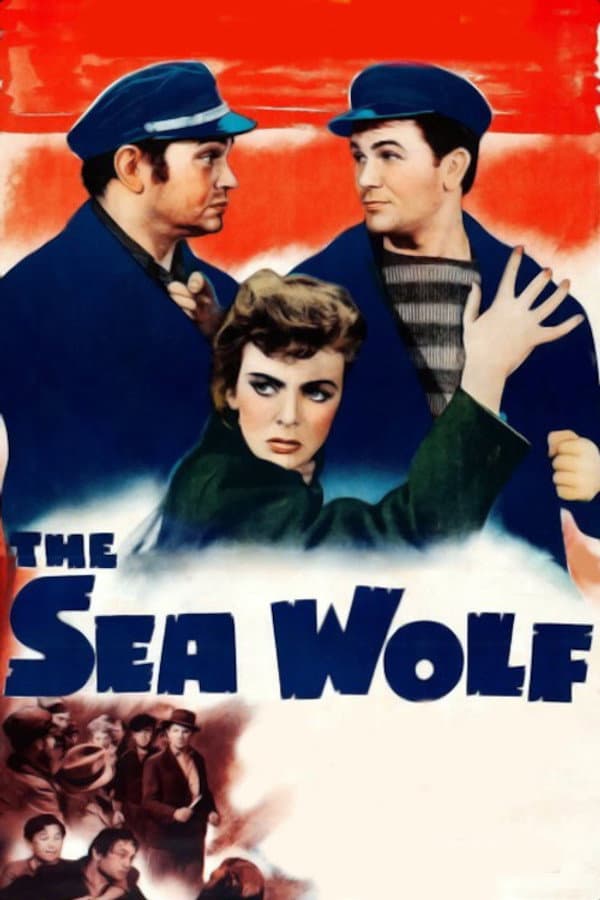
The Sea Wolf
1941 • Adventure, Drama • NR
Shipwrecked fugitives try to escape a brutal sea captain who's losing his mind.
Runtime: 1h 40m
Buy related books from Amazon
As an Amazon Associate I earn from qualifying purchases. Read the full disclosure.
Why you should read the novel
Before pressing play on the 1941 film The Sea Wolf, discover the raw power of Jack London’s The Sea-Wolf. The novel’s relentless maritime survival, psychological tension, and philosophical clashes offer a depth that no screen can fully capture.
Reading The Sea-Wolf gives you unfiltered access to Wolf Larsen’s disturbing intellect, Humphrey Van Weyden’s moral awakening, and Maud Brewster’s strength. Jack London’s prose turns the Pacific fog, the sealing trade, and shipboard brutality into unforgettable, visceral experiences.
For fans of classic literature, maritime adventure, and character-driven drama, The Sea-Wolf book is the definitive version. Explore London’s original themes—individualism, social Darwinism, and human resilience—exactly as the author intended.
Adaptation differences
The 1941 adaptation, directed by Michael Curtiz, streamlines Jack London’s The Sea-Wolf for studio-era pacing and Production Code sensibilities. It compresses plotlines, heightens action, and trims the novel’s grimmer textures to deliver a taut seafaring melodrama.
Key characters are shifted and reshaped. In the book, the central bond and romance develop between Humphrey Van Weyden and Maud Brewster. The film renames her Ruth Brewster and redirects much of the romantic focus toward George Leach, giving John Garfield’s character a larger heroic arc while Humphrey becomes more of an observer. The movie also introduces Dr. Louis Prescott and downplays or omits figures like Death Larsen.
London’s novel is steeped in philosophical debate—materialism versus idealism, might versus right, and the ethics of survival—primarily through intense exchanges between Wolf Larsen and Humphrey. The film reduces these extended arguments to concise moments, prioritizing suspense, atmosphere, and forward momentum over the book’s sustained intellectual sparring.
The structure and ending differ notably. The novel’s survival-on-the-island sequence and Wolf Larsen’s eerie, solitary decline into blindness and paralysis are central to London’s vision. The 1941 movie favors a shipboard climax and a more conventional resolution, emphasizing mutiny, pursuit, and spectacle while softening the novel’s bleak inevitability and existential chill.
The Sea Wolf inspired from
The Sea-Wolf
by Jack London