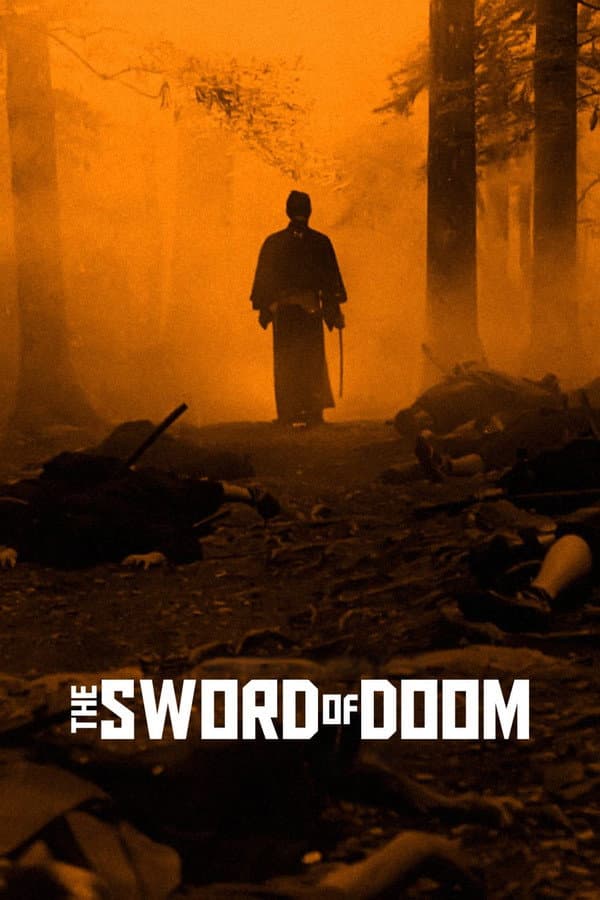
The Sword of Doom
1966 • Crime, Drama • NR
Ryunosuke, a gifted swordsman plying his trade during the turbulent final days of Shogunate rule, has no moral code and kills without remorse. It’s a way of life that leads to madness.
Runtime: 2h 2m
Buy related books from Amazon
As an Amazon Associate I earn from qualifying purchases. Read the full disclosure.
Why you should read the novel
Before you watch The Sword of Doom, discover the source that inspired it: The Great Bodhisattva Pass (Daibosatsu Toge) by Kaizan Nakazato. This monumental samurai novel digs far deeper into the moral rot, spiritual crisis, and historical change that the film only hints at. If you’re searching for the definitive The Sword of Doom book experience, the novel’s sweeping scope and psychological nuance deliver it.
Reading Daibosatsu Toge lets you inhabit Ryunosuke’s world from the inside out. You’ll find layered motivations, Buddhist inquiry into karma and emptiness, and richly textured settings across the waning shogunate. For readers who love literary samurai epics, Kaizan Nakazato’s prose offers atmosphere and insight that no camera can capture.
Choosing the book over the movie rewards you with expanded characters, slower-burn suspense, and a panoramic view of political and social upheaval. If your goal is to fully understand the darkness that defines The Sword of Doom, start with the novel—its pages hold the keys to the story’s unforgettable menace.
Adaptation differences
Scope and coverage: The 1966 film adapts only a slice of Kaizan Nakazato’s vast narrative. While the movie focuses tightly on Ryunosuke’s immediate descent and a handful of confrontations, the novel spans many years and regions, weaving in shifting alliances, rival schools, and the turbulence of the late shogunate. Readers encounter plotlines and turning points that never reach the screen.
Character depth: On film, Ryunosuke is a near-mythic figure of nihilism, presented with stark, minimalist psychology. In the book, his interior life—doubts, flashes of conscience, warped beliefs—emerges through reflection and social encounters. Supporting characters, including mentors, rivals, and victims, gain fuller histories and motivations, transforming simple antagonisms into complex moral entanglements.
Themes and tone: The movie heightens expressionist horror—shadow-drenched sets, relentless swordplay, and existential dread—while compressing the novel’s Buddhist discourse on karma, compassion, and delusion. In print, philosophical questions sit alongside political commentary and everyday detail, balancing brutality with contemplation. The result is a broader ethical canvas than the film’s concentrated bleakness.
Structure and ending: The Sword of Doom ends in an intentionally abrupt, hallucinatory crescendo, leaving arcs unresolved. By contrast, Daibosatsu Toge continues far beyond that point with additional repercussions, shifting perspectives, and new conflicts. Although the epic is famously unfinished, the novel still traces many fates further than the adaptation, offering a more expansive—if open-ended—reckoning with violence and consequence.
The Sword of Doom inspired from
The Great Bodhisattva Pass (Daibosatsu Toge)
by Kaizan Nakazato