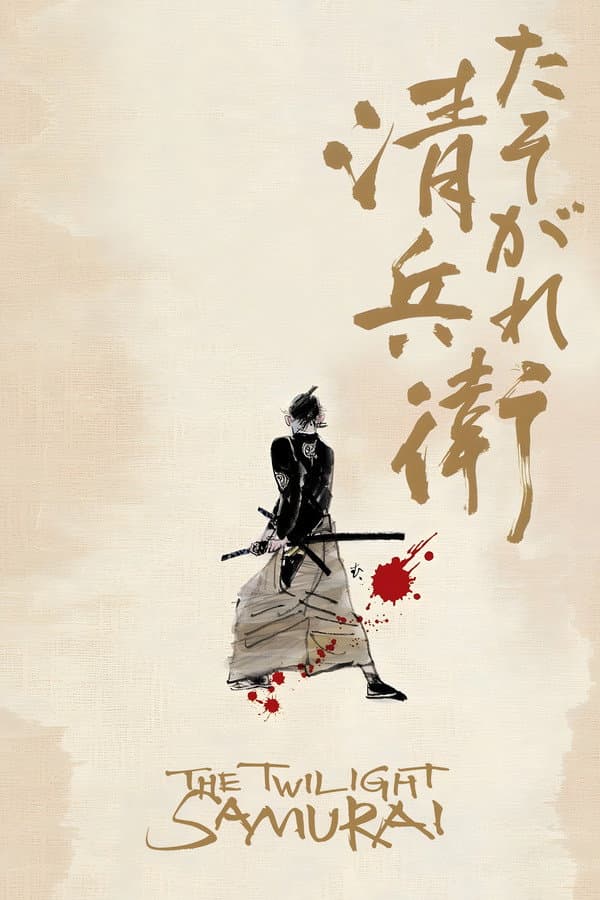
The Twilight Samurai
2002 • Drama, Romance
Seibei Iguchi leads a difficult life as a low ranking samurai at the turn of the nineteenth century. A widower with a meager income, Seibei struggles to take care of his two daughters and senile mother. New prospects seem to open up when the beautiful Tomoe, a childhood friend, comes back into he and his daughters' life, but as the Japanese feudal system unravels, Seibei is still bound by the code of honor of the samurai and by his own sense of social precedence. How can he find a way to do what is best for those he loves?
Runtime: 2h 9m
Buy related books from Amazon
As an Amazon Associate I earn from qualifying purchases. Read the full disclosure.
Why you should read the novels
If you loved The Twilight Samurai (2002), go to the source. Shuhei Fujisawa’s elegant samurai stories deliver quieter revelations, richer historical texture, and intimate character work you can savor at your own pace.
Reading the originals—The Twilight Samurai, The Bamboo Sword, and Love Letter—puts you inside Edo-period rooms, routines, and moral crossroads with tactile detail. These pages foreground daily life, duty, and tenderness in ways even the most faithful film can only suggest.
Search for Shuhei Fujisawa books in English and discover why the author is celebrated for humane, beautifully crafted samurai fiction. Choose the stories first: more nuance, more context, and a deeper emotional reward than a single viewing can offer.
Adaptation differences
The movie blends multiple Shuhei Fujisawa short stories—The Twilight Samurai, The Bamboo Sword, and Love Letter—into one continuous arc. This fusion compresses timelines, combines characters, and reshapes events for a cohesive, feature-length narrative momentum.
Point of view shifts in print become a unified frame in the film. The movie leans on the grown daughter’s retrospective narration, while the stories use different perspectives (including epistolary elements in Love Letter), yielding a more varied interiority on the page.
Action and duels are reframed for cinema. The Bamboo Sword’s moral emphasis on restraint and practice weaponry becomes set-piece moments that reveal Seibei’s character under pressure; the film heightens confrontation beats while the stories dwell longer on preparation, custom, and consequence.
Romance and domesticity are streamlined. The film foregrounds Seibei and Tomoe’s relationship to anchor emotion, whereas the stories explore affection through letters, implication, and everyday gestures. The adaptation adds connective tissue and a more definitive epilogue; the texts leave futures quieter and more open to the reader’s reflection.
The Twilight Samurai inspired from
The Twilight Samurai
by Shuhei Fujisawa
Love Letter
by Shuhei Fujisawa
The Bamboo Sword
by Shuhei Fujisawa