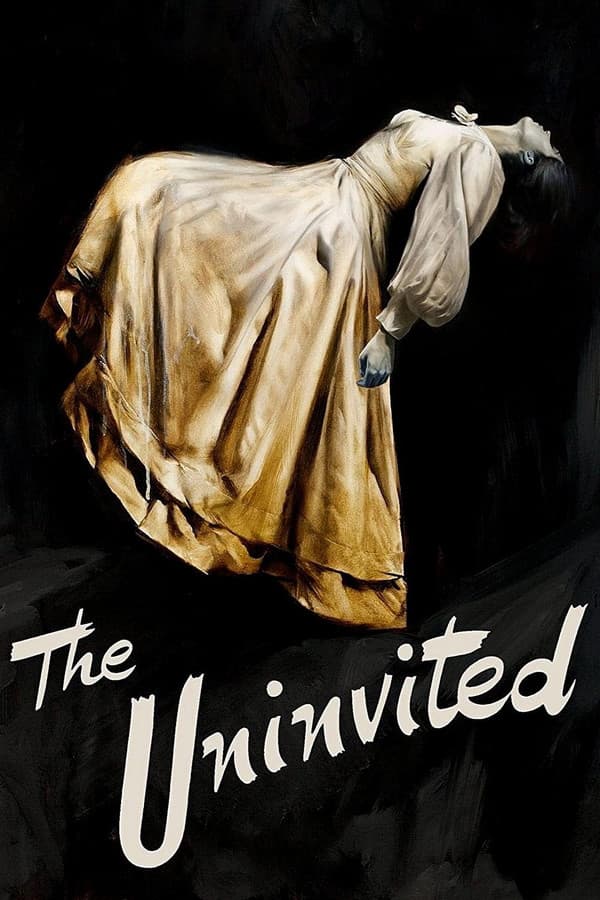
The Uninvited
1944 • Fantasy, Horror, Mystery, Romance • NR
A pair of siblings from London [Ray Milland and Ruth Hussey] purchase a surprisingly affordable, lonely cliff-top house in Cornwall, England. Only to discover that it actually carries a ghostly price, and soon they’re caught up in a bizarre romantic triangle from beyond the grave. Rich in atmosphere, The Uninvited, directed by Lewis Allen, was groundbreaking for the seriousness with which it treated the supernatural, haunted house genre, and it remains an elegant and eerie experience, featuring a classic score by Victor Young. A tragic family past, a mysteriously locked room, cold chills, bumps in the night - this gothic Hollywood classic has it all.
Runtime: 1h 39m
Buy related books from Amazon
As an Amazon Associate I earn from qualifying purchases. Read the full disclosure.
Why you should read the novel
Before you press play on The Uninvited (1944), discover the haunting original: Uneasy Freehold by Dorothy Macardle. This classic Gothic novel, also known as The Uninvited, delivers richer atmosphere, deeper character psychology, and slow-burn dread that the film can only hint at.
Macardle’s prose conjures the Cornish coast, the mysterious house, and the unresolved past with vivid detail. If you love intelligent ghost stories, layered mysteries, and emotionally complex hauntings, reading the book lets you experience the source as the author intended—nuanced, immersive, and unforgettable.
Perfect for fans of Daphne du Maurier and Shirley Jackson, Uneasy Freehold offers literary chills, historical texture, and a resonant exploration of grief, love, and memory. Choose the novel to unlock the full depth behind the movie’s most memorable moments and uncover secrets the adaptation streamlines.
Adaptation differences
Narrative perspective is the first big shift. Dorothy Macardle’s Uneasy Freehold unfolds through Roderick Fitzgerald’s first-person voice, creating intimate, reflective suspense and psychological nuance. The film, by contrast, uses a brisk, third-person cinematic approach that foregrounds momentum, humor, and romance, inevitably trimming interiority and ambiguity.
Characterization is sharpened for the screen. The movie leans into a clearer good-spirit/bad-spirit dichotomy and heightens Miss Holloway’s menace, while the novel lingers in uncertainty, complicating loyalties and motives for longer. Macardle’s text allows the hauntings and relationships—especially around Mary and Carmel—to feel morally and emotionally knottier before the truth clarifies.
Structure and evidence-gathering differ as well. The book dwells on letters, local testimony, and painstaking inquiry, weaving clues with atmospheric detail. The film compresses timelines, streamlines side characters, and brings seances and overt manifestations to the fore earlier, trading procedural mystery for cinematic pace and clarity.
Resolution and aftermath are more spacious in the novel. Macardle explores consequences, emotional recovery, and thematic reverberations beyond a single climactic reveal, whereas the adaptation seeks a cleaner, reassuring closure. The result is a movie that satisfies swiftly and a book that haunts longer—two complementary experiences from the same ghostly foundation.
The Uninvited inspired from
Uneasy Freehold (also published as The Uninvited)
by Dorothy Macardle