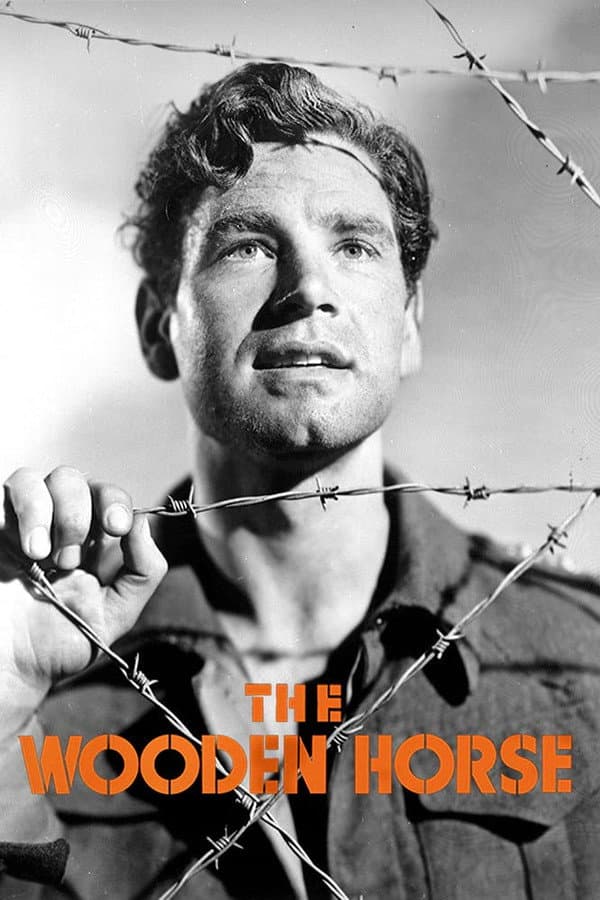
The Wooden Horse
1950 • Drama, War
True story of three British POWs and their attempt to escape from Nazi Germany
Runtime: 1h 41m
Buy related books from Amazon
As an Amazon Associate I earn from qualifying purchases. Read the full disclosure.
Why you should read the novel
Before you stream the 1950 film, read The Wooden Horse by Eric Williams—the authentic, first-hand account that inspired it. Williams’s clear, measured voice places you inside Stalag Luft III, revealing how ordinary airmen engineered an extraordinary escape.
The book dives deeper than any screen version can, unpacking the craft, caution, and courage behind the vaulting-horse ruse. You’ll feel every risk weighed, every inch of tunnel shored, and every coded glance shared under the noses of watchful guards.
If you crave true World War II history, meticulous escape lore, and human resilience, the pages deliver sustained tension and insight. Discover how the real operation worked—and why understanding the original source elevates the story far beyond a two-hour movie.
Adaptation differences
The 1950 adaptation keeps the core concept but fictionalizes identities. Where the book names Eric Williams and his fellow escapers Michael Codner and Oliver Philpot, the film renames them and streamlines backstories, creating composites that simplify relationships and responsibilities.
Planning and tunneling unfold with exhaustive precision in the memoir—tools improvised, soil concealed, routines calibrated to guard rotations. The film condenses weeks and months into taut sequences, prioritizing visual momentum over the book’s granular, procedural detail and first-person reflections.
Williams highlights the wider POW ecosystem: stooges, tailors, forgers, lookouts, and quiet specialists who made the deception credible day after day. On screen, that collective fades into the background so the narrative can track a tight trio, merging roles and minimizing the sprawling teamwork central to the book.
After the breakout, the memoir lingers on documents, languages, train schedules, border checks, and nerve-jangling improvisations across occupied Europe. The film abbreviates these journeys and resolves them briskly, trading the book’s country-by-country nuance and psychological texture for a cleaner, more conventionally cinematic finish.
The Wooden Horse inspired from
The Wooden Horse
by Eric Williams