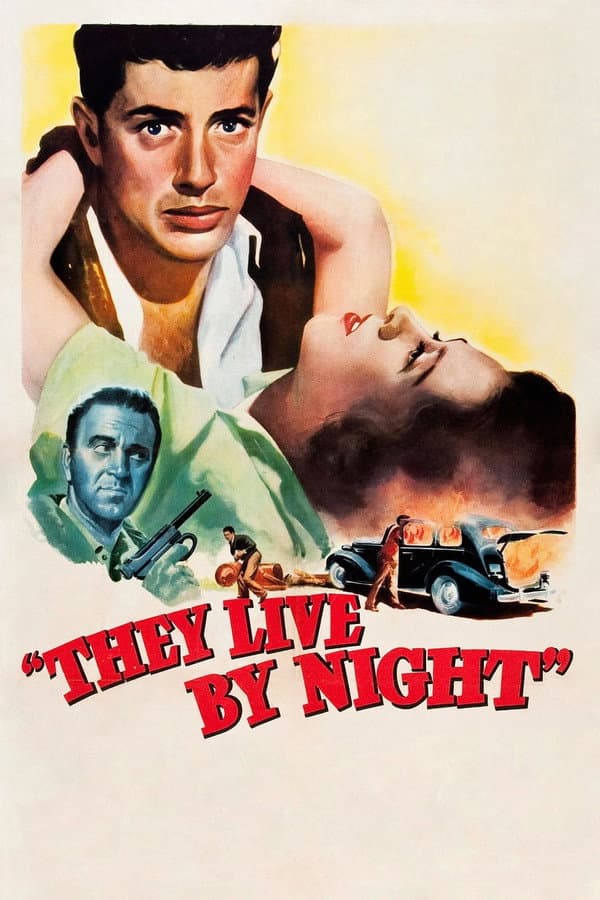
They Live by Night
1949 • Crime, Drama, Romance • NR
An escaped convict, injured during a robbery, falls in love with the woman who nurses him back to health, but their relationship seems doomed from the beginning.
Runtime: 1h 36m
Buy related books from Amazon
As an Amazon Associate I earn from qualifying purchases. Read the full disclosure.
Why you should read the novel
They Live by Night (1949) is adapted from Edward Anderson’s powerful novel Thieves Like Us. If you loved the movie’s doomed-romance energy, the book delivers a deeper, harsher, more intimate version of the story.
On the page, Anderson’s prose plunges you into the Great Depression’s dust, danger, and moral ambiguity. You’ll get richer backstories, urgent social critique, and the full inner lives of Bowie and Keechie—nuances the Production Code–era film could only hint at.
Searching for They Live by Night book origins? Read Thieves Like Us by Edward Anderson in print, ebook, or audiobook. Experience the raw classic that inspired the movie before you rewatch it.
Adaptation differences
Title and theme shift: the film’s They Live by Night rebrands Edward Anderson’s Thieves Like Us, steering the emphasis toward noir fatalism. The novel’s title is a pointed social indictment—suggesting that crooks and respectable institutions are “thieves” alike—that the movie largely softens.
Character depth and point of view: the book spends more time inside Bowie and Keechie’s thoughts, capturing their youth, fear, and fragile hopes with regional texture and interiority. On screen, their psychology is conveyed through performance and visuals, resulting in a more streamlined, romantic focus than the novel’s broader social canvas.
Structure and censorship: Anderson’s narrative ranges across more robberies, downtime, and consequences, while the adaptation compresses events to foreground the love story. Under the Hays Code, violence is toned down, social criticism is muted, and a quick, respectable marriage is highlighted—choices that smooth the novel’s rougher edges and moral complexity.
Ending and tone: both versions are tragic, but the film concludes with a concentrated, iconic farewell—the “I love you” image—then cuts out swiftly. The book lingers longer on aftermath and implications, giving Keechie’s path and the story’s critique of the times a more sustained, unsettling resonance.
They Live by Night inspired from
Thieves Like Us
by Edward Anderson