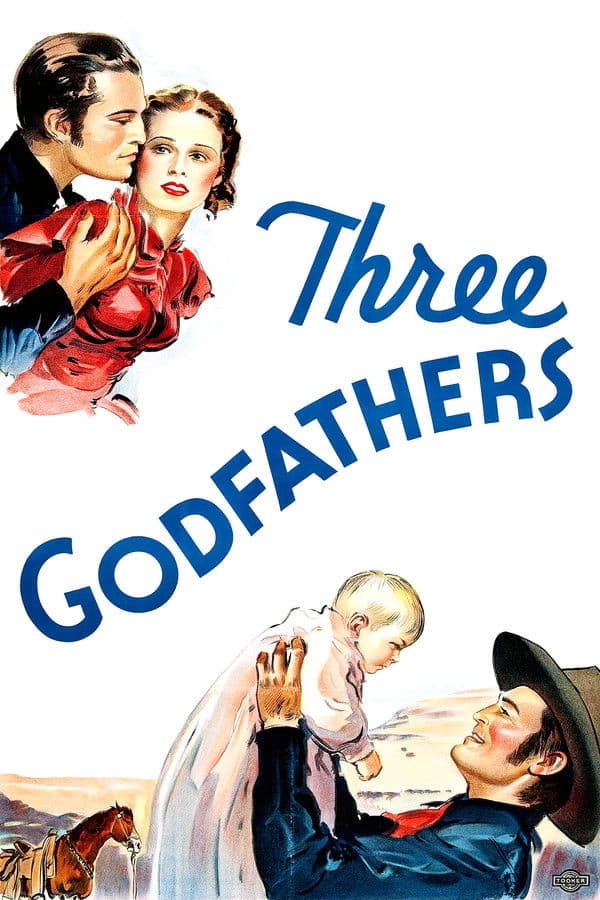
Three Godfathers
1936 • Action, Drama, Western • NR
In a town called New Jerusalem, three bandits hold up a bank. After a gun battle with the townspeople, the three robbers retreat into the scorching Arizona desert. There, they happen upon an ill woman stranded with her child. As the mother dies, she begs the men to take care of her infant. The fugitives want to save the baby -- but to do so, they'll have to travel back to New Jerusalem, where they are wanted men. Remade as 3 Godfathers (1949).
Runtime: 1h 21m
Buy related books from Amazon
As an Amazon Associate I earn from qualifying purchases. Read the full disclosure.
Why you should read the novel
Before you press play on the 1936 film, experience the source that inspired it all: The Three Godfathers by Peter B. Kyne. The novel’s vivid desert journey, frontier morality, and Christmas redemption arc offer richer character depth and spiritual nuance than any screen version can capture.
Reading the original book reveals the full emotional stakes behind the promise to save a newborn across the wasteland. Kyne’s prose layers grit, humor, and faith with intimate detail, making the outlaws’ transformation feel hard-earned, humane, and unforgettable—perfect for fans of classic Western literature.
If you’re curious about the roots of the movie’s most powerful moments, the novel delivers them unfiltered. Choose the book for authentic atmosphere, fuller backstories, and timeless themes. It’s a quick, resonant read available in paperback and ebook, ideal for Western readers and holiday classics collectors.
Adaptation differences
The 1936 adaptation retains the core premise—three outlaws becoming godfathers to a newborn—but reshapes tone and pacing for a studio-era audience. Where Kyne’s novel leans into stark survival and spiritual gravity, the film adds gentle humor, softens violence, and emphasizes sentiment to fit MGM’s polished house style.
Characterization is streamlined on screen. The book carefully distinguishes the men’s temperaments, doubts, and incremental moral awakenings; the film consolidates traits, renames or merges roles, and introduces supportive side characters to create clearer archetypes and more immediate chemistry. This simplification makes the story brisker but trims layers of inner conflict present on the page.
Structurally, the film expands or reshuffles scenes for cinematic momentum—embellishing the robbery setup, compressing the posse dynamics into fewer authority figures, and abbreviating the harshest stretches of the desert crossing. The novel’s methodical survival details and religious symbolism are more explicit, while the movie highlights spectacle, dialogue, and star presence.
The ending and consequences also shift. Kyne’s book treats justice, penance, and redemption with sober balance, carefully weighing promise-keeping against the law; the film crafts a more audience-pleasing resolution, adjusting timing and severity of punishment and leaning into holiday warmth. The result honors the story’s heart but reframes its moral calculus for a 1930s crowd.
Three Godfathers inspired from
The Three Godfathers
by Peter B. Kyne