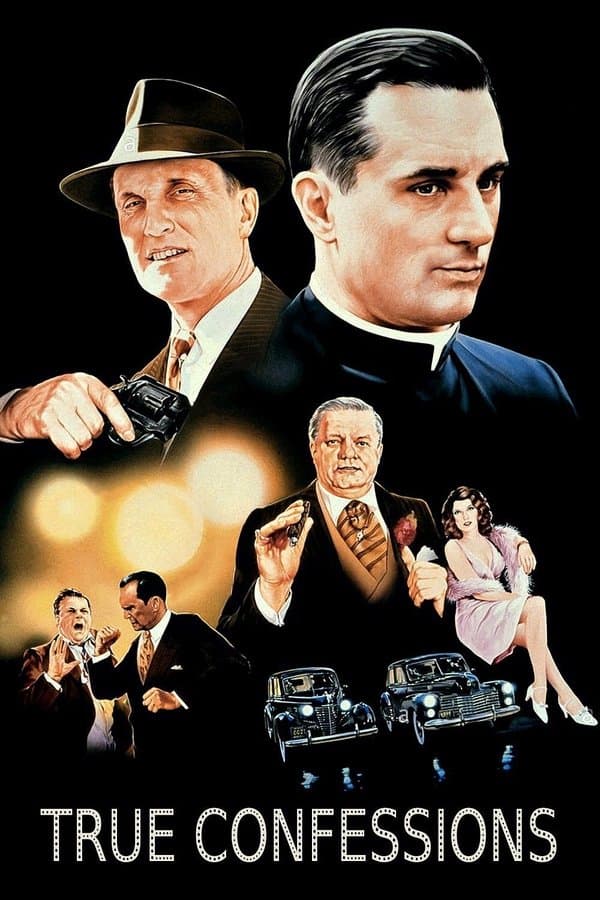
True Confessions
1981 • Crime, Drama • R
A cop clashes with his priest brother while investigating the brutal murder of a young prostitute.
Runtime: 1h 48m
Buy related books from Amazon
As an Amazon Associate I earn from qualifying purchases. Read the full disclosure.
Why you should read the novel
Before you watch the 1981 film, experience the razor‑sharp True Confessions novel by John Gregory Dunne. Its Black Dahlia–shaded mystery and insider’s view of Los Angeles power read with irresistible momentum.
Dunne’s prose delivers layered Catholic themes, political corruption, and brotherly conflict that the camera can only hint at. You get fuller backstories, darker humor, and sharper moral ambiguity on the page.
If you care about the roots of the movie, reading the source book lets you catch every motive, institution, and clue. Discover why critics hail it as a modern crime classic and a must‑read in American noir.
Adaptation differences
Scope and tone: The novel is a biting, satirical panorama of postwar Los Angeles—city hall, real estate, and the Archdiocese—while the film narrows into a somber, intimate character study of two brothers torn by duty.
Plot density: On the page, subplots about civic contracting, parish politics, and media spin interlock with the murder case. The adaptation compresses timelines, merges or drops side characters, and streamlines revelations for a tighter two‑hour arc.
Voice and detail: Dunne’s novel uses incisive interiority, procedural specificity, and scalding black humor. The movie largely trades that authorial bite for visual mood and silence, softening some violence and sexual frankness for a broader audience.
Outcomes and emphasis: The book leaves certain culpabilities and institutional reckonings more ambiguous and caustic; the film leans into reconciliation and penitence, emphasizing the brothers’ relationship over the full breadth of civic and church critique.
True Confessions inspired from
True Confessions
by John Gregory Dunne