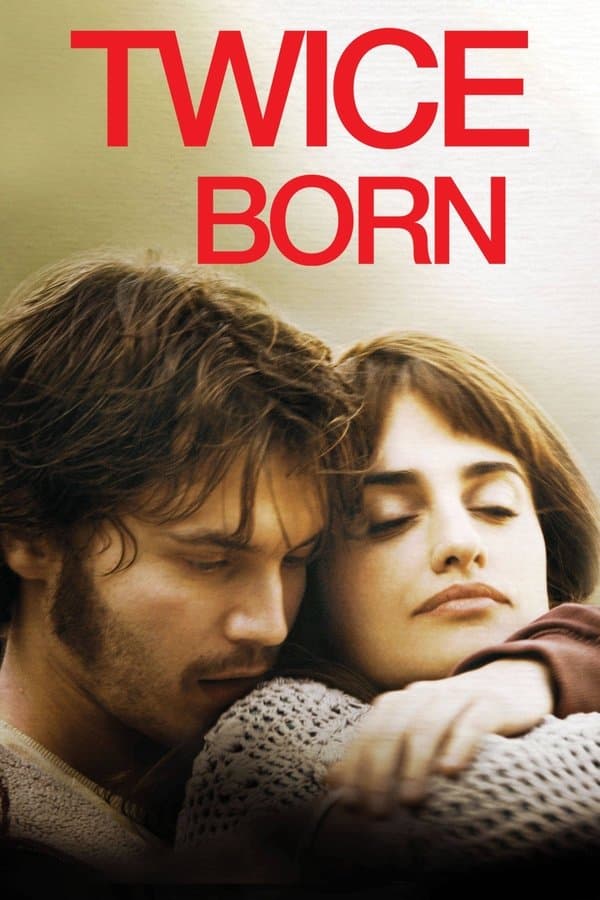
Twice Born
2012 • Drama, Romance, War • R
Full-throttle melodrama about an ill-starred romance set against the backdrop of the siege of Sarajevo. A mother brings her teenage son to Sarajevo, where his father died in the Bosnian conflict years ago.
Runtime: 2h 7m
Buy related books from Amazon
As an Amazon Associate I earn from qualifying purchases. Read the full disclosure.
Why you should read the novel
Before you watch Twice Born (2012), experience the story where it began: Twice Born, the internationally acclaimed novel by Margaret Mazzantini. The book offers a deeper, more intimate journey through love, loss, and the aftermath of war than any screen can capture.
Reading the Twice Born novel lets you inhabit Gemma’s thoughts, feel Sarajevo’s streets under siege, and witness the fragile power of motherhood with nuance and detail. Mazzantini’s lyrical prose and layered storytelling reward every page with emotional clarity and historical texture.
If you’re searching for literary fiction that lingers, choose the original source material. The English edition of Twice Born is ideal for book clubs, readers of war literature, and anyone who wants the full, unfiltered scope of this unforgettable story—well beyond what the movie can show.
Adaptation differences
Narrative perspective and structure differ markedly. The novel’s first-person voice immerses you in Gemma’s inner landscape—her guilt, longing, and moral ambiguity—while the film relies on visual flashbacks and externalized drama, compressing introspection into shorter beats.
Character depth is broader on the page. In Mazzantini’s book, secondary figures like Gojko and the young Bosnian woman central to Gemma’s journey have richer backstories and motivations. The movie streamlines them to serve the central romance and revelation, trimming subplots and relationships that complicate loyalties and identity.
The novel paints a denser portrait of Sarajevo and the war’s social fabric—art, friendship, black-market survival, and postwar reckoning—giving readers a fuller sense of place and politics. The adaptation condenses this context into key set pieces and atmosphere, prioritizing momentum and emotional immediacy over granular historical detail.
A pivotal parentage revelation is handled differently. On the page it’s foreshadowed and unpacked with gradual moral complexity and consequences that echo for longer in the aftermath. On screen it lands as a late, dramatic twist, with a more streamlined resolution and a swifter emotional catharsis than the book’s extended reckoning.
Twice Born inspired from
Twice Born
by Margaret Mazzantini