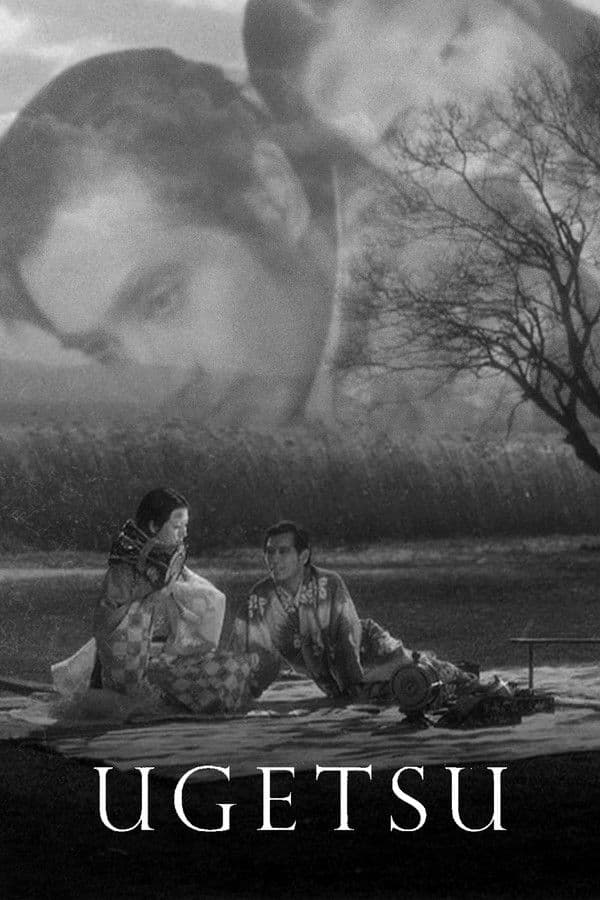
Ugetsu
1953 • Drama, Fantasy, Mystery • NR
In 16th century Japan, peasants Genjuro and Tobei sell their earthenware pots to a group of soldiers in a nearby village, in defiance of a local sage's warning against seeking to profit from warfare. Genjuro's pursuit of both riches and the mysterious Lady Wakasa, as well as Tobei's desire to become a samurai, run the risk of destroying both themselves and their wives, Miyagi and Ohama.
Runtime: 1h 36m
Buy related books from Amazon
As an Amazon Associate I earn from qualifying purchases. Read the full disclosure.
Why you should read the novels
Before Ugetsu became a world-cinema classic, its eerie heart beat inside Tales of Moonlight and Rain by Ueda Akinari. Reading these Edo-period ghost stories lets you savor their delicate psychology, Buddhist morality, and folkloric texture that the screen can only suggest. From the poignant grief of The Reed-Choked House to the seductive peril of A Serpent’s Lust, the prose envelops you in moonlit unease.
Guy de Maupassant’s How He Got the Legion of Honor adds a razor-edged strand of ambition and vanity that the film cleverly reimagines. On the page, Maupassant’s irony and social bite are immediate, exposing the comic-tragic hunger for status with unmatched clarity. It is a swift, bracing read that illuminates one of the film’s key narrative engines.
Choosing the books first gives you the source voices unfiltered—the rhythms, symbolism, and moral turns that shape Ugetsu’s spell. Modern English editions are accessible, annotated, and perfect for close comparison. Explore the stories to discover nuances, motives, and meanings that deepen every later viewing of the movie.
Adaptation differences
Ugetsu fuses two separate tales from Tales of Moonlight and Rain into a single, interwoven narrative. The film invents the peasant potter Genjuro and the would-be samurai Tobei, cross-cutting their desires and downfalls. In Akinari’s collection, these stories stand apart as discrete moral parables rather than a dual-hero structure.
The supernatural is transformed. Akinari’s A Serpent’s Lust features a seductress who is literally a snake spirit, a clear emblem of delusion and danger. The film recasts her as Lady Wakasa, a human ghost with a tragic backstory, shifting the emphasis from monstrous deception to mournful longing and the scars of feudal violence. This change softens the overt bestiary element and heightens pathos.
Historical and social realism are amplified in the adaptation. Mizoguchi locates the action amid civil war, war-profiteering, and banditry, folding in the pottery trade, battlefield chaos, and the brutalization of women (including Ohama’s coerced prostitution). These details are far more explicit than in Akinari’s more intimate, didactic tales. The subplot of Tobei’s meteoric rise through brazen deceit echoes Maupassant’s How He Got the Legion of Honor, transposed from French salons to Sengoku-era opportunism.
Endings and moral tones diverge. Akinari’s stories close with stark Buddhist-Confucian admonitions about karma and illusion; the film adds scenes of return and quiet atonement, including the lingering, protective presence of Miyagi’s spirit. Exorcism and revelation also differ in texture—from textualized ritual unmasking in the tales to a more character-centered reckoning onscreen—resulting in a gentler, humanistic coda compared with the book’s sharper moral finality.
Ugetsu inspired from
Tales of Moonlight and Rain
by Ueda Akinari
How He Got the Legion of Honor
by Guy de Maupassant