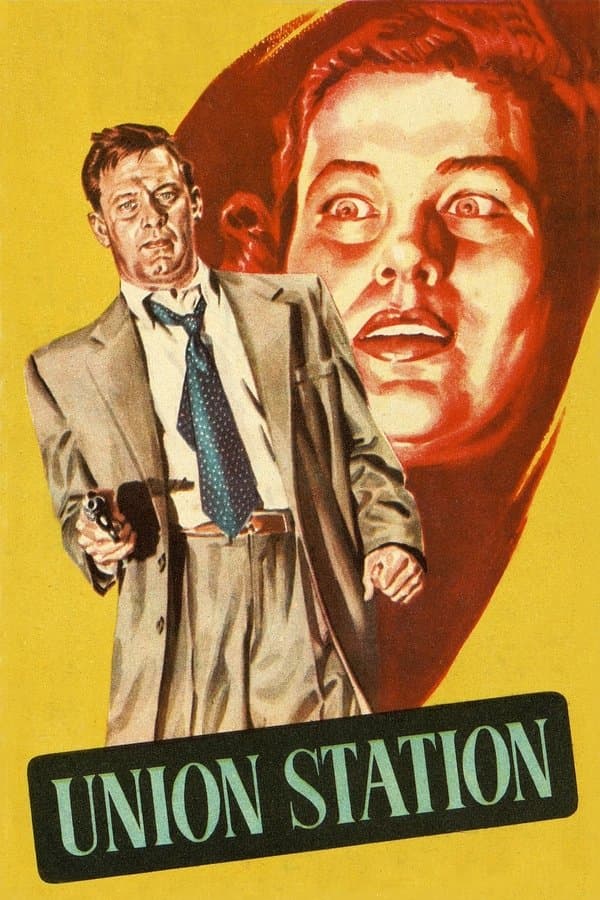
Union Station
1950 • Crime, Thriller • NR
Police catch a break when suspected kidnappers are spotted on a train heading towards Union Station. Police, train station security and a witness try to piece together the crime and get back the blind daughter of a rich business man.
Runtime: 1h 21m
Buy related books from Amazon
As an Amazon Associate I earn from qualifying purchases. Read the full disclosure.
Why you should read the novel
If Union Station (1950) hooked you with its relentless suspense, Thomas Walsh’s crime novel Nightmare in Manhattan delivers even more atmosphere, nuance, and pulse-quickening detail. On the page, the menace seeps from every corridor of a Manhattan rail terminal, building dread with layered character work and intricately timed set pieces only a novel can sustain. Reading the source lets you live inside the investigation instead of merely watching it.
For fans of film noir, classic crime fiction, and procedural thrillers, Nightmare in Manhattan is the definitive way to experience this story. Walsh’s precise pacing, street-level authenticity, and psychological shading create a richer tapestry than any 90-minute runtime can manage. Discover the original motives, red herrings, and human stakes that the movie could only hint at.
Choose the book first and get the unfiltered blueprint behind the suspense you love. Nightmare in Manhattan rewards readers with immersive scene-setting, deeper character motivations, and cleverly engineered twists that land harder on the page. If you admire Union Station’s taut thrills, you’ll find the novel’s broader canvas even more gripping—and unforgettable.
Adaptation differences
Setting and geography are the biggest shifts. The novel unfolds in Manhattan’s rail hub, exploiting the unique rhythms, traffic patterns, and urban density of New York City. The film relocates the action to a Union Station setting (shot in Los Angeles and framed as a Midwestern metropolis), changing the city’s texture, crowd behavior, and logistical possibilities of the chase.
Character focus and perspective also diverge. Walsh’s book spends more time inside multiple viewpoints—civilians, rail personnel, and investigators—building empathy and moral ambiguity. The movie consolidates roles, renames characters, and centers a tougher, more hardboiled police lead, pushing interior reflection aside for visual urgency and momentum.
Plot structure and method differ in emphasis. On the page, timetables, platform choreography, and procedural legwork carry significant weight, with subplots that widen the conspiracy’s footprint. The adaptation streamlines this into a lean cat-and-mouse thriller, prioritizing set-piece suspense, compressed timelines, and kinetic confrontations over the novel’s incremental investigative texture.
Tone and resolution shift toward Code-era certainties. Walsh’s narrative leans into ambiguity and human complexity, while the film amps up brutality, sharpens moral lines, and resolves conflicts with cleaner, punchier finality. The result is a starker, action-forward climax on screen versus a more psychologically shaded payoff in the book.
Union Station inspired from
Nightmare in Manhattan
by Thomas Walsh