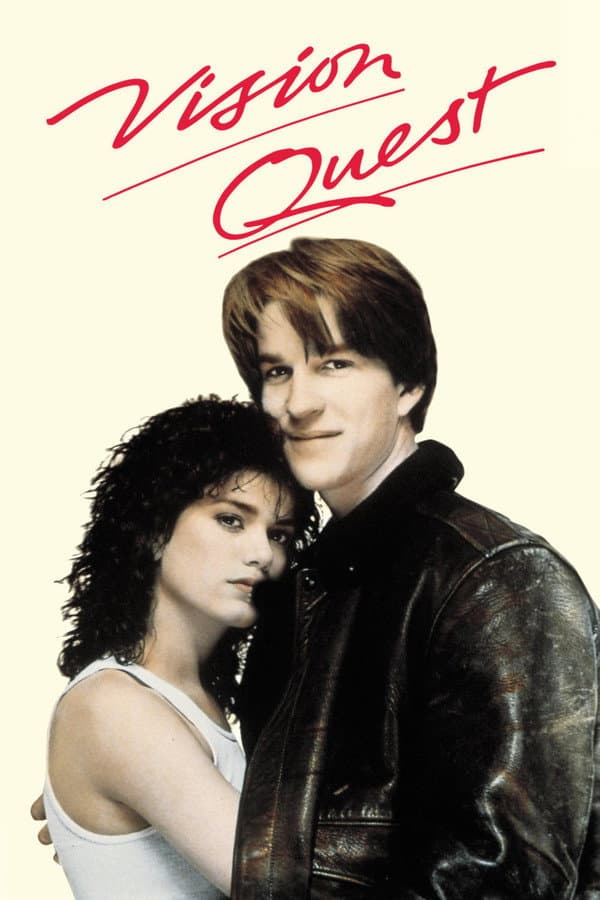
Vision Quest

Vision Quest

1985 • Drama, RomanceR
After deciding he needs to do something meaningful with his life, high school wrestler Louden Swain sets out on a mission to drop weight and challenge the area's undefeated champion, which creates problems with his teammates and health. Matters are complicated further when Louden's father takes in an attractive female drifter who's on her way to San Francisco.
Runtime: 1h 45m
Buy related books from Amazon

As an Amazon Associate I earn from qualifying purchases. Read the full disclosure.

Why you should read the novel

Before you stream the 1985 film, discover Vision Quest by Terry Davis, the original coming-of-age sports novel that created Louden Swain, Brian Shute, and the emotionally charged Spokane setting. The book’s voice, heart, and honesty make the source material unforgettable. Told in an intimate first-person style, Davis’s novel dives deeper than the movie into wrestling craft, weight cutting, friendship, desire, and family. You’ll feel every practice, bruise, doubt, and breakthrough through Louden’s raw, insightful perspective. If you want authentic high school wrestling and richer character growth, read the source. Vision Quest by Terry Davis delivers intensity, nuance, and meaning you won’t get from a two-hour screen adaptation—perfect for readers who crave depth over montage.

Adaptation differences

Point of view and depth: Terry Davis’s novel tells Louden Swain’s journey in a candid first-person voice packed with humor, insecurity, and self-examination. The film externalizes that inner life, relying on visuals, training montages, and soundtrack cues to convey transformation. Carla and relationships: On the page, Carla’s backstory and the slow, complicated push-pull with Louden receive far more nuance. The movie streamlines her into a cleaner catalyst for motivation and romance, softening the frank sexual detail and ambivalence the novel explores. Wrestling realism and mentorship: The book lingers on daily practices, grueling weight management, and the psychological toll of chasing an ambitious cut. The film compresses timelines into high-energy sequences and adds crowd-pleasing beats—like Madonna’s bar performances and the beloved Elmo locker-room pep talk—touches not found in the novel. Themes and climax: Both versions build to the Brian Shute showdown, but the movie shapes it as a triumphant sports crescendo. The novel frames the match as one step in a broader ‘vision quest’ about identity, academics, and adulthood, leaving more reflective aftershocks beyond a single big win.

Vision Quest inspired from

Vision Quest
by Terry Davis