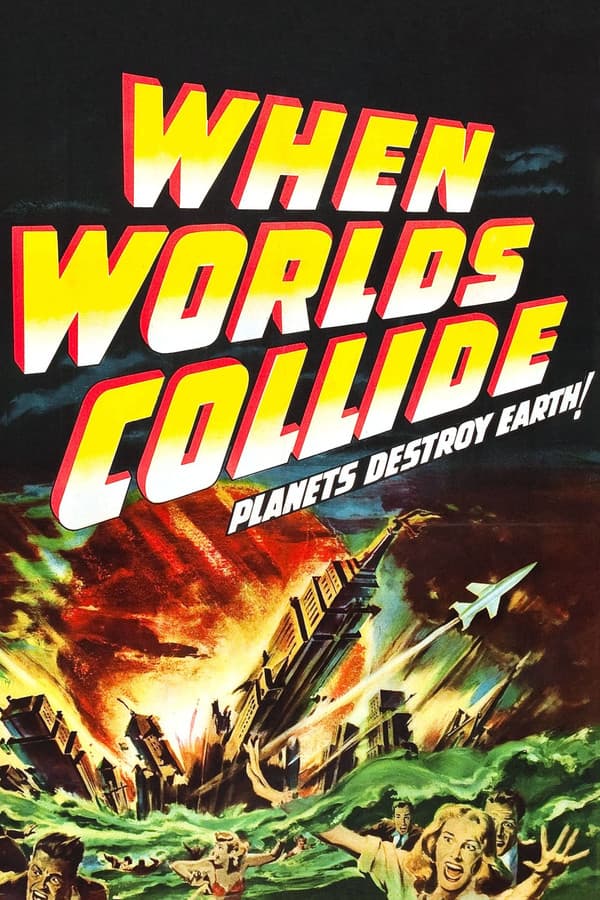
When Worlds Collide
1951 • Drama, Science Fiction • G
When a group of astronomers calculate a star is on a course to slam into Earth, a few days before, it's accompanying planet will first pass close enough to the Earth to cause havoc on land and sea. They set about building a rocket so a few selected individuals can escape to the planet.
Runtime: 1h 23m
Buy related books from Amazon
As an Amazon Associate I earn from qualifying purchases. Read the full disclosure.
Why you should read the novel
Read the original When Worlds Collide novel by Philip Wylie and Edwin Balmer to experience the full, visionary story behind the 1951 movie. The book offers bigger ideas, deeper world-building, and sharper scientific speculation that reward every page.
On the page, the discovery of two rogue planets ignites a global race to build ark ships, portrayed with tense politics, engineering hurdles, and moral choices the film only skims. Meet Cole Hendron’s team in richer detail and feel the stakes rise chapter by chapter.
For fans of classic science fiction, When Worlds Collide (the book) is essential reading. Its brisk prose, prophetic themes, and relentless momentum provide an immersive, thought-provoking experience no adaptation can match.
Adaptation differences
Planetary names and scope shift notably from book to screen: the novel’s Bronson Alpha and Bronson Beta become Bellus and Zyra in the film. The movie condenses the timeline and narrows the global perspective to a single U.S.-centered project, while the book traces international reactions and parallel efforts.
Selection and character emphasis diverge. The novel foregrounds merit-and-skills selection—with frank 1930s eugenics overtones—where youth, health, and expertise dominate. The film softens this with a lottery element and a melodramatic love triangle, and adds a clear antagonist in the wheelchair-bound financier Sydney Stanton to heighten conflict.
Science and logistics receive far more depth in the book. Wylie and Balmer detail orbital mechanics, materials challenges, and competing ark ships alongside broader social collapse. The film streamlines these into a single ramp-launched rocket, prioritizing spectacular disasters and set pieces over the novel’s granular engineering and geopolitical texture.
Endings and tone differ as well. The movie concludes soon after landing on the new world with a brief, idealized vista, emphasizing hope and biblical resonance. The novel builds a fuller bridge to settlement and continuity and directly sets up the sequel, After Worlds Collide, expanding the saga far beyond the film’s final image.
When Worlds Collide inspired from
When Worlds Collide
by Philip Wylie, Edwin Balmer