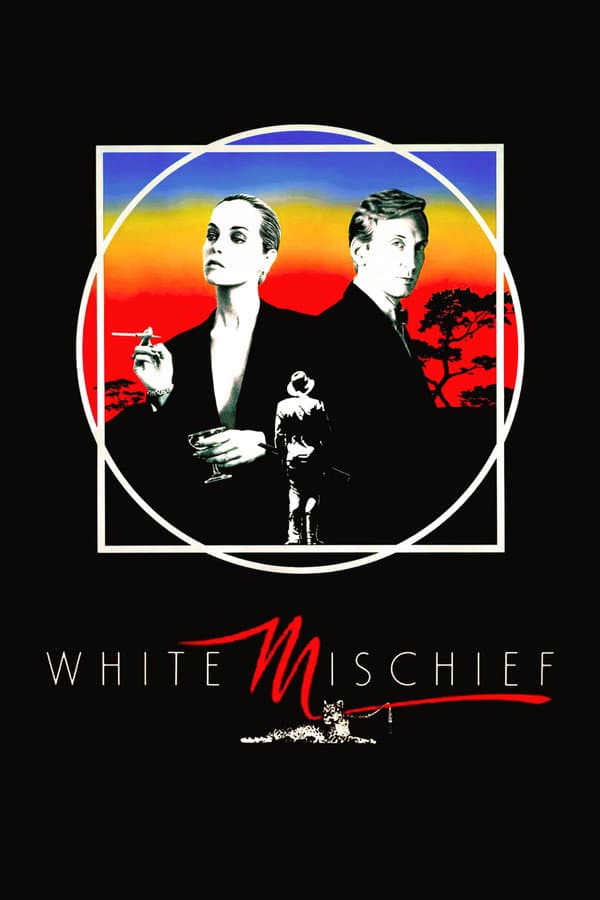
White Mischief
1987 • Crime, Drama, Romance, Thriller • R
A millionaire past his prime and his young wife arrive in Kenya circa 1940 to find that the other affluent British expatriates are living large as the homefront gears up for war. They are busy swapping partners, doing drugs, and attending lavish parties and horse races. She begins a torrid affair with one of the bon vivants, and her husband finds out and confronts them. The husband and wife decide to break up peacefully, but the bon vivant is murdered and all the evidence points to the husband.
Runtime: 1h 47m
Buy related books from Amazon
As an Amazon Associate I earn from qualifying purchases. Read the full disclosure.
Why you should read the novel
Before you press play, open James Fox's investigative classic, White Mischief. This acclaimed true-crime book plunges you into 1940s Kenya, the hedonistic Happy Valley set, and the notorious murder of the Earl of Erroll with a depth no film can match.
Fox combines on-the-ground reporting, archival research, and interviews to reconstruct the crime and its tangled social world. You get courtroom drama, colonial politics, and intimate portraits of the real figures behind the scandal, all shaped by rigorous evidence and multiple perspectives.
If you crave historical accuracy, psychological nuance, and the thrill of a puzzle that resists easy answers, the book delivers. White Mischief by James Fox is the definitive account—rich, absorbing, and essential reading for true-crime and history lovers.
Adaptation differences
Scope and focus: The film spotlights the central love triangle and the glamorous surface of the Happy Valley set, while the book ranges far wider—detailing the colony’s social hierarchies, political tensions, and the broader cast of suspects and witnesses that shaped the case.
Narrative structure: On screen, events are compressed and streamlined to create a clear dramatic arc. The book unfolds as a layered investigation, moving between timelines, testimonies, and documentary sources, allowing contradictions and uncertainties to stand rather than forcing tidy resolutions.
Characters and nuance: The adaptation condenses or composites figures and pares back motivations to sustain momentum and romance. James Fox’s book develops fuller biographies, competing motives, and the messy realities of reputation, money, sex, and power in wartime Kenya, yielding a more complex web of possibilities.
Ambiguity and evidence: The film tends to guide viewers toward a more decisive interpretation of who might be responsible, whereas the book foregrounds evidence, counterevidence, and unanswered questions. Fox’s methodical treatment of trial records, press coverage, and personal testimonies invites readers to weigh the case themselves—highlighting ambiguities the adaptation necessarily softens.
White Mischief inspired from
White Mischief
by James Fox