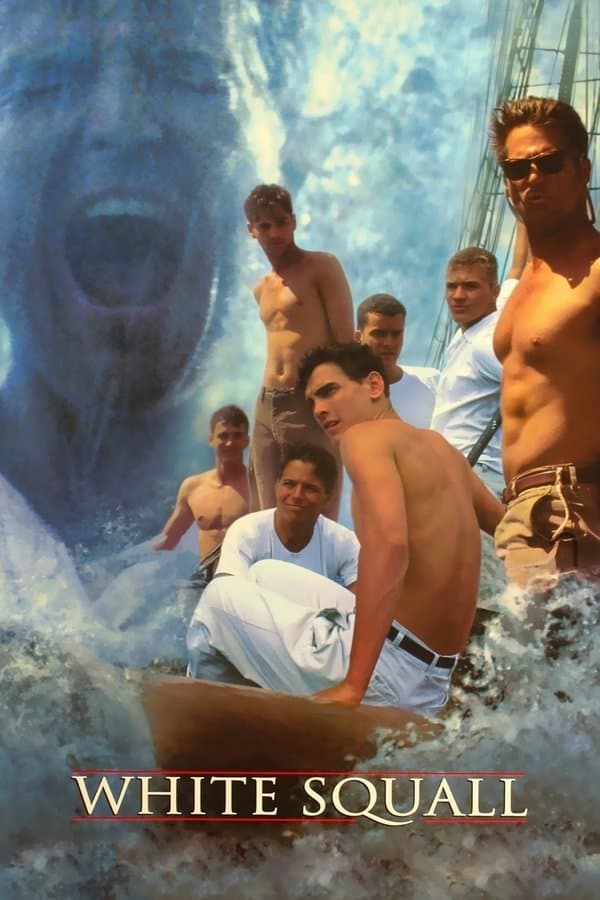
White Squall
1996 • Adventure, Drama • PG-13
In 1960, a hardy group of prep school students boards an old-fashioned sailing ship. With Capt. Christopher Sheldon at the helm, the oceangoing voyage is intended to teach the boys fortitude and discipline. But the youthful crew are about to get some unexpected instruction in survival when they get caught in the clutches of a white squall storm.
Runtime: 2h 9m
Buy related books from Amazon
As an Amazon Associate I earn from qualifying purchases. Read the full disclosure.
Why you should read the novel
Discover the true story behind White Squall by reading The Last Voyage of the Albatross by Charles Gieg Jr. This gripping nonfiction account places you on deck with the students and crew as they learn seamanship, face the elements, and confront a life-changing disaster at sea.
Unlike a two-hour movie, the book offers a vivid, firsthand perspective: real logbook rhythms, authentic nautical detail, and the day-to-day discipline that forged character long before the storm hit. It’s perfect for readers who love maritime history, survival narratives, and coming-of-age memoirs grounded in fact.
Before you stream the film, experience the original voice that inspired it. The Last Voyage of the Albatross gives you context, craft, and courage in the sailors’ own words—an essential read for anyone searching for the most complete and accurate version of the events that shaped White Squall.
Adaptation differences
Point of view and scope differ markedly. The memoir is a firsthand, documentary-style narrative that moves through training, watches, maintenance, and weather decisions with methodical clarity. The film reshapes this material into a streamlined ensemble drama, compressing time and ports of call to fit a conventional arc of rivalry, crisis, and resolution.
Characters are more composite and dramatized on screen. While the book focuses on the crew’s collective experience, the adaptation amplifies distinct student archetypes and interpersonal conflicts, adding or heightening rivalries, mischief ashore, and moments of rebellion to intensify tension. These cinematic embellishments serve theme and pace, whereas the memoir’s portraits are grounded in observation and crew culture.
Nautical and meteorological detail are simplified for impact. The book explains sail handling, drills, watch systems, and practical navigation, building a cumulative sense of seamanship. The movie prioritizes visual set pieces and frames the storm as a defining, symbolic “white squall,” with foreshadowing and stylized imagery. The memoir treats the weather as a sudden, violent reality rather than a mythic antagonist.
The aftermath and inquiry diverge in tone. On the page, the investigation reads as procedural and reflective, emphasizing testimony, responsibility, and lessons learned. On screen, it becomes an emotional climax that foregrounds loyalty and identity, including the ship’s-bell motto “Where we go one, we go all,” a symbolic throughline the film popularizes far more than the memoir. The result is a courtroom-like finale tailored to cinematic catharsis rather than the memoir’s measured reconstruction.
White Squall inspired from
The Last Voyage of the Albatross
by Charles Gieg Jr., Felix Sutton