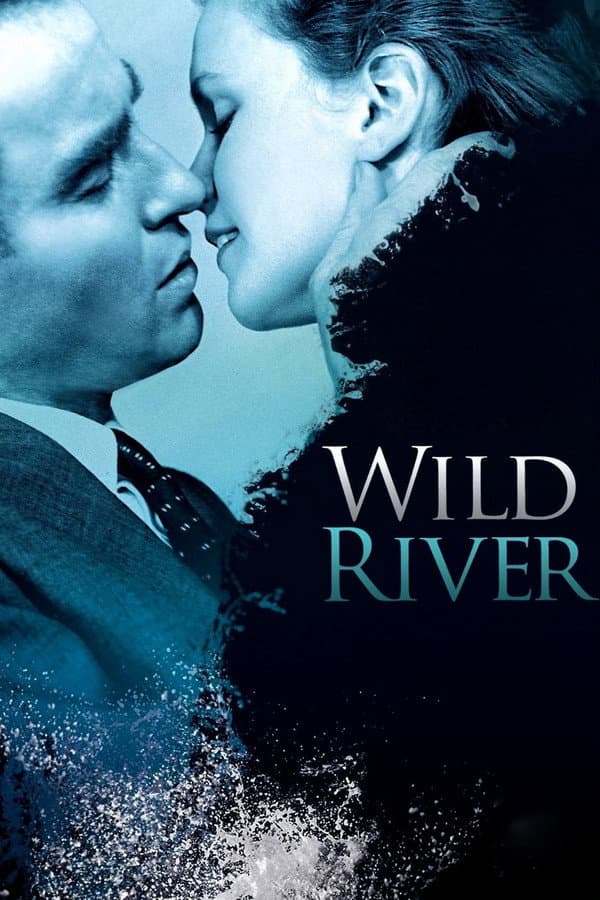
Wild River
1960 • Drama, Romance
A young bureaucrat for the Tennessee Valley Authority goes to rural Tennessee to oversee the building of a dam. He encounters opposition from the local people, in particular a farmer who objects to his employment (with pay) of local black laborers. Much of the plot revolves around the eviction of a stubborn octogenarian from her home on an island in the river, and the young man's love affair with that woman's widowed granddaughter. Preserved by the Academy Film Archive in partnership with The Film Foundation.
Runtime: 1h 50m
Buy related books from Amazon
As an Amazon Associate I earn from qualifying purchases. Read the full disclosure.
Why you should read the novels
If Wild River (1960) moved you, experience the deeper, richer source material that inspired it: Borden Deal’s Dunbar's Cove and William Bradford Huie’s Mud on the Stars. These novels plunge you into the Tennessee Valley Authority era with layered characters and unflinching social insight the screen can only suggest.
Reading the books gives you the sweeping context behind the movie’s conflict—land rights, generational ties, class, and race—told with detail and intimacy. Dunbar's Cove paints a community on the brink of change, while Mud on the Stars explores the Southern social fabric that shapes every choice and consequence.
For readers searching “Wild River book,” “Dunbar's Cove novel,” or “Mud on the Stars by William Bradford Huie,” the novels deliver the definitive New Deal–era story. Discover the original voices, fuller histories, and moral complexity the film only hints at—on the page, where every nuance counts.
Adaptation differences
Book vs. movie: Wild River condenses two separate novels—Dunbar's Cove and Mud on the Stars—into one streamlined narrative. The film creates composite characters and merges plotlines, prioritizing a single emotional throughline over the broader, community-wide focus and multiple arcs found across the books.
Perspective and scope shift notably. The novels offer wider, multi-voiced examinations of the TVA’s arrival, including land politics, small-town economics, and generational memory. The movie largely centers on the TVA agent’s dilemma and a central romance, trimming subplots and internal monologues that give the books their granular social texture.
Tone and emphasis differ, too. The books delve more deeply into class tensions and race relations in the Depression and New Deal South, often with tougher edges. The 1960 adaptation softens or compresses some of that material for mainstream audiences, favoring character intimacy and visual storytelling over the novels’ policy details and sharper critiques.
Structure and outcomes are tighter on screen. Timelines are compressed, settings amalgamated, and certain events re-ordered for cinematic momentum. Where the novels allow more open-ended fallout and community repercussions, the film seeks a clearer, bittersweet resolution—trading some ambiguity and breadth for focus and immediacy.
Wild River inspired from
Dunbar's Cove
by Borden Deal
Mud on the Stars
by William Bradford Huie