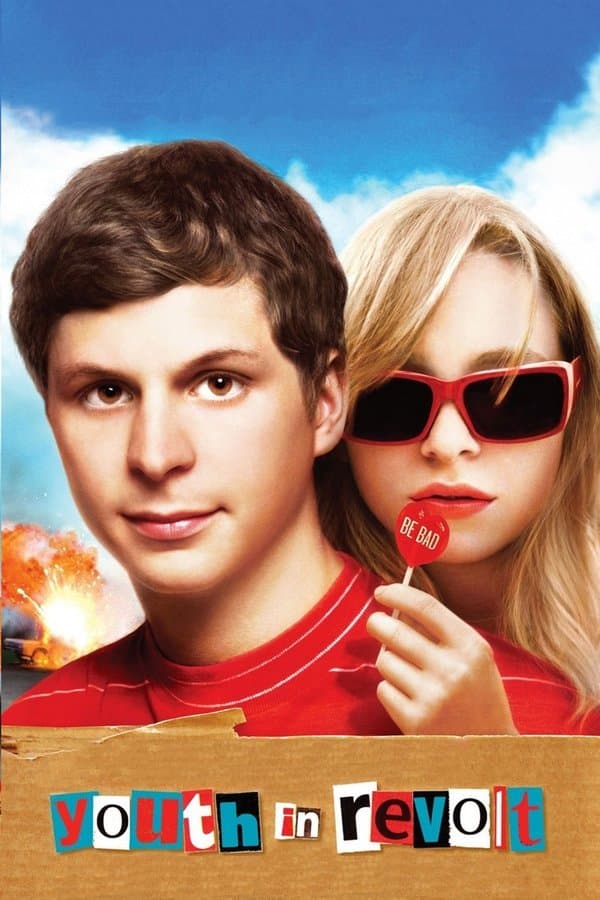
Youth in Revolt
2009 • Comedy, Drama, Romance • R
As a fan of Albert Camus and Jean-Luc Godard, teenage Nick Twisp is definitely out of his element when his mother and her boyfriend move the family to a trailer park. When a pretty neighbor named Sheeni plays records by French crooners, it's love at first sight for frustrated and inexperienced Nick. Learning that she is dating someone, Nick launches a hilarious quest to find his way into Sheeni's heart -- and bed.
Runtime: 1h 29m
Buy related books from Amazon
As an Amazon Associate I earn from qualifying purchases. Read the full disclosure.
Why you should read the novel
Before you stream the film, meet Nick Twisp where he’s funniest and most fearless: on the page. C.D. Payne’s Youth in Revolt lets you inhabit Nick’s diary, a razor-sharp voice brimming with audacity, wit, and painfully honest self-awareness that no screen can fully capture.
The novel’s comic anarchy runs deeper and wilder—more schemes, more satire, more deliciously bad decisions—while giving Sheeni, family, and frenemies richer nuance. You’ll feel the stakes rise as Nick’s plans spiral, not just watch them, enjoying layers of humor and heart that reward every chapter.
If you crave a coming-of-age story that’s smarter, riskier, and outrageously entertaining, choose the book. Youth in Revolt by C.D. Payne delivers the definitive Nick Twisp experience for readers who love irreverent satire, clever prose, and unforgettable characters.
Adaptation differences
Scope and compression: The 2009 movie adapts only a slice of Nick Twisp’s sprawling journals, merging timelines, condensing episodes, and trimming subplots to fit a brisk feature. The book journeys further, with extended misadventures and consequences that the film only hints at or omits entirely.
Narrative voice and format: Payne’s novel unfolds as Nick’s diary, packed with sardonic asides, meticulous lists, and a confessional tone that builds intimacy and irony. The film uses voiceover and visualizes François Dillinger, but it can’t replicate the full bite, rhythm, and textual playfulness of the written journals.
Tone and content: On the page, the comedy is darker, more transgressive, and more satirically pointed toward adult hypocrisy and teen desire. The movie reshapes that energy into a quirkier, lighter rom-com vibe with stylish flourishes, dialing down some of the novel’s more brazen set pieces and messy repercussions.
Setting, arcs, and resolution: The book’s longer timeline and period-specific texture provide a richer sense of place and cultural detail. The film updates and streamlines events into a self-contained arc, crafting a neater resolution around Nick’s legal troubles and romance, while the novel continues to escalate complications well beyond the movie’s endpoint.
Youth in Revolt inspired from
Youth in Revolt: The Journals of Nick Twisp
by C.D. Payne