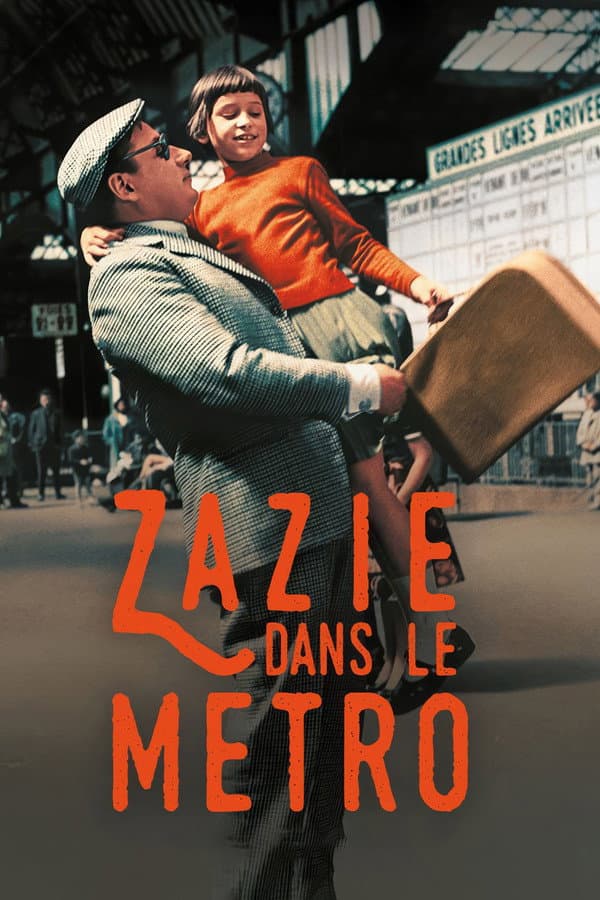
Zazie dans le Métro
1960 • Comedy, Fantasy
A brash and precocious ten-year-old comes to Paris for a whirlwind weekend with her rakish uncle.
Runtime: 1h 33m
Buy related books from Amazon
As an Amazon Associate I earn from qualifying purchases. Read the full disclosure.
Why you should read the novel
Choosing between the film and the original? Read Zazie in the Metro by Raymond Queneau first. This landmark of modern French literature—superbly available in English—crackles with wordplay, street argot, and linguistic mischief no camera can fully capture.
On the page, Zazie’s irreverent voice drives the comedy and satire, and Barbara Wright’s renowned English translation preserves Queneau’s puns and phonetic pyrotechnics. You’ll savor jokes, rhythms, and layers the movie can only hint at.
Perfect for readers, students, and book clubs, the novel is short, dazzling, and endlessly discussable. Discover why this Raymond Queneau classic is essential reading—download the ebook or grab the paperback and enjoy the book’s full brilliance.
Adaptation differences
Book vs movie: the most striking difference is language. Queneau builds humor from phonetic spellings, puns, and street slang; Barbara Wright’s English translation brilliantly mirrors much of it. Louis Malle’s film translates that verbal fireworks into visual gags, sound effects, and rapid cutting, but inevitably loses many word-level nuances.
Tone diverges too. The novel’s satire of adult hypocrisy and authority can feel sharper and occasionally bawdier on the page, while the film leans into high-energy slapstick and cartoon exuberance. Characters who carry a faint menace or bite in the book often read as gentler, broader comic types on screen.
Structure and pacing are streamlined in the adaptation. The book wanders delightfully through digressions and side encounters; the film compresses episodes, merges minor figures, and amps up set pieces—like speeded-up chases and chaotic restaurant sequences—to sustain visual momentum in classic French New Wave style.
Perspective shifts with the medium. The novel’s playful narrator and free-indirect access to Zazie’s thoughts give intimate, linguistic texture to her coming-of-age. The film adds meta-cinematic winks and physical comedy, but it can’t reproduce the interior voice; reading the book reveals themes, jokes, and stylistic inventiveness that the screen can only approximate.
Zazie dans le Métro inspired from
Zazie in the Metro
by Raymond Queneau