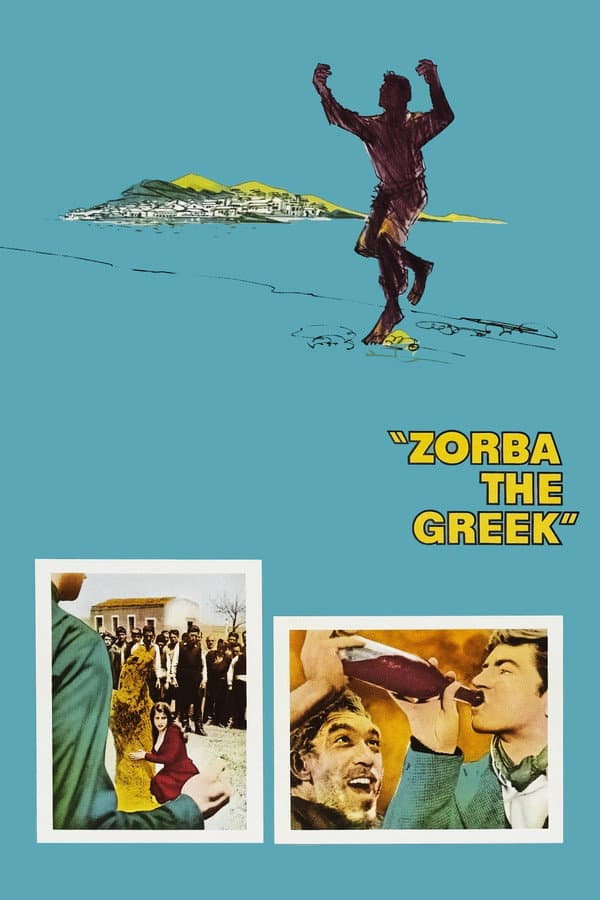
Zorba the Greek
1964 • Drama • NR
An uptight English writer traveling to Crete on a matter of business finds his life changed forever when he meets the gregarious Alexis Zorba.
Runtime: 2h 22m
Buy related books from Amazon
As an Amazon Associate I earn from qualifying purchases. Read the full disclosure.
Why you should read the novel
Choose the source over the screen. Nikos Kazantzakis’s Zorba the Greek offers a living, breathing voice that plunges you into Crete’s wind, rock, and sea—textures no lens can truly reproduce.
Beyond the film’s images lies the novel’s pulse: a searching first-person narrator wrestling with freedom, faith, desire, and the pull of the Buddha versus the call of the earth. If you want the full philosophy, poetry, and paradox that made Zorba unforgettable, read the book.
Discover why generations return to this classic in print, ebook, and audiobook. Explore modern translations, helpful introductions, and annotations that illuminate Kazantzakis’s ideas—then feel the story expand beyond any two-hour adaptation.
Adaptation differences
Narrator and perspective shift: the 1964 film names the intellectual “Basil” and externalizes his journey, while the novel’s unnamed first-person narrator (“Boss”) invites you into dense inner monologues, letters, and meditations the movie largely trims.
Philosophical breadth: Kazantzakis’s book dwells on spiritual struggle—Buddhism, freedom, responsibility, and the tension between contemplation and action. The film prioritizes character chemistry and visual storytelling, reducing the long reflective passages and explicit political and mystical threads that shape the novel’s meaning.
Structure and ending: the adaptation condenses time and episodes, sharpening the timber-cable venture into set-piece spectacle. The famous beach dance (sirtaki) and Mikis Theodorakis’s score are cinematic creations; the novel does not conclude with that celebratory scene, ending instead on a more contemplative, epistolary note.
Character emphasis and tone: Madame Hortense and the Widow remain pivotal, but the film heightens melodrama and communal violence on-screen, while the book supplies wider social context and nuance. Zorba’s backstory, tall tales, and contradictions run deeper in the novel, where his earthy wisdom challenges the narrator—and the reader—more directly than the movie’s streamlined arc.
Zorba the Greek inspired from
Zorba the Greek
by Nikos Kazantzakis