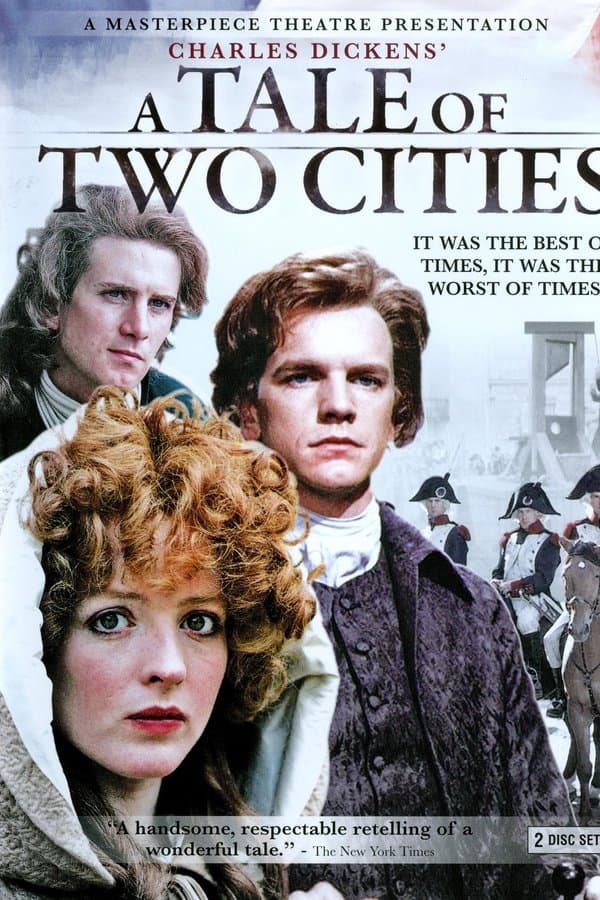
A Tale of Two Cities
1989 • Drama • TV-PG
A pair of lookalikes, one a former French aristocrat and the other an alcoholic English lawyer, fall in love with the same woman amongst the turmoil of the French Revolution.
Buy related books from Amazon
As an Amazon Associate I earn from qualifying purchases. Read the full disclosure.
Why you should read the novel
Before watching the 1989 TV series A Tale of Two Cities, experience the full power of Charles Dickens on the page. The novel offers richer historical texture, sharper moral contrasts, and a narrative sweep that no screen can fully contain. Reading the original lets you savor Dickens's language, irony, and foreshadowing at your own pace.
The book delivers deeper character journeys for Sydney Carton, Charles Darnay, Lucie Manette, and the Defarges, revealing motives, memories, and inner conflicts that brief scenes can only hint at. Subplots and side characters often trimmed for television add humor, tension, and resonance in print. Choose a reliable unabridged edition and discover layers of wit, pathos, and social critique.
If you want the definitive tale of love, sacrifice, and revolution, read the classic novel first. It supplies historical context, memorable set pieces, and the thematic architecture that adaptations rely on. For literature lovers and history fans, the book remains the most complete and rewarding version of this timeless story.
Adaptation differences
Structure and pacing differ significantly between the novel and the 1989 TV series. Dickens builds momentum through a carefully layered, three-book design with extensive foreshadowing and narrative asides. Screen storytelling condenses, reorders, or omits episodes to maintain runtime, which can flatten build up and minimize recurring motifs.
Characterization in the book is more expansive and interior. Sydney Carton's self-reckoning, Dr. Manette's trauma and relapses, and Madame Defarge's motives and symbolism receive far greater space on the page. Television generally reduces interior monologue and psychological depth, merges minor figures, and tones down Dickens's darker comic beats, altering how arcs land emotionally.
Themes and imagery shift in emphasis. The novel's rhetoric, biblical and legal allusions, and authorial commentary on justice, vengeance, and resurrection are central to its effect. A screen version must externalize these through dialogue and visuals, often simplifying satire, compressing courtroom detail, and streamlining symbols such as knitting, wine, and echoing footsteps.
Endings and tonal balance also vary. Dickens closes with an extended, visionary coda that frames the sacrifice within hope and historical continuity. Television typically abbreviates or reframes this passage, trims side resolutions, and softens or intensifies violence to fit broadcast standards. The result is a leaner, more linear experience that conveys the plot but cannot fully replicate the novel's scope and resonance.
A Tale of Two Cities inspired from
A Tale of Two Cities
by Charles Dickens