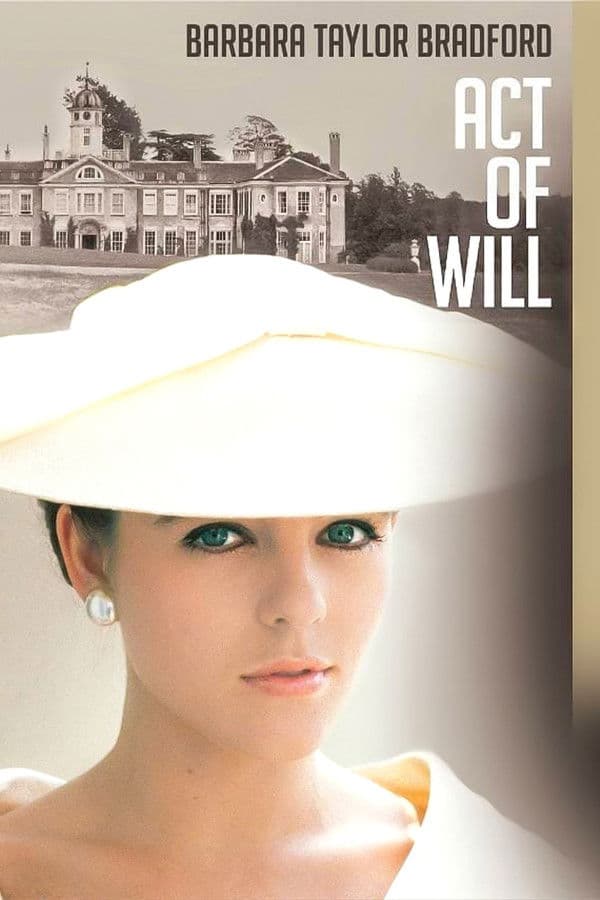
Act of Will
1989 • Drama
Act of Will is a four-part 1989 British television serial directed by Don Sharp, based on Barbara Taylor Bradford's 1986 novel of the same name.
Three beautiful women – grandmother, mother and daughter – struggle bravely through five eventful decades of hidden love, high drama and sudden death. From 1926 to present day, from the Yorkshire Dales to London, Paris and New York, how each woman commits an act of will that changes their life and world.
Buy related books from Amazon
As an Amazon Associate I earn from qualifying purchases. Read the full disclosure.
Why you should read the novel
Before pressing play, open the novel that inspired the series: Barbara Taylor Bradford’s Act of Will. On the page, this sweeping family saga unfolds with richer context, layered backstories, and the kind of emotional nuance that television can only hint at. Bradford’s keen eye for class, ambition, and love gives you a grand, panoramic experience from the very first chapter.
Reading the book means living inside the characters’ hearts and minds—understanding their motives, their compromises, and the private victories that shape their destinies. Bradford’s prose brings workplaces, drawing rooms, and turning-point decisions to life with elegant detail and purposeful momentum. Fans of epic romance, rags-to-riches journeys, and multigenerational drama will find a deeper, more rewarding journey in print.
For readers searching “Act of Will book,” “Barbara Taylor Bradford novel,” or “best family saga to read,” the original novel delivers an uncut story with extra layers of intrigue, business stakes, and personal transformation. Available in paperback, ebook, and audiobook, Act of Will is perfect for book clubs and readers who prefer the author’s full vision over a condensed screen adaptation.
Adaptation differences
The Act of Will miniseries compresses the novel’s multi-decade scope to fit a limited runtime, streamlining timelines and reordering a few developments for episodic momentum. As a result, certain transitional chapters and incremental character turns that unfold patiently in the book appear more swiftly on screen, emphasizing big moments over the quieter beats that shape them.
Several supporting roles are reduced or combined in the adaptation, which narrows the web of relationships and shifts focus to the central romantic and family arcs. While the novel traces a wider constellation of friends, rivals, and mentors—and how each nudges the heroine’s rise—the series typically spotlights fewer figures to keep the plot tightly paced.
Tone and theme also diverge. The television version leans into glamour, romance, and cliffhangers, whereas the book balances those elements with richer business intrigue, class dynamics, and interior reflection. Readers will notice how the novel’s internal monologues and detailed negotiations sharpen motivations and moral stakes that the screen can only suggest.
Some settings and journeys are abbreviated or relocated for visual economy, and a handful of reveals land at different moments to heighten drama near episode breaks. The book’s closing movements offer added context and resolution—particularly around consequences and future prospects—making the novel feel more expansive. If you want the fullest understanding of character decisions and long-term outcomes, the source text goes well beyond the adaptation.
Act of Will inspired from
Act of Will
by Barbara Taylor Bradford