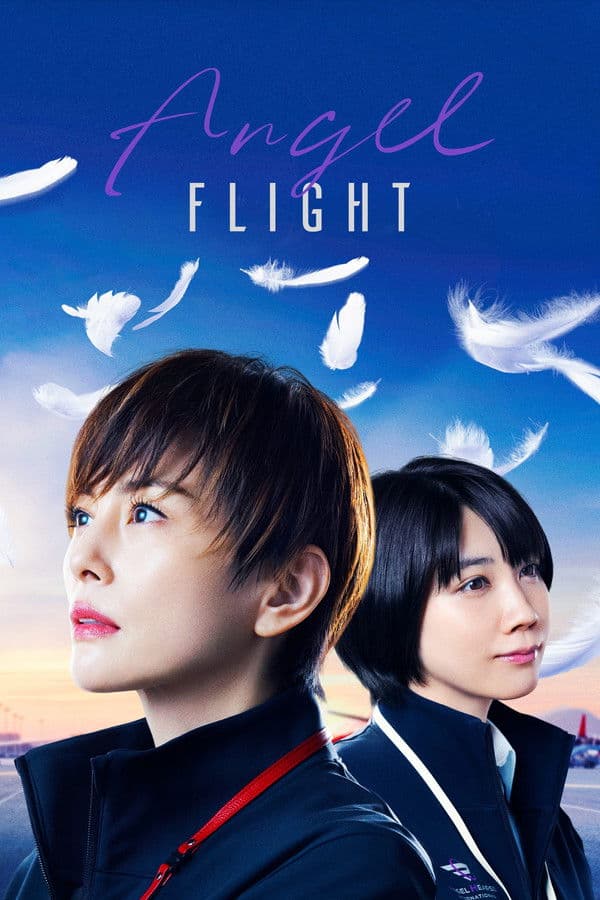
Angel Flight
2023 • Drama
Ryoko Yonekura stars in this series written by Ryota Kosawa about specialists who transport the deceased back home. The company Angel Hearse is run by Nami Izawa and Kashiwagi. A drama that portrays love between the deceased and the bereaved.
Buy related books from Amazon
As an Amazon Associate I earn from qualifying purchases. Read the full disclosure.
Why you should read the novel
If Angel Flight (2023) moved you on screen, the source book Angel Flight: International Repatriation Specialists by Ryoko Sasa delivers the true, deeply reported stories behind the headlines. This acclaimed nonfiction work takes you inside real repatriation cases, honoring the deceased while illuminating the compassion, expertise, and cross-border coordination required to bring loved ones home.
Reading the Angel Flight book offers a richer, more complete understanding of the profession: meticulous logistics, cultural and religious customs, consular negotiations, airline policies, and the quiet heroism of professionals who navigate grief with dignity. For fans of narrative journalism and real-life human drama, it’s a compelling, authoritative counterpart to the TV series.
Choose the book if you want authenticity, nuance, and layered context that television can only hint at. Discover why readers searching for Angel Flight book vs series comparisons consistently praise Ryoko Sasa’s empathetic reporting, memorable true stories, and practical insights you’ll revisit long after the final page.
Adaptation differences
Angel Flight (2023) is adapted from Ryoko Sasa’s nonfiction reportage, and that origin shapes the core differences. The book presents real cases and industry practices with journalistic depth, while the series transforms them into scripted, character-driven episodes designed for emotional arcs and weekly catharsis. If you’re researching Angel Flight book vs series, start with this: the book is true-to-life nonfiction; the show is a dramatization inspired by it.
Structure and pacing also diverge. The book organizes material around actual repatriation operations, professional roles, and ethical dilemmas, lingering on details that matter in real life—documentation, chain of custody, international regulations, and cultural protocols. The TV adaptation condenses timelines, streamlines procedures, and blends or composites cases to fit a tight episode format, prioritizing momentum, cliffhangers, and accessible exposition for new viewers.
Tone is another key difference between the Angel Flight book and the 2023 series. Sasa’s text is restrained and observational, letting facts, interviews, and on-the-ground scenes convey emotion. The series heightens interpersonal conflict, workplace banter, and backstory to create a cohesive ensemble narrative. It often spotlights moments of triumph or confrontation that read powerfully on screen but are simplified compared to the book’s quieter, procedural nuance.
Finally, scope and focus shift. The nonfiction book casts a wide lens on the profession—policy, training, interagency cooperation, and cultural sensitivity—while the adaptation narrows in on a core team and selects representative challenges. For viewers comparing Angel Flight differences between book and show, the takeaway is clear: watch the series for dramatized empathy and momentum; read the book for comprehensive context, real-world complexity, and a fuller understanding of international repatriation.
Angel Flight inspired from
Angel Flight: International Repatriation Specialists
by Ryoko Sasa