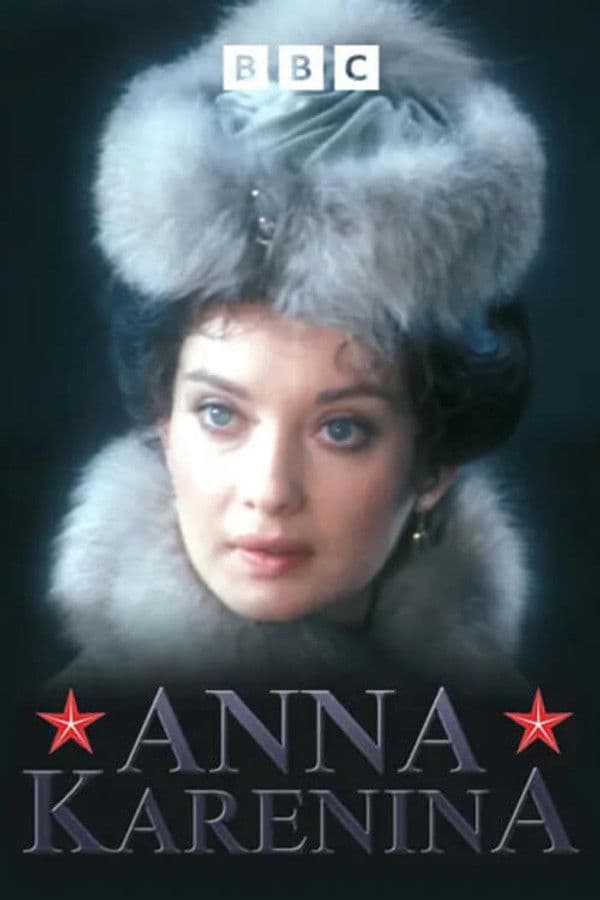
Anna Karenina
1977 • Drama • TV-14
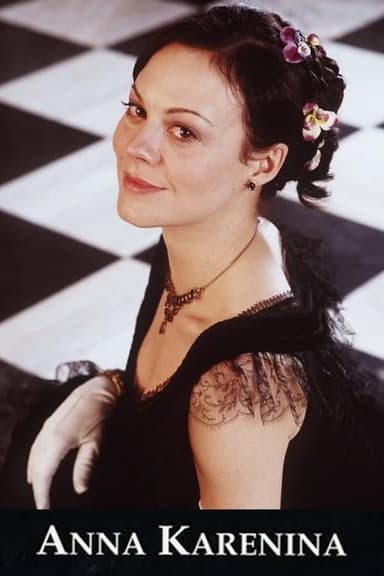
Anna Karenina was a 1977 BBC television adaptation of Leo Tolstoy's novel & tragic story of the love affair between Vronsky, a Russian Count and Anna Karenina, a married upper class woman. Nicola Pagett takes the role of Anna, a young woman who is married to a man twenty years her senior (Eric Porter), and who begins a passionate affair with the handsome Count Vronsky (Stuart Wilson). When she falls pregnant, Anna decides to dissolve her marriage and wed Vronsky, but true happiness proves elusive.
Buy related books from Amazon
As an Amazon Associate I earn from qualifying purchases. Read the full disclosure.
Why you should read the novel
Before pressing play on the 1977 TV series, read Anna Karenina by Leo Tolstoy to encounter the unabridged emotional power of the original classic. The novel’s sweeping narrative, psychological depth, and vivid portrait of nineteenth‑century Russian society are unmatched on screen.
Tolstoy’s prose brings Anna, Vronsky, Karenin, Levin, and Kitty to unforgettable life, exploring love, marriage, class, faith, and identity with nuance the camera can’t fully capture. Choose a trusted English translation—such as Pevear and Volokhonsky, Maude, or Garnett—to enjoy clarity, musicality, and historical precision.
If you love period drama, reading the source novel delivers a richer, more immersive experience than any adaptation. Find Anna Karenina in print, ebook, or audiobook today and discover why Tolstoy’s masterpiece remains essential reading for classic literature and book club enthusiasts.
Adaptation differences
The 1977 TV series focuses primarily on Anna and Vronsky’s tragic affair, streamlining the novel’s broader architecture. Tolstoy alternates these chapters with Levin’s agricultural experiments, political debates, and spiritual searching; the show compresses and rearranges this material to maintain narrative momentum.
Much of Tolstoy’s power comes from interiority—Anna’s spiraling self‑doubt, Karenin’s wounded pride and duty, Levin’s existential crisis—which the book renders through inner monologue and omniscient narration. The series necessarily externalizes these layers into dialogue and performance, reducing the philosophical and psychological nuance readers experience on the page.
Tolstoy’s social canvas is vast: salons, elections, peasant reforms, hunting and mowing scenes, and the rhythms of city and country life. The adaptation condenses secondary plots and side characters, narrowing the social critique and trimming political and theological discussions that are central to the novel’s texture.
After Anna’s death, the book continues with an extended final section in which Levin confronts meaning, faith, and everyday goodness. Most screen versions, including the 1977 serial, reduce or hasten this epilogue, shifting the emphasis from Tolstoy’s ultimate moral and spiritual resolution to the romance’s tragic climax.
Anna Karenina inspired from
Anna Karenina
by Leo Tolstoy