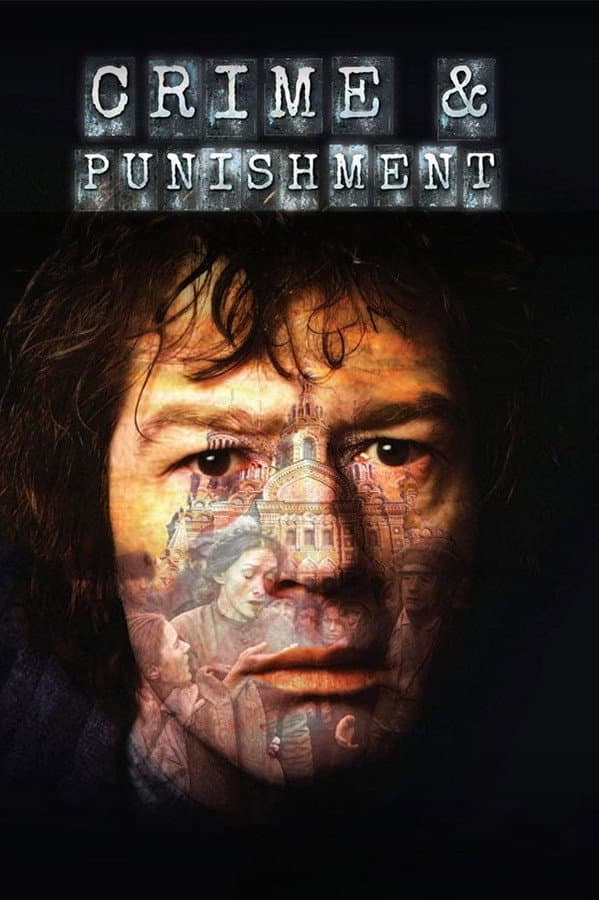
Crime and Punishment
1979 • Crime, Drama
Former student Raskolnikov is pushed to murder when struggling to pay the rent on his apartment. When the murder is being investigated by the police, Raskolnikov struggles between trying to hide his guilt and the pressure to confess.
Buy related books from Amazon
As an Amazon Associate I earn from qualifying purchases. Read the full disclosure.
Why you should read the novel
Before you watch the 1979 TV series, discover the power of Crime and Punishment on the page. Dostoevsky’s novel plunges you directly into Raskolnikov’s conscience, delivering raw interior monologues and moral turmoil that no screen can fully capture.
Reading the source novel unlocks the book’s full philosophical sweep—free will, guilt, redemption, and the clash of ideas—set against a vividly rendered St. Petersburg. Choose a trusted English translation and experience every nuance, symbol, and turning point the series must condense.
If you love classic literature, start with the original. Crime and Punishment in print offers richer character depths, layered themes, and a more haunting, unforgettable journey than any adaptation can provide.
Adaptation differences
Scope and structure: The 1979 BBC series necessarily condenses Dostoevsky’s sprawling narrative into a limited runtime. Subplots and social textures—such as extended satire around Lebezyatnikov, the Marmeladov family’s fuller background, and the city’s grinding impoverishment—are streamlined or abbreviated to maintain narrative momentum.
Psychological method: The novel’s intense interior monologue—Raskolnikov’s feverish thoughts, shifting justifications, and spiritual anguish—becomes externalized on screen through dialogue, performance, and staging. This shifts emphasis toward a more visible cat‑and‑mouse dynamic, while the book lingers longer on abstract debates about morality, utilitarianism, and faith.
Character focus: Several characters feel different in balance and depth. The series foregrounds Raskolnikov’s actions and his interviews with Porfiry, while the novel devotes more space to Razumikhin’s warmth and growth, Dunya’s and Pulcheria’s inner resolve, and the ideological nuances of Luzhin and Svidrigailov. Motivations that unfold gradually in the text can read as simplified or accelerated on screen.
Ending and tone: The televised adaptation resolves events more briskly and with fewer theological meditations than the novel’s extended Siberian epilogue. Dostoevsky’s closing emphasis on spiritual rebirth and Christian redemption is more sustained and explicit in the book than in the series’ terser, dramatized conclusion.
Crime and Punishment inspired from
Crime and Punishment
by Fyodor Dostoevsky