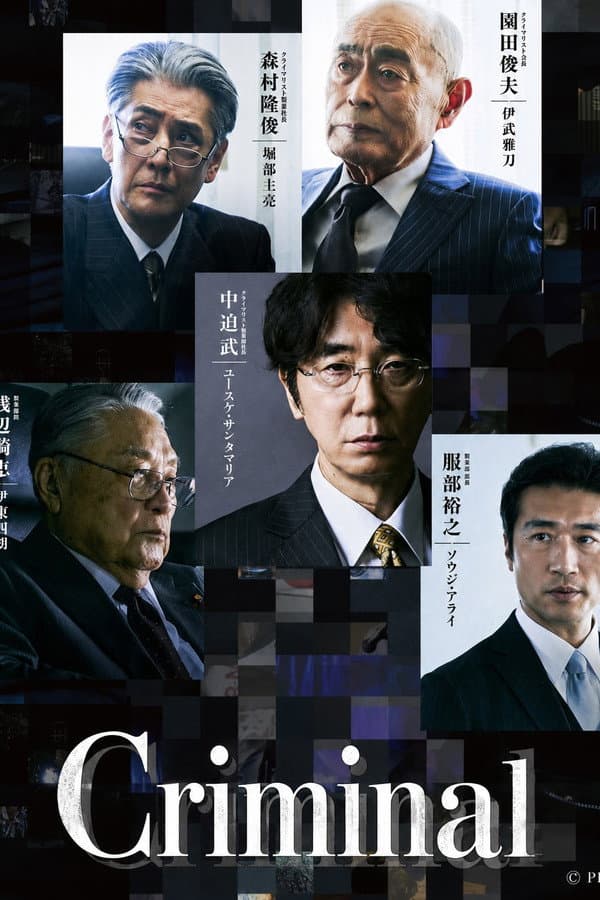
Criminal
2026 • Drama, Mystery
A random mass stabbing, major food company Titus Foods, and a mysterious infant disease. These three things have as much in common as Detective Soma, hack writer Yarimizu, and the stabbing's lone survivor, Shuji. Yet, these men are now embroiled in a risky quest for the truth. What they find, though, is more heinous than they imagined, making them question just who is the real criminal?
Buy related books from Amazon
As an Amazon Associate I earn from qualifying purchases. Read the full disclosure.
Why you should read the novels
Discover the acclaimed Criminal graphic novels by Ed Brubaker and Sean Phillips—the raw, unfiltered source behind the Criminal TV series. These award-winning noir crime books deliver razor-sharp plotting, bruised romance, and consequences that hit harder on the page.
Reading Criminal unlocks the full, interconnected tapestry of heists, betrayals, and haunted histories. Each volume stands alone yet deepens the saga, with recurring characters, hidden callbacks, and morally complex turns that streaming can only hint at.
If you crave uncompromising crime fiction, start with Coward, Lawless, or The Last of the Innocent and sink into the atmospheric art that defines modern noir. Experience the creators’ definitive vision before any adaptation edits, compressions, or tonal shifts—read the books first.
Adaptation differences
In the Criminal graphic novels, the story unfolds as a mosaic of interlinked, standalone arcs that span decades. A Criminal TV series adaptation typically consolidates timelines, combines cases, and reorders events to build season-length momentum and cliffhangers. Expect character and story amalgamations so episodes flow for newcomers. The books’ flexible, non-linear reading order becomes a more guided, serialized structure on screen.
Ed Brubaker and Sean Phillips’ shadow-drenched artwork, quiet beats, and interior monologues define the comics’ neo-noir tone. Television often replaces those contemplative pauses with dialogue, pacing, and sound design. Voiceover may echo the books’ narration, but the texture of brushwork, panel composition, and page-turn reveals is unique to print. Live-action choices in color, lighting, and period detail will naturally differ from the graphic novels’ visual language.
The Criminal TV series will likely spotlight fewer perspectives per season, streamlining or expanding roles to fit casting and episode counts. Side characters who cameo on the page may be merged, renamed, or elevated for ongoing subplots. Backstories can be softened or intensified to align with ratings and broader audiences. The books’ bleaker outcomes and uncompromising moral ambiguity often read harsher than what mainstream television sustains week to week.
Because production realities demand connective tissue, scenes may be invented, crimes re-staged, or endings reshaped while honoring the spirit of the comics. Period settings might shift, with timelines updated or compressed for cohesion. These are common adaptation patterns rather than confirmed episode specifics; consult the Criminal graphic novels to experience every twist as originally conceived. Reading first lets you appreciate what was changed, what was kept, and why.
Criminal inspired from
Criminal: Bad Weekend
by Ed Brubaker, Sean Phillips
Criminal: Cruel Summer
by Ed Brubaker, Sean Phillips
Criminal, Vol. 5: The Sinners
by Ed Brubaker, Sean Phillips
Criminal, Vol. 2: Lawless
by Ed Brubaker, Sean Phillips
My Heroes Have Always Been Junkies
by Ed Brubaker, Sean Phillips
Criminal, Vol. 3: The Dead and the Dying
by Ed Brubaker, Sean Phillips
Criminal: Wrong Time, Wrong Place
by Ed Brubaker, Sean Phillips
Criminal, Vol. 6: The Last of the Innocent
by Ed Brubaker, Sean Phillips
Criminal, Vol. 1: Coward
by Ed Brubaker, Sean Phillips
Criminal, Vol. 4: Bad Night
by Ed Brubaker, Sean Phillips