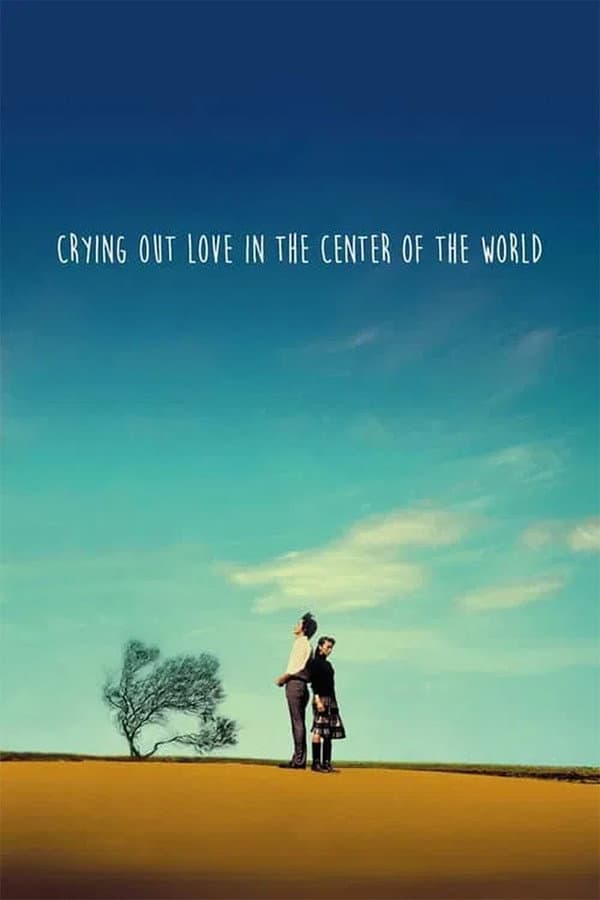
Crying Out Love, in the Center of the World
2004 • Drama
"I thought I might be using a lifetime's happiness in a moment. I was that happy and she was that beautiful." A young boy stands on the red earth of Australia under its blue sky. It is 17-year-old Sakutaro Matsumoto. His time with the girl comes back to him. The colored sand runs through his hands and a tear appears on his cheek. He wakes up. It's 2004 and he is 34 years old and in Japan. He thinks "I have been in a world without her for 17 years." Returning home to see his old high school for the last time before it is demolished, Saku confronts anew the loss of the love of his life, Aki, to leukemia 17 years ago. Now a medical researcher at graduate school, he has been living as if half of him died with her since then.
Buy related books from Amazon
As an Amazon Associate I earn from qualifying purchases. Read the full disclosure.
Why you should read the novel
Before you stream the 2004 TV series, experience the story where it began: Kyoichi Katayama’s novel Socrates in Love. The book’s intimate voice, spare beauty, and emotional honesty create a closeness no screen can match.
Reading the original novel lets you linger with Saku’s thoughts, Aki’s presence, and the quiet, aching spaces between them. Katayama’s lyrical prose and delicate pacing invite a deeper connection to first love, loss, and memory—perfect for readers who cherish moving, reflective fiction.
Available in English in accessible paperback and ebook formats, Socrates in Love is a quick yet unforgettable read. Choose the source novel for the purest version of the story’s heart, and discover why the book became a modern classic before the adaptation.
Adaptation differences
Book vs series: Socrates in Love is a first-person, introspective confession from Saku, while the TV drama externalizes emotion through ensemble scenes, music, and visual motifs. The novel’s quiet, internal grief contrasts with the series’ heightened melodrama.
Pacing and structure differ significantly. The novel is concise and tightly focused, but the multi-episode TV format expands events, adds cliffhangers, and intercuts timelines more aggressively, creating new beats to sustain weekly viewing.
Characterization shifts as well. The book keeps a laser focus on Saku and Aki’s inner worlds; the show broadens side characters, introduces or merges roles, and invents subplots—school activities, family moments, and friendships—to deepen context beyond the novel’s pages.
Iconic motifs are reframed. The adaptation often reorders revelations, amplifies hospital and farewell scenes, and emphasizes keepsakes (letters, tapes, photographs) for catharsis. The core arc remains, but the series crafts bigger set pieces and a more overtly consoling final note than the book’s understated closure.
Crying Out Love, in the Center of the World inspired from
Socrates in Love
by Kyoichi Katayama