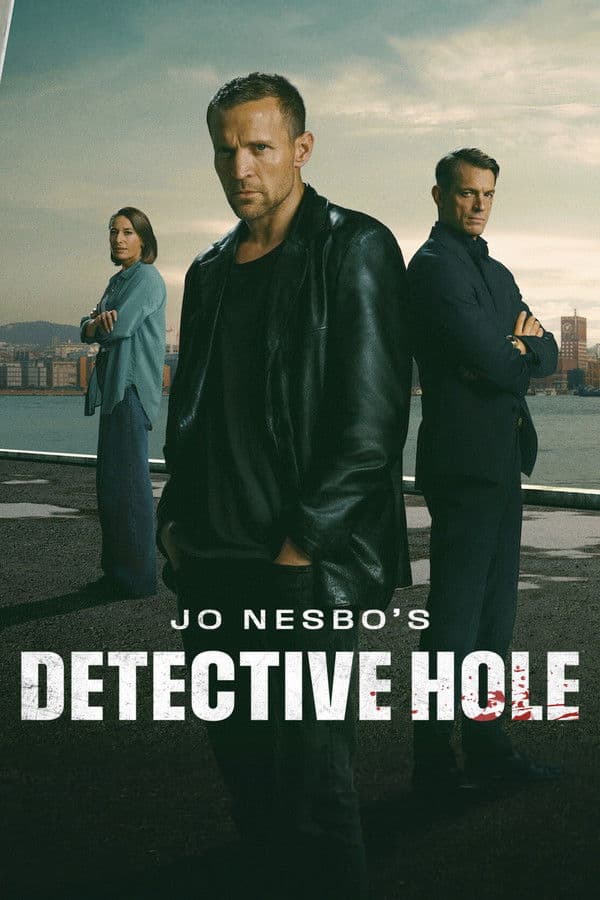
Detective Hole
2026 • Crime, Mystery • TV-MA
When a series of ritualistic murders hits Oslo, a gifted detective must navigate a puzzle of patterns, corruption and his own demons to catch the killer.
Buy related books from Amazon
As an Amazon Associate I earn from qualifying purchases. Read the full disclosure.
Why you should read the novels
Before you stream the Detective Hole TV series, discover the pulse and precision of the original Harry Hole novels by Jo Nesbø. The books define Nordic noir: razor‑sharp plotting, bleak beauty, and a detective whose haunted brilliance turns every page into a revelation.
Reading the source material puts you inside Harry’s head—his instincts, trauma, and razor‑edged deductions—delivered through Nesbø’s taut prose. From The Bat and Cockroaches to fan favorites like The Snowman, The Leopard, Phantom, Police, The Thirst, Knife, and Killing Moon, each novel layers character, city, and case with immersive depth you can’t fast‑forward.
If you love complex mysteries, morally tangled choices, and Oslo rendered with chilling authenticity, read the books first. You’ll catch foreshadowing, subplots, and emotional beats that any screen version must compress, and you’ll experience the definitive Harry Hole the way Jo Nesbø wrote him.
Adaptation differences
Scope and timeline: TV adaptations of long‑running crime series typically streamline chronology to fit season arcs. Compared with the novels’ years‑spanning continuity—from The Bat through Killing Moon—episodes often rearrange or compress events so a single mystery resolves within a tighter schedule.
Characters and arcs: Screen versions commonly merge supporting characters, abbreviate backstories, and pare down police‑bureaucracy threads to keep focus on Harry and the primary investigation. Side plots that enrich the books—such as intricate financial crimes, Salvation Army intrigue, or newsroom subplots—may be reduced or combined to serve pacing and clarity.
Tone and interiority: The novels convey much of Harry’s brilliance and turmoil through internal monologue and granular detail. On TV, those inner battles are typically externalized—through visuals, music, and dialogue—and depictions of violence or addiction may be stylized or moderated to fit platform standards while preserving the series’ Nordic noir mood.
Mystery mechanics: Jo Nesbø’s books lean into layered red herrings, meticulous forensics, and delayed reveals. Television usually narrows suspect pools, surfaces clues more cleanly, and accelerates unmaskings to reward episodic viewing, sometimes trading procedural legwork for high‑stakes set pieces. If you crave the densest twists and longest fuse, the novels deliver them best.
Detective Hole inspired from
The Leopard
by Jo Nesbø
Police
by Jo Nesbø
Nemesis
by Jo Nesbø
The Devil's Star
by Jo Nesbø
Killing Moon
by Jo Nesbø
Phantom
by Jo Nesbø
Cockroaches
by Jo Nesbø
Knife
by Jo Nesbø
The Redbreast
by Jo Nesbø
The Bat
by Jo Nesbø
The Thirst
by Jo Nesbø
The Redeemer
by Jo Nesbø
The Snowman
by Jo Nesbø