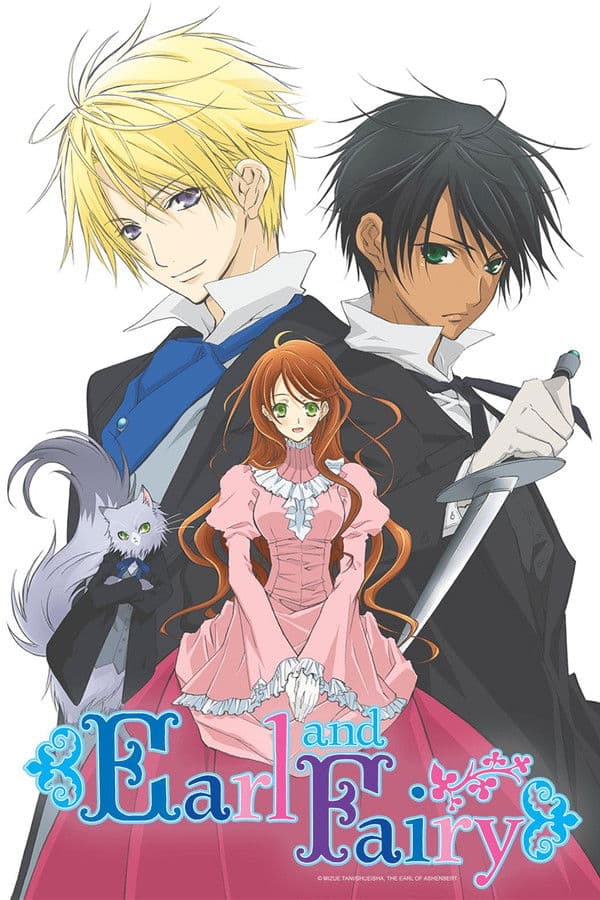
Earl and Fairy
2008 • Animation, Drama
In 19th century England, 17-year-old Lydia Carlton ekes out a living as a fairy doctor. She is one of the rare humans who can see and communicate with fairies, although almost no one believes her in this day and age. But Lydia s quiet country life is turned upside down when Edgar J. C. Ashenbert, who claims to be royalty, hires her for her fairy expertise. She joins his quest for an invaluable magic sword, traveling from the United Kingdom to the Fairy World in this adventurous romantic fantasy.
Buy related books from Amazon
As an Amazon Associate I earn from qualifying purchases. Read the full disclosure.
Why you should read the novel
If you loved the 2008 Earl and Fairy anime, step into the original vision with The Earl and the Fairy light novels by Mizue Tani. The books deliver deeper Victorian fantasy romance, richer fairy folklore, and a more atmospheric mystery tone that the screen can only hint at.
Reading the source novels rewards you with layered character development for Lydia, Edgar, and their companions, slow-burn relationship growth, and immersive worldbuilding steeped in Celtic and British fairy lore. You’ll uncover nuanced motivations, courtly intrigue, and cases never fully explored in the adaptation.
For fans seeking the definitive Earl and Fairy experience, the books provide the complete tapestry: precise mythology, elegant prose, and multi-volume arcs that elevate every reveal. Discover why readers praise Mizue Tani’s storytelling as the heart of this beloved Victorian fantasy romance series.
Adaptation differences
Scope and pacing: The 2008 anime condenses multiple novel arcs into 12 episodes, reorders events, and streamlines investigations into tighter, case-of-the-week narratives. The books unfold at a measured pace, allowing mysteries to breathe, clues to accumulate, and tensions to simmer across volumes.
Character depth: The novels delve more frankly into Edgar’s shadowed past, Lydia’s growth as a fairy doctor, and the complex loyalties surrounding Raven, Ermine, and other allies. The anime softens or abbreviates some trauma and moral ambiguity, while the books linger on motives, secrets, and consequences that shape the cast.
Worldbuilding and tone: Mizue Tani’s prose immerses readers in Celtic and British fairy lore—taxonomy of creatures, rules of bargains, and the Blue Knight Earl legacy—far beyond what the series can summarize. On screen, lore is selective and expository; on the page, it’s embedded in atmosphere, folklore citations, and casework.
Plot resolution and themes: The anime provides a more self-contained, adaptation-specific resolution to fit its episode count, whereas the novels sustain overarching mysteries and recurring antagonists over many volumes. Romance also progresses differently: the books favor a nuanced, incremental slow-burn, while the show emphasizes immediate chemistry and swifter emotional beats.
Earl and Fairy inspired from
The Earl and the Fairy (Light Novel Series)
by Mizue Tani