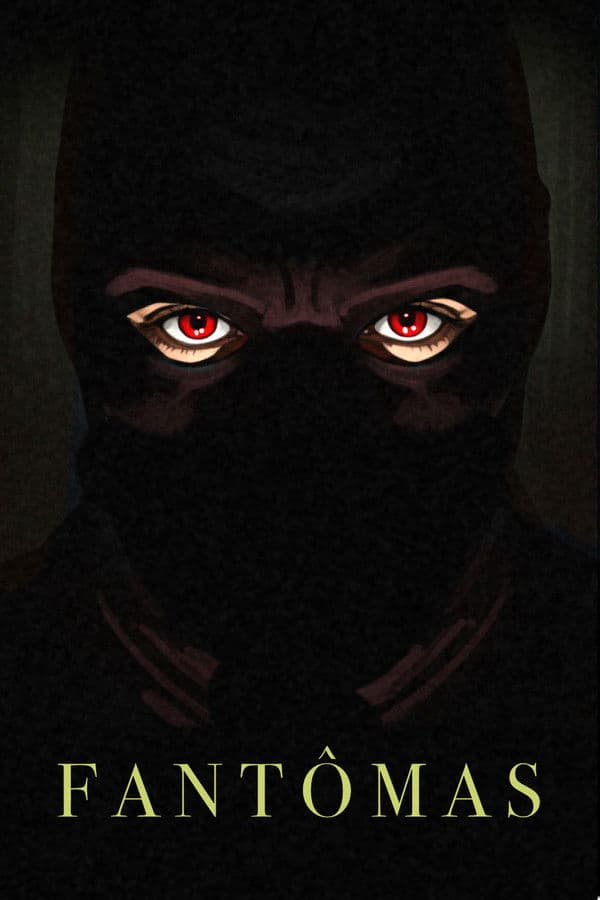
Fantômas
1980 • Crime, Mystery
Master criminal Fantomas kills an ambassador, has an affair with the dead man's wife, sneaks into a rich woman's house handing out vanishing-ink business cards, is arrested and sentenced to death but switches with an actor, who goes to the guillotine.
Buy related books from Amazon
As an Amazon Associate I earn from qualifying purchases. Read the full disclosure.
Why you should read the novels
Before the 1980 TV series, Fantômas lived on the page—shocking, elusive, and terrifying. Reading the original novels by Marcel Allain and Pierre Souvestre lets you encounter the master criminal in his purest, most unsettling form.
The books deliver everything viewers love—and more: audacious crimes, breakneck chases, sinister disguises, and the relentless pursuit by Inspector Juve. Their serialized rhythm, cliffhangers, and haunting atmosphere create an immersive Belle Époque thriller experience only prose can sustain.
For fans of classic crime fiction, pulp melodrama, and gothic intrigue, the Fantômas novels are essential. Discover the darker tone, bolder twists, and dizzying inventiveness that shaped European popular literature and still outpace most screen adaptations.
Adaptation differences
Scope and structure differ markedly. The 1980 TV adaptation compresses and rearranges material from several early Fantômas novels into streamlined story arcs. Complex subplots and secondary figures are merged or omitted, and intricate conspiracies are simplified so episodes can deliver clear narrative payoffs.
Tone and intensity are softened for television. On the page, Fantômas is shockingly ruthless and nihilistic, with macabre set pieces and brazen cruelty. The series tempers the violence, emphasizes elegance and spectacle, and sometimes presents the arch-villain as a charismatic enigma rather than the books’ remorseless agent of chaos. Juve’s obsession and moral ambiguity also read sharper in the novels.
Narrative devices change as well. The books revel in false identities, misleading documents, and sensational newspaper excerpts to manipulate perspective and seed paranoia. The adaptation visualizes disguises and stings effectively but trims the novels’ labyrinth of aliases, red herrings, and cliffhangers, favoring clearer action beats and self-contained resolutions.
Setting and thematic breadth are narrowed. The novels range across Paris and Europe with daring set pieces—catacombs, midnight trains, remote châteaux—while exposing the fragility of social order. The series condenses locations and sidelines some social critique, keeping the period flavor but focusing on a polished cat-and-mouse that’s less sprawling than the books’ feverish, continent-hopping crime saga.
Fantômas inspired from
Fantômas
by Marcel Allain, Pierre Souvestre
The Daughter of Fantômas
by Marcel Allain, Pierre Souvestre
A Nest of Spies
by Marcel Allain, Pierre Souvestre
The Exploits of Juve
by Marcel Allain, Pierre Souvestre
The Hangman of London
by Marcel Allain, Pierre Souvestre
Messengers of Evil
by Marcel Allain, Pierre Souvestre