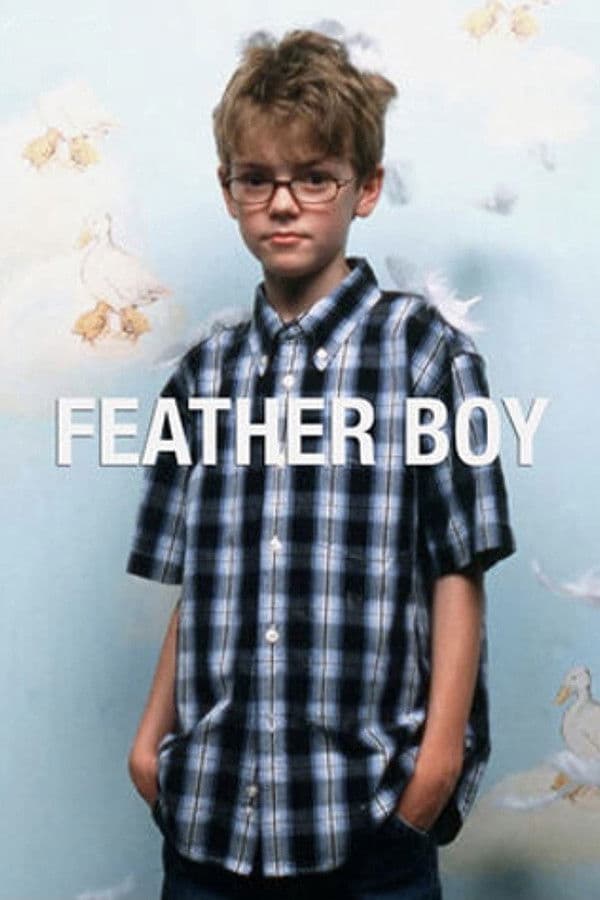
Feather Boy
2004 • Drama
Robert Nobel is the butt of classroom jokes and a victim of Niker the classroom bully. He is haunted by dreams that seem to tell the future as well as the past. His life changes when a storyteller invites some of his class to Mayfield House, a place Robert has already dreamed about. There he meets a spiky old lady called Edith Sorrel who chooses him as her partner. He embarks on a series of events that will change their lives forever.
Buy related books from Amazon
As an Amazon Associate I earn from qualifying purchases. Read the full disclosure.
Why you should read the novel
Before you stream the 2004 TV adaptation, experience the complete story in Nicky Singer’s Feather Boy book. The novel’s immersive voice brings Robert’s fears, courage, and imagination into sharp, unforgettable focus.
The Feather Boy novel offers richer character growth, layered symbolism, and a deeper exploration of grief, identity, and belonging than the screen can show. Singer’s prose turns London’s corners, rumors, and history into an evocative, page-turning landscape.
If you enjoyed the series, read the original Feather Boy by Nicky Singer to discover the nuanced themes, emotional beats, and memorable details that inspired the show—available in print, ebook, and audiobook.
Adaptation differences
Perspective and interiority: The book unfolds largely through Robert’s intimate, first-person viewpoint, saturating every scene with his doubts, flashes of bravado, and spiraling imagination. The TV series externalizes this inner world, relying on performances and visuals, which inevitably trims the nuance of his private thoughts and blurs some of the novel’s deliberate ambiguities.
Structure and pacing: The adaptation compresses timelines, streamlines school and family subplots, and merges or omits minor characters to fit a limited episode count. Plot strands that leisurely build tension in the novel are accelerated on screen, reshaping how discoveries occur and tightening the mystery’s breadcrumb trail.
Tone and thematic emphasis: While both versions address bullying, guilt, memory, and healing, the book leans darker and more psychologically probing. The series softens certain edges for a family audience, brightening moments of hope and companionship and making some consequences less stark than in the source material.
Imagery and resolution: The novel’s feather imagery and hints of the uncanny maintain a purposeful uncertainty, inviting readers to question what is literal versus symbolic. The screen version visualizes key motifs more concretely and provides a clearer, more uplifting closure, whereas the book leaves select elements open to interpretation, lingering after the final page.
Feather Boy inspired from
Feather Boy
by Nicky Singer