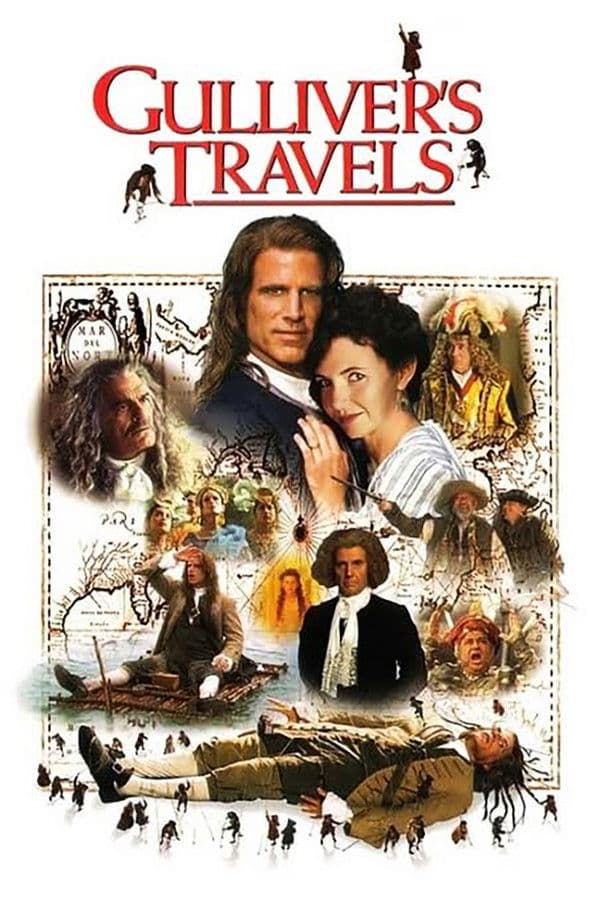
Gulliver's Travels
1996 • Action & Adventure, Drama, Sci-Fi & Fantasy
Dr. Gulliver has returned from his journey to his family after a long absence - and tells them the story of his travels.
Buy related books from Amazon
As an Amazon Associate I earn from qualifying purchases. Read the full disclosure.
Why you should read the novel
Before you stream the 1996 TV miniseries, read Jonathan Swift’s Gulliver’s Travels—the original razor-edged satire that inspired it. Swift’s first-person voice, dry wit, and fearless social critique make every island a mirror held up to power, pride, and human folly.
Only the book takes you unfiltered from Lilliput’s petty political wars to Brobdingnag’s moral clarity, from Laputa’s absurd science to the unsettling logic of the Houyhnhnms. You’ll encounter the full range of Swift’s targets—party politics, imperialism, bad science, and empty intellectual fashion—exactly as he wrote them.
If you’re searching for the definitive Gulliver’s Travels experience, choose the novel. Read it unabridged or in a carefully annotated edition, in print, ebook, or audiobook. Discover why Jonathan Swift’s classic remains essential reading for lovers of satire, classic literature, and thought-provoking adventures.
Adaptation differences
The 1996 Gulliver’s Travels TV miniseries reshapes Swift’s novel into an effects-rich fantasy with added family drama and courtroom intrigue. The book, by contrast, is a straight-faced travel narrative and sustained political satire, whose bite and ambiguity drive the story more than spectacle.
The series builds a prominent framing story in England—expanding Mary Gulliver’s role and introducing legal inquiries and confinement that question Lemuel’s sanity and credibility. In the novel, Mary is largely offstage, there’s no courtroom antagonist, and Gulliver simply publishes his account, leaving readers to judge.
To fit runtime and a broad audience, the adaptation condenses or softens major satirical set pieces. Lilliput’s religious-party disputes and petty court politics, Brobdingnag’s moral rebuke of European warfare, and Laputa’s impractical science (and the Academy of Lagado’s absurd experiments) are streamlined, with scatological and harsher misanthropic elements toned down for family viewing.
Character arc and ending differ markedly. Swift’s Gulliver returns from the land of the Houyhnhnms a severe misanthrope who can barely stand human company and prefers conversing with his horses. The 1996 miniseries moves toward emotional reconciliation and a more hopeful, human-centered resolution, shifting the theme from corrosive satire to redemptive adventure.
Gulliver's Travels inspired from
Gulliver's Travels
by Jonathan Swift