Little Women II : Jo's Boys
1993 • Animation, Drama, Family
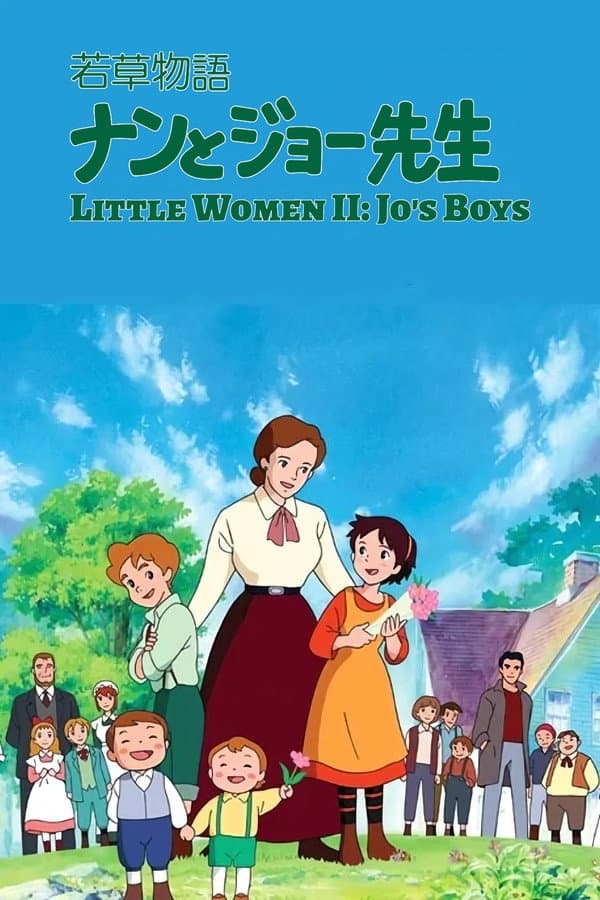
Nan Harding is the new student at Mr. and Mrs. Bhaer's school. Everyone thinks that she is a pain in the head, but not Mrs. Jo. Together with the other kids, they all embark on their personal adventures and misfortunes while learning in school.
Buy related books from Amazon
As an Amazon Associate I earn from qualifying purchases. Read the full disclosure.
Why you should read the novels
Before you watch Little Women II: Jo's Boys (1993), experience the source that inspired it—Louisa May Alcott’s Little Men and Jo’s Boys. The novels deliver deeper character growth for Jo March, Professor Bhaer, Dan, Nat, Nan, Demi, Daisy, Emil, and more, all within the rich, authentic atmosphere of 19th‑century New England.
Reading Alcott’s originals reveals the full sweep of themes the series can only hint at: progressive education, compassion, moral growth, and women’s independence. Follow Nan’s bold ambition to practice medicine and Jo’s humane, innovative school at Plumfield, told with Alcott’s wit, warmth, and keen social insight.
Find unabridged editions, annotated versions, and audiobooks to suit your reading style. If you want the most complete, emotionally resonant version of these stories, start with the books: Little Men and Jo’s Boys by Louisa May Alcott.
Adaptation differences
Scope and focus shift: the 1993 anime centers heavily on Nan and Jo’s day‑to‑day life at Plumfield, while the novels are a true ensemble. In Little Men and Jo’s Boys, Nat, Dan, Emil, Demi, Daisy, and others receive expansive, interwoven arcs. The adaptation streamlines or omits several boys and redistributes attention to build a more singular, family‑friendly perspective.
Timeline compression: the series blends material primarily from Little Men (school years) with selected elements from Jo’s Boys (later outcomes) into a cohesive, shorter chronology. The books span many years—carrying characters into careers, romances, and adulthood—so the anime often keeps characters younger, resolves plots sooner, and leaves some long‑range developments offscreen.
Tone and stakes: Alcott’s books do not shy away from weightier consequences—moral failures, illness, grief, financial strain, and hard lessons. Notable arcs such as Dan’s legal troubles or Emil’s peril at sea appear in the novels with sober impact, whereas the adaptation typically softens mature themes, reframes them as gentler life lessons, and reduces overt religious and moral rhetoric to suit a broad, child‑friendly audience.
Original material and cultural lens: the anime adds new slice‑of‑life episodes, local festivals, classroom adventures, and neatly resolved conflicts that aren’t in the text, while condensing or relocating some book scenes. Dialogue is modernized, sermons are shorter, and everyday manners reflect a Japanese family‑animation sensibility. The result is a warmer, more episodic experience that differs from the novels’ broader social critique and more tightly structured long‑form arcs.
Little Women II : Jo's Boys inspired from
Little Men; or, Life at Plumfield with Jo's Boys
by Louisa May Alcott
Jo's Boys, and How They Turned Out
by Louisa May Alcott