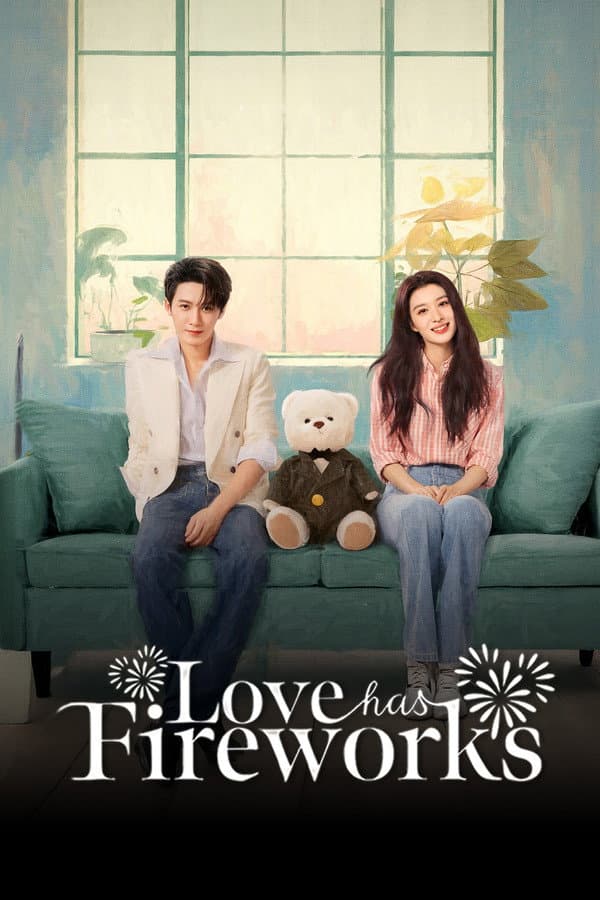
Love Has Fireworks
2026 • Comedy, Drama
Qian Fei, an employee in a bank, was planning a fulfilling life. But after being abandoned by her fiancé, she had to redefine her life. Li Yifei, from a rich family, always prioritized his career. His girlfriend couldn't endure poverty and left. To cover her mortgage, Fei rent out a room to Yifei, and they became collaborators. Fei bravely faced challenges and grew through the process. Their journey was marked by collisions, but they fell in love and decided to face the future together.
Buy related books from Amazon
As an Amazon Associate I earn from qualifying purchases. Read the full disclosure.
Why you should read the novel
Discover the original source novel Love Has Fireworks, where the characters’ emotions simmer and ignite with even greater vibrancy than on screen. The book offers insight into the protagonists’ inner struggles, dreams, and aspirations, painting a vivid picture of their growth and relationships that episodic television often condenses or glosses over. Readers will experience first-hand the raw passion, longing, and hope that inspired the series, granting a deeper appreciation for every pivotal scene.
Choosing to read the novel gives you access to beautifully crafted prose and detailed descriptions that fully immerse you in the story’s setting and the subtleties of each character’s emotional journey. The narrative unfolds at a pace that allows you to savor every interaction and internal dilemma, giving extra context and depth to events that may seem fleeting in the show.
While the TV adaptation delivers visual and dramatic moments, the source novel provides a more comprehensive, unfiltered exploration of love, ambition, and healing. Pages brim with life’s little details and delicate moments that can get lost on screen, inviting you to connect more intimately with the story’s heart and soul. Experience the true essence of Love Has Fireworks by reading the original novel.
Adaptation differences
One significant difference between Love Has Fireworks and its TV adaptation lies in narrative depth. The novel delves deeply into the protagonists’ minds, giving readers a window into their thoughts, motivations, and growth in ways that the show can only suggest with visuals or dialogue. Key scenes, especially those containing internal monologues or nuanced emotional shifts, gain much greater resonance in the book than on television.
Another notable variation is in pacing and story structure. The TV series streamlines or rearranges certain plot points to fit episodic constraints and to enhance on-screen drama. Some side characters and subplots are merged or omitted entirely, while moments of quiet character development from the source material may get condensed or altered to maintain narrative momentum.
Characterization also differs between the two mediums. Secondary characters in the novel are often given more significant backstories and motivations, enriching the world and stakes around the central romance. On screen, these characters may serve more as plot devices, and their arcs can lack the intricate development found in the book.
Lastly, the tone and language of the source material are more intimate, with the prose offering poetic or reflective passages that invite contemplation. The adaptation, by necessity, externalizes much of this inner world through music, performance, and visual cues, but sometimes sacrifices subtlety for clarity, changing the overall emotional impact. Thus, readers will find the original work an entirely different and more immersive experience.
Love Has Fireworks inspired from
Love Has Fireworks
by Jinjiang Literature City (Jinjiang Wenxue Cheng)