Maria Watches Over Us
2004 • Animation, Drama
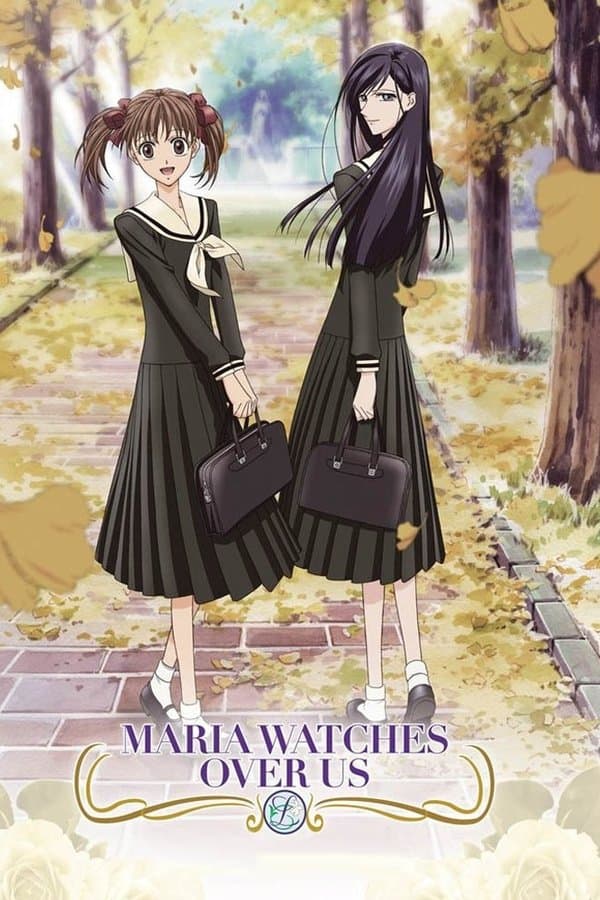
When Yumi Fukuzawa entered the Lillian Girls' Academy, a prestigious all-girls Catholic school in Tokyo, she never imagined she would catch the eye of beautiful and demure Sachiko Ogasawara, one of the school's most popular students. Now Sachiko has offered to be Yumi's soeur, her "sister" and guide for all her years at the academy. The whole idea has Yumi completely flustered—after all, they hardly know each other!
The entire campus is abuzz with rumors about the two of them, but Yumi is conflicted over accepting Sachiko's offer. While she admires Sachiko, being her soeur would also mean constantly being at the center of the entire school's attention!
Buy related books from Amazon
As an Amazon Associate I earn from qualifying purchases. Read the full disclosure.
Why you should read the novel
Discover Maria Watches Over Us in its purest form by reading Oyuki Konno’s original light novels. The books offer a graceful, intimate window into Lillian Girls’ Academy—its customs, quiet tensions, and the heartfelt soeur bonds that define this beloved yuri classic.
On the page, character growth unfolds through rich inner monologues, layered motivations, and precise social nuance you simply can’t fully capture on screen. The novels deepen every glance and gesture, illuminating the refined etiquette, Catholic symbolism, and traditions that anchor the school’s world and the relationships at its core.
If you love elegant, emotionally resonant storytelling, start with the Maria Watches Over Us novels to follow the complete arc as the author intended. You’ll gain context, side stories, and voice-driven depth that reward careful reading and make each reveal and reunion more meaningful.
Adaptation differences
The Maria Watches Over Us anime is a faithful, tasteful adaptation, but it condenses and curates material from Oyuki Konno’s novels. Several arcs are streamlined, the timeline is tightened, and some episodes prioritize momentum over the slower, contemplative cadence found in the books.
A key difference is interiority. The light novels rely on introspective narration to convey shifting feelings, delicate power dynamics, and the unspoken rules of Lillian. The anime translates this with visuals and music, yet some subtleties—hesitations, private doubts, and layered etiquette—are more explicit and nuanced in prose.
Side stories and supporting characters often receive more development in the books. Short episodes, epilogues, and campus vignettes that enrich traditions like the soeur system, seasonal ceremonies, and family backgrounds may be abbreviated or rearranged in the adaptation, changing emphasis and emotional build-up.
Tone and pacing also diverge. The anime’s direction and score create an elegant atmosphere, but the novels sustain a more reflective rhythm and thematic focus on ritual, responsibility, and personal growth. Reading the source provides a fuller chronology and connective tissue between events, offering a broader, more textured portrait than the adaptation’s curated selection.
Maria Watches Over Us inspired from
Maria Watches Over Us (light novel series)
by Oyuki Konno