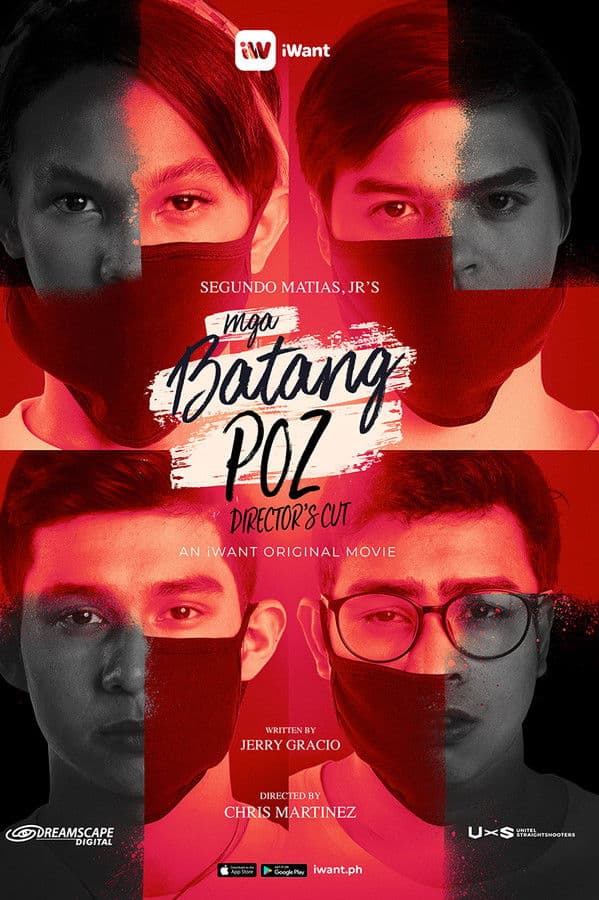
Mga Batang Poz
2019 • Comedy, Drama
Four teenagers, all HIV positive and members of Love is Brave—a support group for people living with HIV—decide to meet in a cafe. This includes Luis, the school heartthrob and son of a Chinese businessman; Enzo, who has body and family issues; Gab, the dutiful son of a town mayor; and Chuchay, an urban poor teen who works to support his family.
Buy related books from Amazon
As an Amazon Associate I earn from qualifying purchases. Read the full disclosure.
Why you should read the novel
Before you stream the series, read Mga Batang Poz (The Poz Kids) by Segundo Matias Jr. The novel offers a raw, intimate portrait of HIV-positive teens, revealing interior lives, fears, and courage you can only experience on the page.
As you turn each chapter, you’ll discover deeper character backstories, nuanced emotions, and cultural context that the camera can’t fully capture. The book’s authentic voice and unflinching honesty make it an essential read for anyone who cares about youth, health, and empathy.
Choose the source material to gain richer insight, powerful reflection, and conversation-starting themes perfect for classrooms and book clubs. Reading the novel first elevates your understanding of the series—and stands alone as a timely, compassionate work.
Adaptation differences
Mga Batang Poz series vs book: the novel by Segundo Matias Jr. leans heavily on the teens’ interiority—private thoughts, anxieties, and hopes—while the TV adaptation externalizes those feelings through performances, dialogue, and visuals. Reading the book gives you sustained access to inner monologues that deepen motive and meaning.
Structurally, the novel unfolds in carefully shaped chapters that spotlight each teen’s arc at length. The adaptation reshapes pacing for episodic momentum, sometimes condensing timelines, reordering revelations, or streamlining side characters to keep the narrative propulsive on screen.
In tone and content, the book can be more direct in discussing sex, stigma, and misinformation, whereas the series observes platform and broadcast sensibilities. On-screen, difficult scenes are moderated and often paired with health advisories or guidance, while the novel’s frankness invites slower, more personal reflection.
World-building also shifts: the series highlights visual elements—clinics, classrooms, social media, and group dynamics—to widen context and immediacy. The novel, meanwhile, prioritizes language, internal debates, and myth-busting conversations, offering readers fuller nuance behind choices that may appear swifter or simplified in the adaptation.
Mga Batang Poz inspired from
Mga Batang Poz (The Poz Kids)
by Segundo Matias Jr.